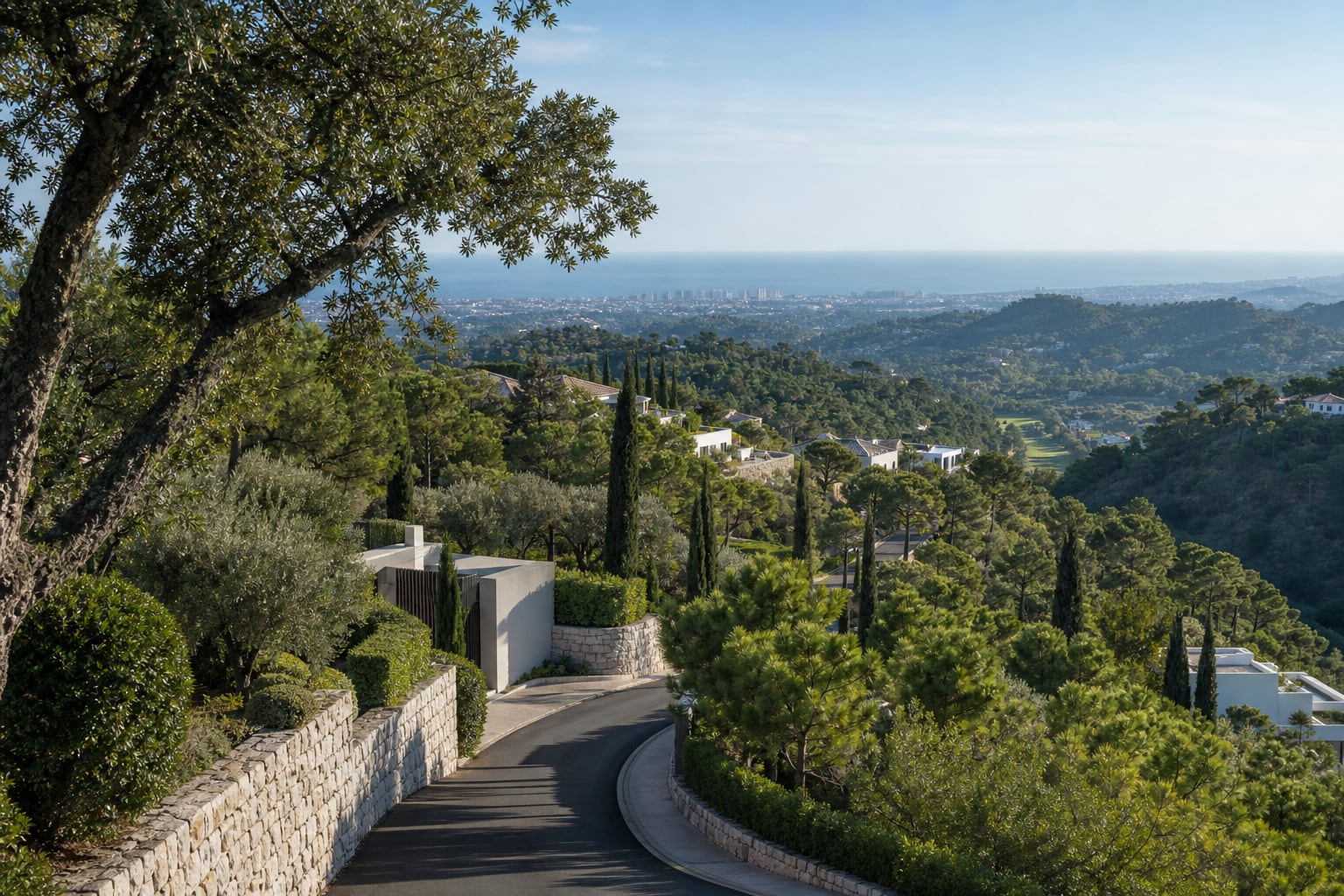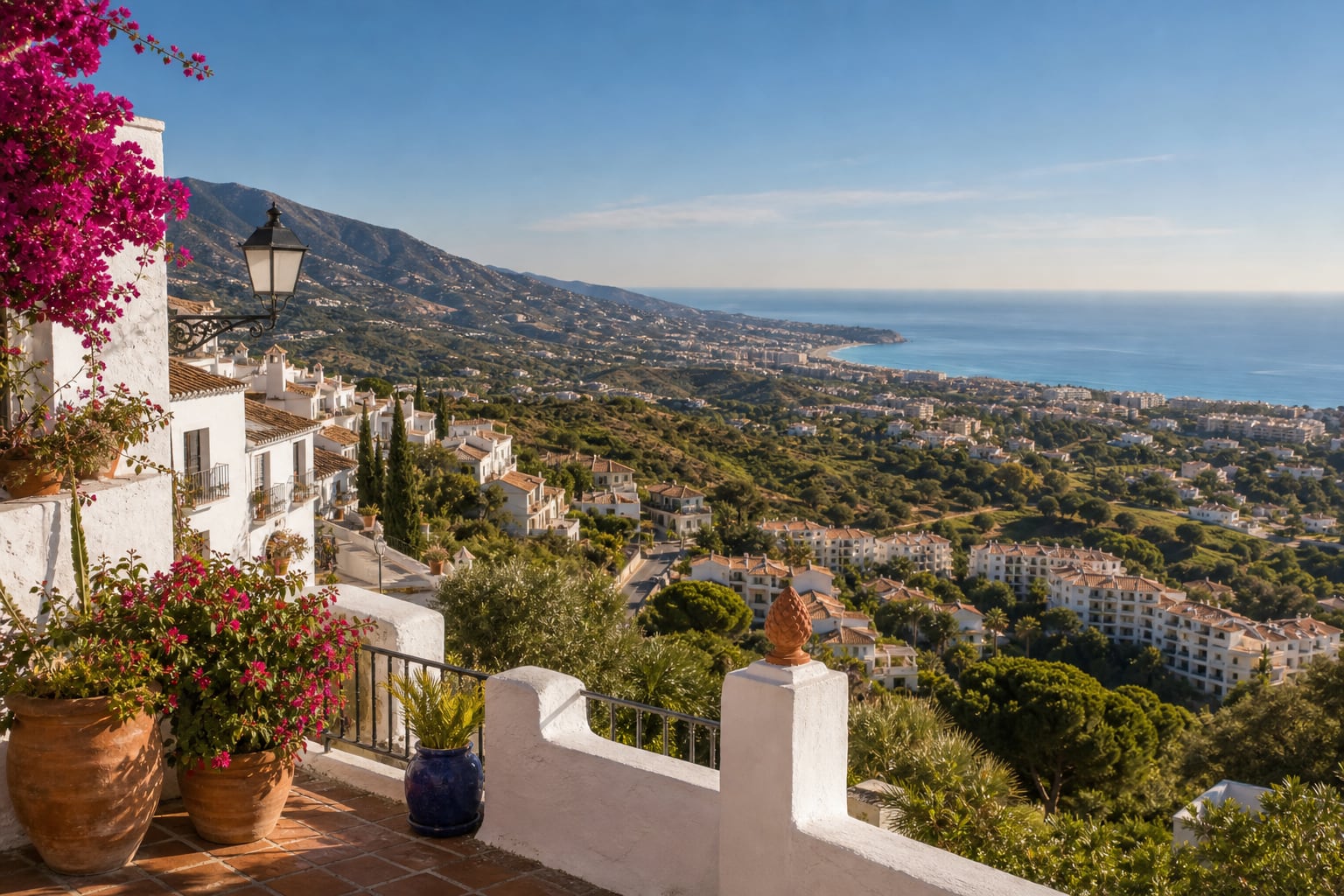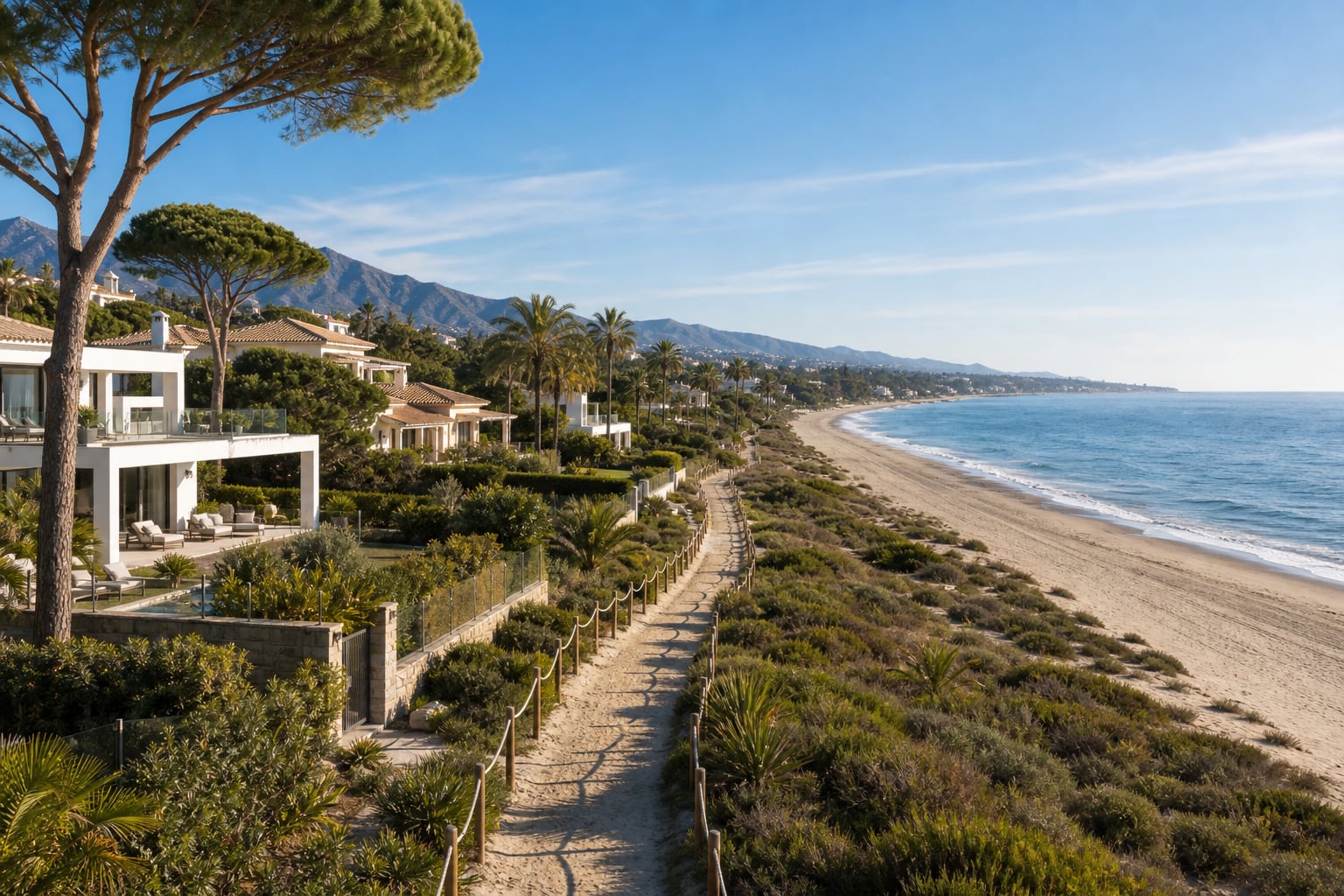
Les acheteurs qui peuvent confortablement s’offrir le Golden Mile posent souvent la même question avant de se tourner vers l’est de la ville de Marbella : à quoi renoncez-vous exactement en vivant au-delà du centre, et qu’obtenez-vous en retour ? Les chiffres refusent de donner une réponse facile. En février 2026, Los Monteros – l'enclave fermée en bord de plage à peine quatre kilomètres à l'est du centre de Marbella – coûtait en moyenne 8 772 € le mètre carré., confortablement au-dessus du €6,789/m² enregistré le même mois sur le tronçon Nagüeles du Golden Mile lui-même. En d’autres termes, l’Est de Marbella n’est pas l’alternative budgétaire que tout le monde suppose. Il s'agit d'une route côtière longue d'environ quinze kilomètres, et le long de celle-ci, le prix d'une maison oscille plus fortement que presque partout ailleurs sur la Costa del Sol.
Ce simple fait remodèle la recherche. Le couloir qui s'étend de la rivière Río Real – la limite orientale de Marbella proprement dite – jusqu'à la marina de Cabopino, à la limite de Mijas, abrite à la fois le front de mer le plus cher de la municipalité et certains des meilleurs rapport qualité-prix, parfois en vue les uns des autres. Comprendre où se situe la frontière entre les deux est tout un jeu pour un acheteur se dirigeant vers l'Est, et cela récompense la précision par rapport à la sténographie paresseuse de "Marbella East".
La carte des prix, d’Ouest en Est
Commencez par l’extrémité ouest, là où les prix sont les plus élevés, et la logique devient vite claire. Los Monteros se trouve en premier lorsque vous quittez Marbella en direction de l'est, et son 8 772 €/m² en moyenne — en hausse de 11,9 % sur un an dans les données d'Idealista de février 2026 — reflète la rareté des terrains en première ligne de plage et une vague de rénovations haut de gamme plutôt qu'un changement soudain de mode. Avancez quelques kilomètres plus loin et la silhouette disparaît. Les inscriptions jusqu’au printemps 2026 placent le marché combiné Elviria-Cabopino plus proche de 5 000 à 5 200 €/m², parmi les codes postaux les plus abordables de toute la commune, bien qu'ils soient situés directement sur le même littoral.
À titre de comparaison, cela situe les plages de l'est au-dessous de Nueva Andalucía, la vallée du Golf derrière Puerto Banús, qui atteint €5,654/m² dans la même période. Le résultat pratique est qu'un acheteur avec, disons, 1,4 million d'euros peut acheter un appartement fatigué de trois chambres nécessitant des travaux sur le Golden Mile, ou une généreuse villa récemment construite avec une piscine et une vue sur la mer à Elviria – et toujours être à dix minutes en voiture des mêmes restaurants. Le choix porte rarement sur la qualité. Il s'agit de ce que vous appréciez : le code postal et la promenade jusqu'à Puente Romano, ou les mètres carrés, le jardin et le parking.
L’est de Marbella a également été l’une des parties de la côte qui a connu la plus forte croissance au cours de l’année écoulée, les poches autour de Cabopino et d’Elviria affichant des gains annuels à deux chiffres alors que les acheteurs éloignés du centre déplacent leur recherche de quelques kilomètres le long de la route. C’est pourquoi ce domaine mérite d’être compris maintenant plutôt que plus tard – et c’est pourquoi une part croissante de Inventaire en direct de Marbella se trouve à l’est de la ville plutôt qu’à l’ouest.
Los Monteros et Río Real : la fin du prestige
Le premier tronçon à l’est de Marbella est progressivement devenu l’une des adresses les plus prisées de la côte. Los Monteros était l'un des premiers quartiers résidentiels de luxe de Marbella dans les années 1960, et il est aujourd'hui en pleine réinvention. L'emblématique hôtel Los Monteros a rouvert ses portes sous la marque Kimpton, et son club de plage, La Cabane, relancée avec le style Dolce & Gabbana et les cuisines gérées par Grupo Dani García – le même nom derrière le restaurant trois étoiles Michelin de Marbella. À quelques pas de la plage de Río Real, le Trocadero Arena s'étend sur la même étendue de sable dans son style colonial africain. C'est la partie de la côte Est qui concurrence directement le Golden Mile en matière de glamour, et le Données sur les prix Idealista de février 2026 montre que le marché est d’accord.
Derrière la plage se trouve Río Real, la douce vallée qui doit son nom à la rivière qui donne son identité à la région. Son ancre est Rio Real Golf, un cours conçu par Javier Arana — largement considéré comme le plus grand architecte de golf d'Espagne — et ouvert en 1965, tissant dix-huit trous par 72 à travers des pins matures jusqu'à un green célèbre au bord de la Méditerranée. Il se trouve à cinq minutes du centre de Marbella, reconnu par la Real Federación Española de Golf, et l'un des rares parcours classiques de la côte sur lequel vous pouvez jouer toute l'année. Une maison à Río Real vous offre ce terrain à deux pas et la ville à quelques minutes en voiture, sans le prix au mètre du front de mer juste en dessous.
Les produits ici vont des villas en première ligne de plage dépassant largement les 10 millions d'euros aux maisons familiales confortables quelques rues plus loin. Un développement tel que La Liste Río Real — une communauté de vingt-sept maisons jumelées avec jardins privés, piscines et vue sur la mer, au prix d'environ 1,79 million d'euros — se situe carrément au milieu de cette fourchette : une nouvelle construction de qualité, à quelques minutes du golf et de la plage, et un code postal de Marbella, pour moins qu'une adresse comparable sur la Milla de Oro le commanderait. Pour les acheteurs qui recherchent le prestige des enclaves occidentales avec un peu plus de maison pour leur argent, c'est là que l'Est fait valoir ses arguments les plus solides.
Elviria, Las Chapas et la ceinture scolaire
Continuez vers l'est et le personnage passe du glamour à une vie de famille sédentaire toute l'année. Las Chapas, El Rosario et Elviria forment une bande de villas et de complexes d'appartements de faible hauteur situés au milieu des pins parasols, où le profil des acheteurs penche vers les résidents à temps plein et les propriétaires de longue durée plutôt que vers la haute saison. Les plages ici sont larges et sablonneuses, et la valeur est réelle : c'est la partie du couloir où le même budget qui achète un appartement sur le Golden Mile achète une villa individuelle avec jardin.
Elviria ne manque pas d’ancres de style de vie. Nikki Beach Marbella, l'avant-poste européen d'origine de la marque mondiale, occupe le sable de l'hôtel Don Carlos depuis 2003 – à environ dix minutes du centre-ville – et reste le club de plage le plus connu de la région. Les golfeurs ont Santa María Golf, un parcours de dix-huit trous aménagé au cœur d'Elviria et ouvert en 1991, et le plus petit Greenlife Golf à proximité, un parcours par trois construit autour d'une académie d'enseignement. Greenlife abrite également El Lago, un restaurant une étoile Michelin, preuve que la banlieue Est n'est plus l'arrière-plan culinaire qu'elle était autrefois.
Pour les familles qui déménagent, l’attraction décisive est souvent l’école. Le Collège international anglais se trouve dans l'Urbanización Ricmar, entre Las Chapas et Elviria sur l'A-7. Créé en 1982, il suit le programme britannique pour les élèves âgés de 3 à 18 ans. et envoie un flux constant de sortants à Oxbridge, Imperial, LSE et UCL. En pratique, l’école fait ce que les bonnes écoles font toujours sur le marché immobilier : elle fixe la demande. Les familles qui veulent que leurs enfants fréquentent l'EIC veulent vivre à proximité, ce qui maintient un plancher fiable sous les prix dans les urbanisations environnantes, quelle que soit l'évolution du marché au sens large.
Cabopino : dunes, petit port de plaisance et bord de Mijas
À l'extrême est de Marbella, là où la municipalité rencontre Mijas, la côte fait quelque chose d'inhabituel : elle est protégée. Le Dunes d'Artola étaient déclaré Monument Naturel en 2001, un système de dunes mouvantes et fossiles réparties sur une vingtaine d'hectares derrière la plage, parcourues par des passerelles en bois et surveillées par la Torre de los Ladrones du XVIe siècle. Il n'y a ici aucune concession de transats et aucune possibilité de construire dessus, chose rare sur un littoral aussi développé, et garantie permanente d'espace ouvert pour les habitations adossées à celui-ci.
À côté des dunes se trouve Puerto Cabopino, la plus petite marina d'Andalousie, avec environ 170 places, un anneau bas de restaurants et d'appartements blanchis à la chaux autour d'un port naturellement abrité qui ne peut pas accueillir de grands yachts et qui n'en est que plus charmant. Elle se trouve à une dizaine de kilomètres du centre de Marbella et à une quarantaine de minutes de l'aéroport de Malaga. L'ambiance est discrète et familiale - plus proche d'un port de pêche méditerranéen que de Puerto Banús - et la propriété qui l'entoure reflète cela, avec des appartements et des maisons de ville qui ouvrent la zone aux acheteurs dont les prix sont plus à l'ouest.
La position frontalière de Cabopino est en soi un argument de vente. Franchissez la ligne et vous êtes dans Mijas-Costa, avec La Cala de Mijas et sa scène gastronomique en pleine expansion quelques minutes plus loin. Les acheteurs ici bénéficient des plages et du golf de l'est de Marbella d'un côté et de la valeur et des commodités de Mijas de l'autre, l'aéroport étant plus proche que du Golden Mile. Pour un certain type de propriétaire – celui qui apprécie la nature, le calme et un court transfert via un code postal de Marbella – l’extrémité du couloir, des dunes, est la partie la plus calme et convaincante de toutes.
Qui achète l'Est et quoi peser
L’acheteur qui prospère dans l’est de Marbella souhaite généralement l’une des deux choses suivantes. Soit ils veulent une adresse trophée en bord de mer avec un peu plus d'intimité que ce que permet le Golden Mile, auquel cas Los Monteros et Río Real la livrent au prix du Golden Mile ou au-dessus ; ou bien ils veulent de l'espace, de la verdure et une fonctionnalité toute l'année à un véritable rabais par rapport au centre, auquel cas Elviria, Las Chapas et Cabopino comptent parmi les meilleurs rapport qualité-prix de la côte. Ce qui unit le corridor, c'est l'accès : Los Monteros se trouve à environ sept minutes du centre de Marbella et à trente-cinq minutes de l'aéroport, et toute la bande orientale est plus proche de Malaga que les villes de l'ouest.
Sur la question de la construction neuve par rapport à la revente, l’Est offre les deux, et le compromis est celui habituel. Les villas en revente à Elviria et Las Chapas sont souvent situées sur des terrains plus grands et plus matures que tout ce qu'un promoteur peut assembler aujourd'hui, mais beaucoup datent des années 1980 et 1990 et ont besoin d'être rénovées. Les maisons neuves et récemment achevées – plus courantes autour de Río Real, Cabopino et les collines d'Elviria – offrent des performances énergétiques modernes et un entretien réduit, et elles ont tendance à être plus simples à louer aux vacanciers en vertu des règles d'enregistrement renforcées de l'Andalousie. Le large sable des plages de l'Est et leur attrait familial en font d'excellentes performances pendant la saison intermédiaire, et la façon dont une propriété gagne réellement sa vie en tant que location doit être modélisée avant toute offre plutôt que supposée à partir d'une brochure.
L’erreur à éviter est de traiter « Marbella Est » comme un marché unique. Un terrain de première ligne à Los Monteros et un appartement à l'ombre des pins à Cabopino sont séparés par dix kilomètres et par plusieurs milliers d'euros par mètre carré, et ils répondent à des missions totalement différentes. Décidez d’abord quelle version de l’Est vous achetez – le front de mer de prestige ou la ceinture familiale axée sur la valeur – et la longue liste se raccourcit rapidement.
Si le côté plage de Marbella figure sur votre liste, la prochaine étape la plus utile consiste à voir comment la carte des prix s'applique aux maisons réelles. Parcourez le courant Propriétés Domosmar autour de Marbella et de la Costa del Sol comparer ce que Los Monteros, Río Real, Elviria et Cabopino proposent réellement aux prix actuels, et contactez l'équipe Domosmar pour une liste restreinte construite autour de la façon dont vous comptez utiliser la maison : trophée en bord de mer, base familiale ou valeur toute l'année.