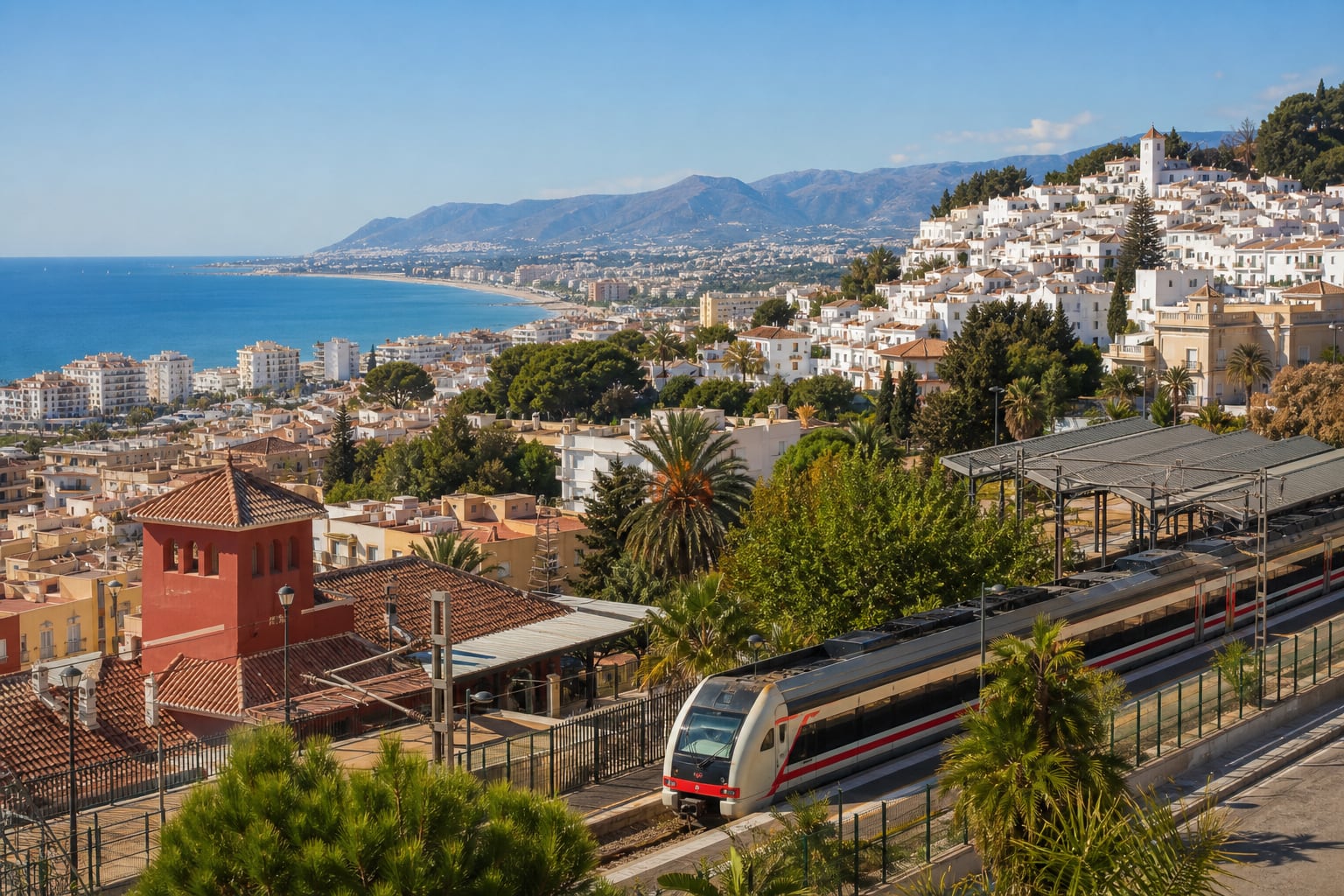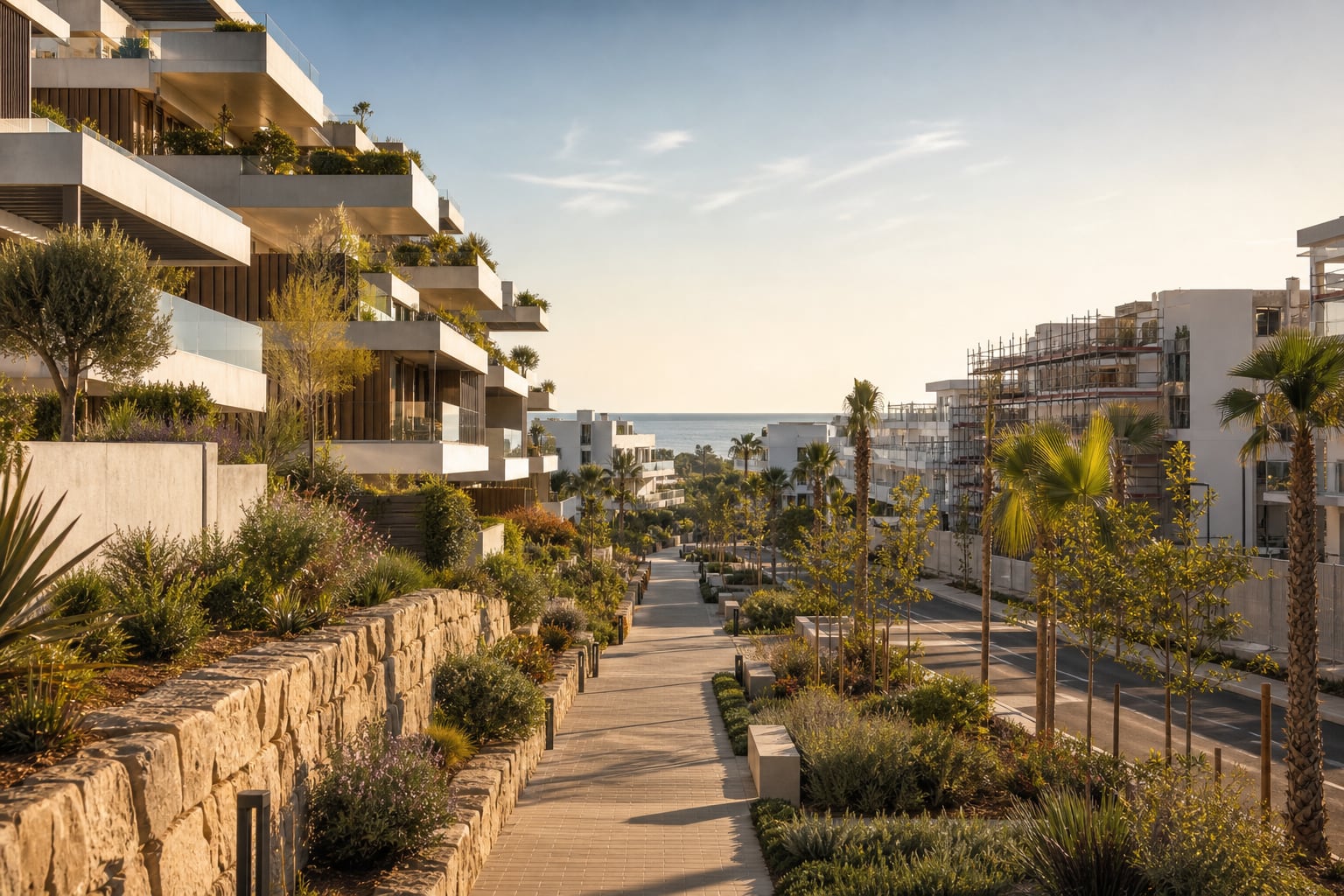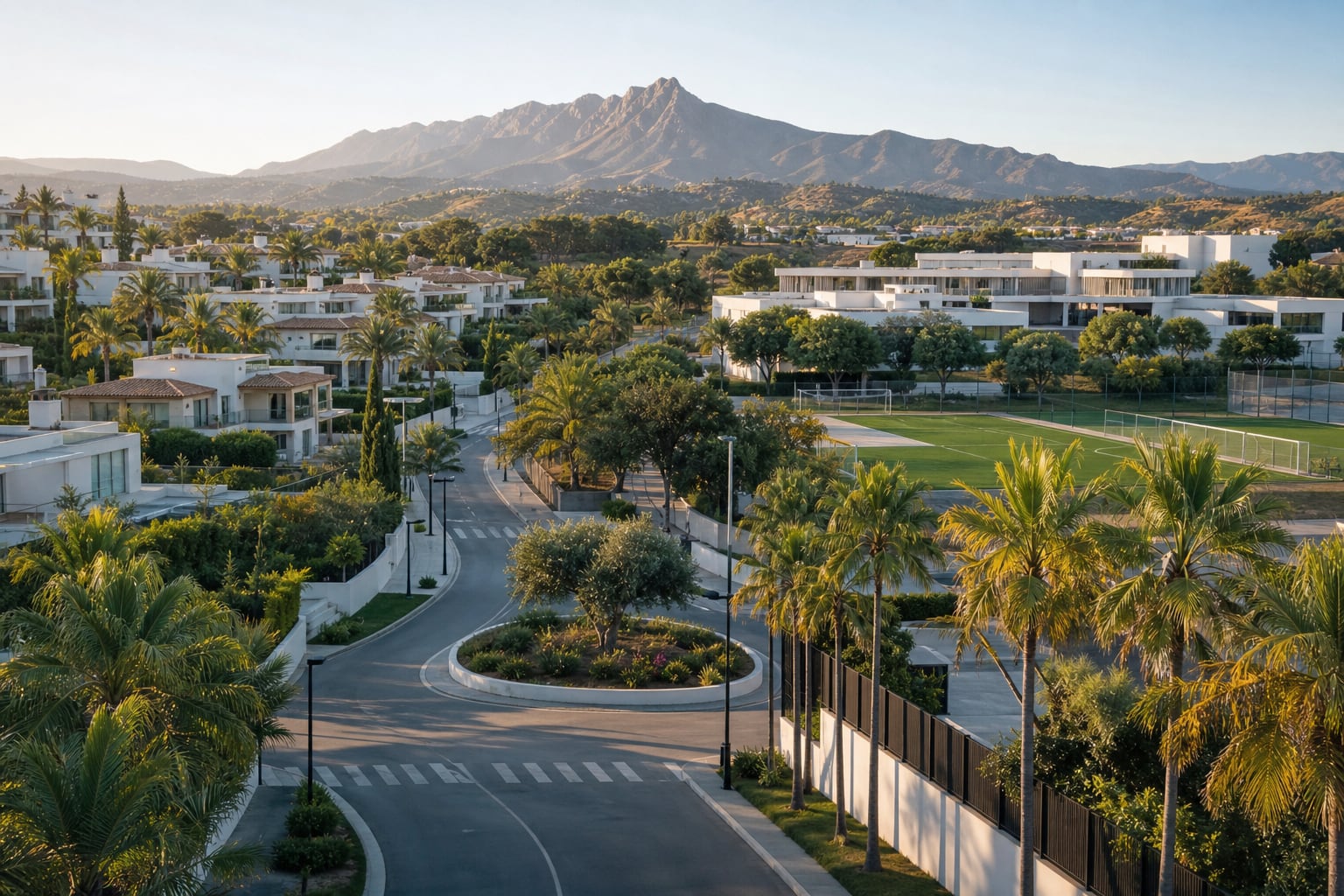
Il existe plus d'une douzaine d'écoles britanniques et internationales regroupées entre San Pedro de Alcántara et la limite est de Marbella, et pour la plupart des familles qui s'installent sur la Costa del Sol, le choix entre elles est la première véritable décision du déménagement. Le plus souvent, il est réglé avant qu’une seule propriété ait été visitée. Le raisonnement est purement arithmétique : un foyer peut être changé en un an ou deux, mais un enfant placé en 4e année dans une école particulière y reste, en pratique. L'école fixe la géographie quotidienne de la vie familiale et la recherche immobilière doit s'adapter à elle plutôt que l'inverse.
Cela inverse l’ordre attendu par la plupart des acheteurs. Ils arrivent en imaginant qu'ils choisiront un quartier – le Golden Mile, Nueva Andalucía, le New Golden Mile – et trouveront ensuite une école à proximité. En pratique, la séquence se déroule dans l’autre sens. Une fois qu'une famille a une place confirmée à Collège Aloha ou Laude San Pédro, la carte des propriétés viables se limite à tout ce qui se trouve dans un trajet matinal sain. Comprendre quelles écoles sont situées, où et combien chacune coûte, n'est donc pas une question secondaire pour un acheteur familial sur la Costa del Sol. C'est la question qui façonne le budget, la liste restreinte et le code postal.
Pourquoi la décision scolaire précède la décision relative à la propriété
La région de Marbella attire des familles internationales depuis des décennies, et une part importante des acheteurs chaque année ne sont pas des acheteurs de maisons de vacances mais des ménages en pleine délocalisation – un ou les deux parents travaillant à distance ou dirigeant une entreprise, des enfants en âge scolaire, le tout étant prévu vers le début du mois de septembre. Pour ce groupe, la décision de scolariser a un poids que la vue sur la mer n’aura jamais. Les qualifications doivent voyager. Un enfant peut passer des IGCSE sur la Costa del Sol et un examen d'entrée à l'université dans un autre pays, le programme proposé n'est donc pas un détail à régler plus tard.
C'est là que le Association nationale des écoles britanniques en Espagne importe. Fondée en 1978 et affiliée au British Council, la NABSS accrédite les écoles britanniques opérant en Espagne – au total plus de quatre-vingts d'entre elles, enseignant dans la région de 49 000 enfants. L'accréditation indique qu'une école est véritablement autorisée à dispenser le programme britannique et que ses IGCSE et A-Levels seront reconnus, y compris pour l'entrée dans les universités espagnoles. Pour une famille qui déménage, un badge NABSS est un raccourci pour la continuité : un enfant peut entrer dans le système depuis une école au Royaume-Uni, ou en sortir vers une université presque n'importe où, sans que ses qualifications soient remises en question.
Le timing comprime alors la décision. L'année universitaire britannique sur la côte s'étend de début septembre à fin juin, en trois trimestres, et les promotions les plus recherchées se remplissent tôt. Il est systématiquement conseillé aux familles visant une place en septembre de postuler avant janvier ; Les années d'admission populaire dans les écoles établies peuvent être complètes bien avant cela. Un acheteur qui arrive au printemps avec l’espoir de choisir une école, puis une maison, puis d’emménager pour le nouveau trimestre, est souvent déjà trop tard pour faire un premier choix. La séquence réaliste consiste à sécuriser d’abord le lieu de l’école et à le traiter comme le point fixe autour duquel tout le reste est construit.
Et le lieu de l’école est véritablement en train de se réparer, car il n’y a pas ici de culture du bus scolaire qui efface tranquillement la distance. La plupart des familles font la course elles-mêmes, deux fois par jour, cinq jours par semaine. La route côtière A-7 entre San Pedro et Marbella avance lentement aux heures de pointe du matin, et un trajet qui ressemble à quinze minutes sur une carte peut prendre beaucoup plus de temps à huit heures et quart un matin d'octobre. En d’autres termes, le bassin versant n’est pas une abstraction. C’est la différence entre un début de journée calme et une journée chargée, répétée près de deux cents fois par an.
Un littoral cartographié par bassin versant
Courez d’ouest en est et la carte commence à avoir un sens. Collège Aloha, dans l'urbanisation El Ángel de Nueva Andalucía, fait partie des écoles britanniques les plus anciennes de la côte - une organisation à but non lucratif qui accueille des élèves âgés de trois à dix-huit ans, suivant le programme national anglais jusqu'à l'IGCSE et offrant ensuite un choix entre les A-Levels et le diplôme du baccalauréat international en sixième année. Il prépare également les élèves aux diplômes espagnols aux côtés des diplômes britanniques, un véritable avantage pour les familles qui ne savent pas combien de temps elles resteront finalement. Aloha ancre la demande familiale dans toute la Golf Valley derrière Puerto Banús.
Plus près de la ville de Marbella, École internationale des cygnes est réparti sur deux campus : un site primaire à Marbella et une école secondaire spécialement construite à flanc de colline à Sierra Blanca, au-dessus du Golden Mile. Swans gère un programme véritablement bilingue britannique et espagnol et conduit les élèves jusqu'au diplôme de l'IB, où il est l'un des plus performants d'Espagne depuis plusieurs années. Son bassin versant naturel est le centre de Marbella, le Golden Mile et la Sierra Blanca elle-même – le cœur établi et hautement reconnu de la ville.
À l'est de la ville, dans l'urbanisation Ricmar sur l'A-7 en direction de Las Chapas, le Collège international anglais existe depuis 1982. Il suit le programme britannique Pearson Edexcel IGCSE et International A-Levels, maintient la taille des classes à un maximum d'une vingtaine et envoie un flux constant de sortants vers les principales universités du Royaume-Uni et au-delà. L'EIC attire les familles vers l'est de Marbella – Elviria, Las Chapas, Los Monteros – une partie de la côte plus calme, plus verte et plus résidentielle que le côté de Banús.
West again, Collège international Laude San Pedro se trouve sur l'Avenida de la Coruña, au centre de San Pedro de Alcántara. Faisant partie de l'International Schools Partnership, il gère le programme national britannique à partir de trois ans et permet aux élèves d'intégrer le système espagnol - ESO et Bachillerato - à partir de douze ans environ, ce qui convient aux familles envisageant un avenir à plus long terme en Espagne. Un peu plus à l'ouest, dans l'urbanisation El Paraíso sur le New Golden Mile, le École internationale d'Estepona est la principale école primaire et crèche britannique de la côte d'Estepona depuis 2004.
Cinq écoles, cinq tronçons de côte distincts. Le modèle n’est pas accidentel. Chaque école a, au fil des décennies, attiré la demande de logements familiaux dans son orbite, et cette demande a à son tour façonné ce qui est construit à proximité. Un acheteur qui sait quelle école ses enfants fréquenteront sait déjà, en termes approximatifs, dans quel tiers de la région de Marbella ils vivront – et c'est un point de départ plus utile que n'importe quelle recherche sur un portail.
What the school run actually looks like
Prenez Aloha College comme exemple concret. En pratique, une famille ayant un logement là-bas regardera plus attentivement Nueva Andalucía – le réseau d’urbanisations derrière Puerto Banús, traversé par l’Avenida Valle Inclán, où l’école se trouve à seulement quelques minutes de la plupart des portes d’entrée. C'est une vie pratique : école, supermarché, club de padel et terrain de golf dans un court rayon. It is also not cheap. Prix moyen demandés à Nueva Andalucía 6 552 € le mètre carré en avril 2026, up a striking 8.44% on the year before, selon Indomio's market data, avec une fourchette allant d'environ 4 580 € à 6 900 € selon la rue, l'urbanisation et la vue.
Une famille à Laude San Pedro a un budget plus facile. San Pedro de Alcántara est une ville active avec un véritable centre, une longue plage et une promenade redessinée, et les prix demandés y sont bien inférieurs à ceux de Nueva Andalucía - le même prix permet d'acheter sensiblement plus d'espace au sol, souvent à distance de marche de l'école elle-même. Le commerce est axé sur le caractère plutôt que sur le polonais : San Pedro ressemble à une ville espagnole qui abrite une grande communauté internationale, plutôt qu'à une station balnéaire construite pour une seule. Pour de nombreuses familles, c’est un attrait et non un compromis. Our account of à quoi ressemble une semaine ordinaire à Nueva Andalucía expose le contraste en termes quotidiens.
La même logique se joue aux deux extrémités de la côte. Autour de l'école internationale d'Estepona, le tronçon El Paraíso et New Golden Mile offre un parc plus récent de style complexe et, en règle générale, un meilleur rapport qualité-prix au mètre carré que le centre de Marbella. Autour de l'EIC, des adresses de l'est de Marbella telles qu'Elviria et Las Chapas échangent un peu de buzz en bord de mer contre de l'espace, de la verdure et un rythme plus calme. Dans chaque cas, l'école est le centre de gravité, et la décision en matière de propriété est en réalité une décision quant à laquelle de ces versions de la vie côtière une famille souhaite réellement.
Ce que le bassin versant achète également, c'est la forme de l'après-midi. L'école finit et la vie en plein air de la côte prend le dessus : courts de padel à Nueva Andalucía, académies de golf le long de la Golf Valley, voile et tennis à proximité des marinas, plage à portée de main la majeure partie de l'année. Les soins de santé privés sont à portée de main partout où une famille atterrit : Hospiten et Quirónsalud gèrent tous deux des hôpitaux dans la région. La journée d’école se termine par une version de l’enfance qui constitue, pour de nombreux parents, tout l’intérêt du déménagement.
La question des frais que les acheteurs ont tendance à sous-estimer
Les frais de scolarité constituent le coût de fonctionnement que la plupart des acheteurs ne parviennent pas à modéliser correctement. Il ne s’agit pas d’un coût d’achat unique ; il s'agit d'un coût annuel qui tombe chaque année où les enfants sont inscrits, et sur la Costa del Sol, ils sont importants. À l’Aloha College, les frais journaliers grimpent largement quelque part €7,000 a year dans les premières années à l'ordre de 17 000 € en sixième, avec les années IGCSE entre les deux - l'école publie les cours primaires et secondaires actuels fee schedules chaque année, et ils valent la peine d’être lus ligne par ligne. Les écoles primaires sont moins bien placées : les frais de scolarité primaires publiés par l'International School Estepona se situent entre 7 500 et 8 700 € par an.
Multipliez ces chiffres par le nombre d’enfants et le nombre d’années, et le total commence à rivaliser avec les autres coûts récurrents de possession. Une famille avec deux enfants scolarisés dans le secondaire peut payer chaque année plus en frais de scolarité qu'en taxe d'habitation IBI, charges communautaires et assurance habitation réunies. C'est de l'argent qui devrait figurer dans le budget de déménagement dès la première conversation, et non être découvert par la suite - et si l'achat est financé, le calendrier d'un prêt et un début en septembre doivent être alignés tôt, un point que notre guide explique. Hypothèques espagnoles pour non-résidents expose en détail. Certaines écoles assouplissent le calendrier – Laude San Pedro, par exemple, offre une réduction aux familles qui règlent les frais de scolarité de l'année en une seule fois – mais l'ordre de grandeur ne change pas.
Deux remarques pratiques méritent d’être rappelées. Premièrement, les barèmes de frais changent chaque année et la plupart des écoles citent les chiffres actuels uniquement sur demande ou dans un barème téléchargeable. Ainsi, tout chiffre datant de plus d'un an doit être traité à titre indicatif - confirmez toujours directement auprès de l'école. Deuxièmement, les frais couvrent généralement les frais de scolarité et le matériel de base, mais pas nécessairement les déjeuners, le transport, les voyages ou les uniformes, qui s'additionnent sur une année. Une famille qui envisage un déménagement devrait demander à chaque école le coût annuel tout compris par enfant, et non le seul montant des frais de scolarité.
Une année scolaire qui se déroule en grande partie en extérieur
Il y a une raison pour laquelle les familles continuent de déménager malgré les frais. La Costa del Sol offre une version de l'année scolaire vraiment difficile à trouver en Europe du Nord. Avec environ 320 jours de soleil les températures annuelles et les températures diurnes hivernales qui se situent généralement autour de 16°C – des chiffres cohérents avec les moyennes à long terme publiées par l'AEMET, l'agence météorologique nationale espagnole – l'après-midi en plein air n'est pas un luxe d'été mais une quasi-constante. Les rencontres sportives sont rarement annulées en raison de la météo. La promenade jusqu'à un café après le retrait s'effectue en janvier à peu près aussi facilement qu'en juin. Le climat est régulièrement comparé à celui de la Californie du Sud, et pour la vie quotidienne d'un enfant, la comparaison tient bien.
L’autre chose que cette décision achète, c’est la communauté. Les écoles internationales sur la côte fonctionnent comme des centres sociaux pour les familles qui les entourent : la porte de l'école est l'endroit où les parents nouvellement arrivés trouvent leur place, où se font les dîners, les partenariats padel et les projets d'été partagés. Pour un ménage qui vient de quitter une vie établie ailleurs, cela compte plus que ne le suggère n’importe quelle brochure immobilière. C'est aussi la raison pour laquelle les familles qui déménagent si souvent pour l'école y restent : l'école devient tranquillement le centre de toute une vie, et non seulement un lieu d'éducation.
Pour un acheteur, la conclusion est simple. Les écoles internationales entre Estepona et l’est de Marbella ne sont pas une note de bas de page dans une recherche de propriété – elles constituent le cadre sur lequel elle doit être construite. Décidez de l'école et de la carte viable de Maisons dans la région de Marbella se résume à quelque chose de gérable : un budget, une poignée d’urbanisations, un trajet matinal réaliste. La décision la plus difficile en matière de déménagement, prise en premier, s'avère rendre plus facile chaque décision ultérieure.
Si vous envisagez de déménager pendant l'année scolaire, Domosmar peut vous aider à établir une liste restreinte en fonction de la zone scolaire de votre choix, avec une vision franche du coût de chaque zone et de la façon dont elle se vit en dehors de la saison estivale. Parcourir les maisons actuelles sur la Costa del Sol ou parlez à notre équipe pour discuter des domaines, du calendrier et des chiffres avant que la prochaine rentrée de septembre ne soit remplie.