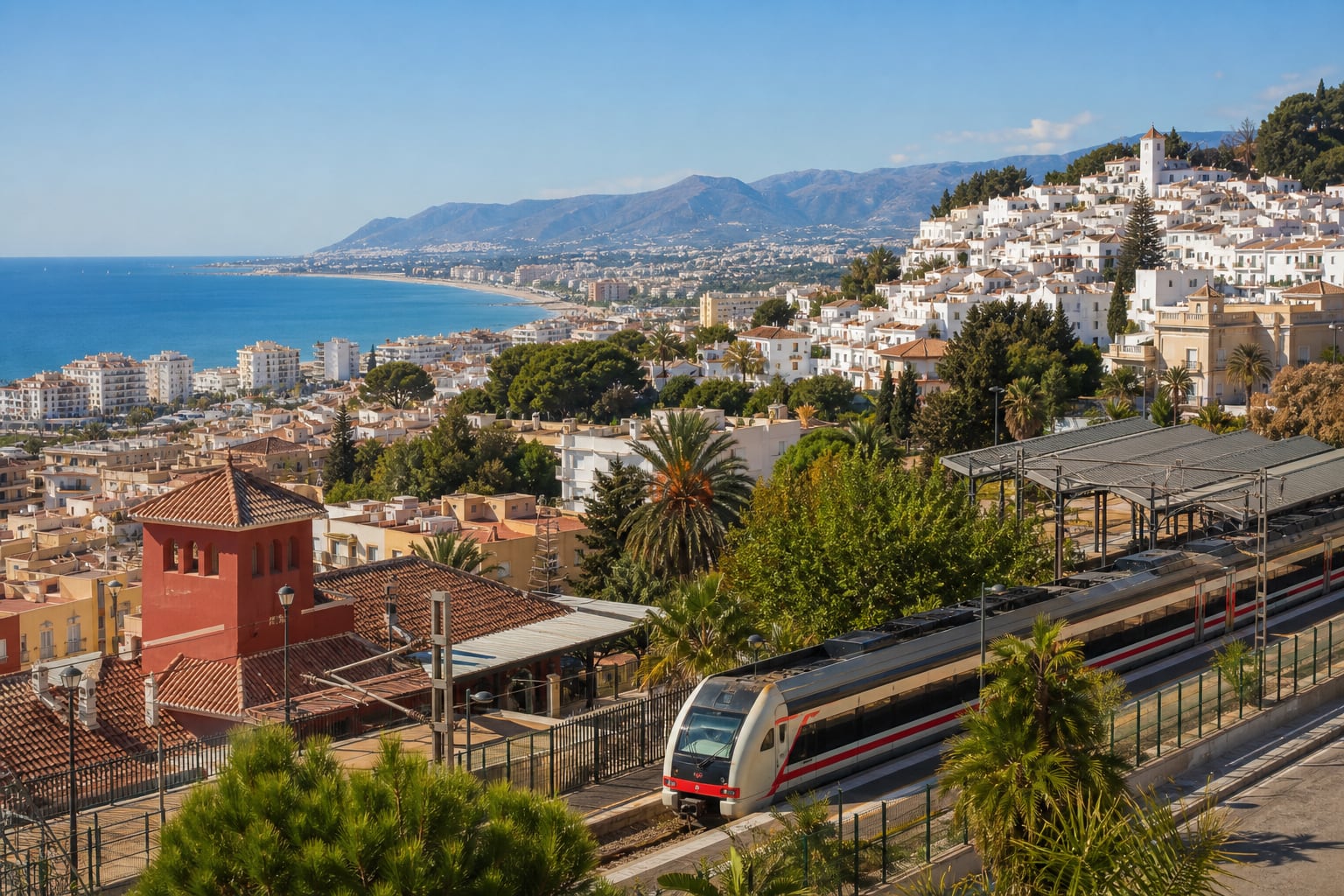
Plus de soixante-dix peintures murales monumentales recouvrent les pignons des immeubles d'Estepona – un projet artistique municipal lancé en 2012 qui a transformé une ville ouvrière banale de l'ouest de la Costa del Sol en l'un des endroits les plus photographiés de la province de Malaga. Les peintures murales sont la partie la plus facile à remarquer. Ce qui prend plus de temps à s'enregistrer, et qui compte bien plus pour quiconque évalue une maison ici, c'est la ville en dessous : piétonne, fleurie, habitée douze mois par an, et toujours bien en dessous de Marbella, à vingt-cinq minutes à l'est.
Pendant deux décennies, Estepona a été le lieu de passage des acheteurs pour se rendre dans un endroit plus célèbre. Cela s’est discrètement inversé. La ville croît désormais plus vite que presque n'importe quel autre endroit de cette côte, son vieux quartier est devenu un modèle étudié par d'autres conseils andalous, et un type particulier d'acheteur – celui qui souhaite vivre quelque part plutôt que de le visiter pendant trois semaines en août – commence de plus en plus ses recherches ici. Voici à quoi ressemble réellement cette vie et ce qu’elle coûte.
Une ville devenue piétonne
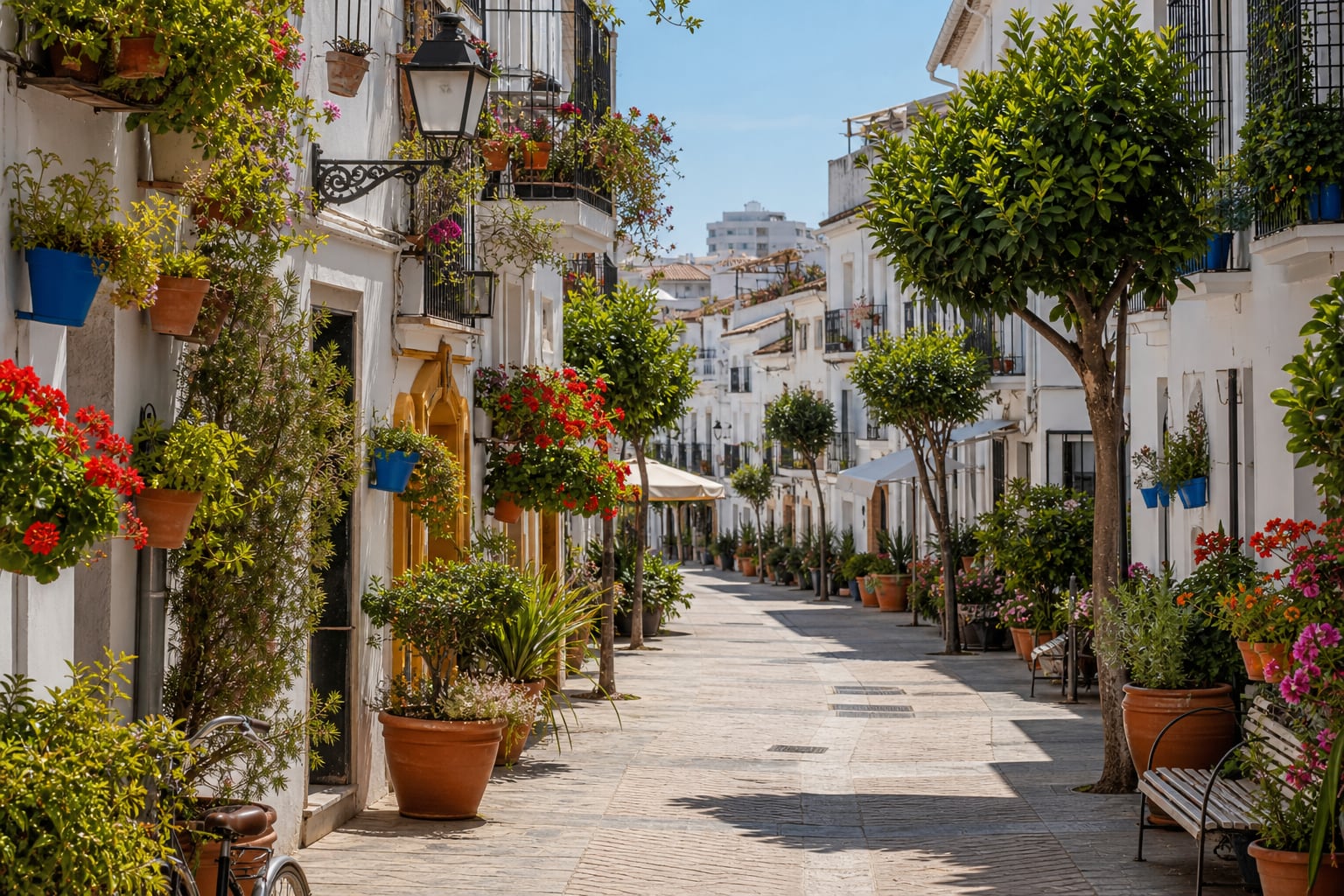
La décision déterminante dans l’Estepona moderne n’a pas été une décision glamour. Au cours des quinze dernières années, la municipalité a creusé les rues du vieux quartier, enterré les services, refait le revêtement en pierre pâle et fermé la majeure partie du casco antiguo à la circulation. Le résultat est une grille de voies où le bruit le plus fort est généralement celui d'un balai ou d'une machine à café. Des pots en terre cuite – des milliers d'entre eux, replantés selon les saisons – grimpent sur les murs blancs de la Calle Caridad, de la Calle Terraza et des rues alentour. Place de las Flores, charnière sociale de la ville, où l'office de tourisme distribue gratuitement le plan et l'application téléphonique du parcours des peintures murales.
Ce sentier mérite d’être compris comme plus qu’une simple séance de photos. Lancé en 2012 en tant que programme municipal soutenu, il compte désormais plus de soixante-dix œuvres de grande envergure peint aux extrémités des immeubles résidentiels ordinaires, et il est encore ajouté la plupart des années ; tu peux suivre l'itinéraire complet à pied dans quelques heures. Le point important, pour un résident, est ce que cela signale : une ville qui a dépensé de manière cohérente et délibérée pour son apparence et son fonctionnement au niveau de la rue, plutôt que de laisser son centre disparaître derrière le front de mer.
L'emblème le plus clair de ces dépenses se trouve à deux minutes de la Plaza de las Flores. Le Orquidaire — La maison des orchidées et le parc botanique d'Estepona, ouverts en 2015 et ses jardins nommés plus tard en l'honneur de la baronne Carmen Thyssen — sont construits autour de trois dômes de verre, le plus haut s'élevant à environ 30 mètres au-dessus d'une cascade intérieure et tient à peu près 5 000 plantes réparties sur quelque 1 300 espèces dans ce qui est considéré comme la plus grande collection publique d'orchidées d'Europe. C’est le genre d’équipement civique ambitieux qu’une ville construit lorsqu’elle a décidé d’y vivre, et elle se situe au centre plutôt qu’à l’extérieur d’une rocade.
Le tissu en cours de restauration est véritablement ancien. Les maisons casa mata d'Estepona – d'anciennes maisons de pêcheurs basses et au toit plat, construites en rangées serrées – sont le genre de biens qui, dans le Casco Antiguo de Marbella, se vendent à un prix très élevé. Ici, ils sont toujours achetés et transformés en maisons individuelles de charme. Pour avoir une idée de la façon dont la vieille ville d'Estepona se compare au centre historique de Marbella en tant que lieu de vie réel, le guide Domosmar de une semaine au Casco Antiguo de Marbella est un contrepoint utile.
Sur quoi se déroule réellement la semaine
La vie quotidienne à Estepona s'organise autour d'un petit nombre de points fixes. Le plus gros est le Marché de rue du mercredi — plus de 250 stands de produits, vêtements et articles ménagers qui envahissent les rues autour de la Calle Eslovaquia de 9h30 à 14h00 environ. Le dimanche, le Marché du Port longe le port de plaisance de 9h à 14h, les bateaux d'un côté et le large de l'autre. Ce n’est pas non plus un décor touristique ; c'est là qu'une grande partie de la ville fait encore ses courses hebdomadaires.
Le port de pêche en activité ancre l'autre bout de la ville et l'autre bout de la semaine. Les prises sont débarquées quotidiennement et transitent par la lonja et dans les cuisines de la vieille ville en quelques heures – c'est la raison pour laquelle une institution sans fioritures comme La Escollera, au pied du marché aux poissons, nourrit les habitants depuis des décennies avec tout ce qui arrive ce matin-là. La scène culinaire est suffisamment profonde pour mériter son propre traitement ; l'article de Domosmar sur Les restaurants de la vieille ville d'Estepona et les vins cultivés au-dessus de la côte le couvre en détail.
Les plages font partie de la texture hebdomadaire plutôt que d'une ressource uniquement estivale. Playa de la Rada, la longue plage de la ville, s'étend juste en dessous du centre, et le drapeau bleu, plus calme, s'étend à l'est et à l'ouest, offrant aux résidents un véritable choix à quelques minutes en voiture. La marina ajoute des vendeurs, des écoles de plongée et une rangée de tables simples au bord de l'eau ; la combinaison d'un port en activité, d'un port de loisirs et d'une plage urbaine dans un seul endroit compact explique en partie pourquoi la vie quotidienne ici semble plus remplie que ne le suggèrent les seuls chiffres de la population.
Le chemin du bord de mer le relie. Le tronçon d'Estepona du Sentier Litoral la promenade couvre désormais la grande majorité du territoire de la municipalité 23 kilomètres de littoral, avec seulement trois courtes sections à connecter. Une fois terminé, il offrira aux résidents un itinéraire ininterrompu de marche, de course et de vélo tout au long du front de mer et, à terme, jusqu'à Marbella. Un matin normal, on y retrouve le même mélange qui remplit le marché : des retraités d'une douzaine de pays, des parents avec des poussettes et des familles espagnoles qui vivent ici depuis des générations.
L'écart de prix qui encadre la décision
La principale raison pour laquelle de nombreux acheteurs atterrissent à Estepona plutôt qu’à Marbella est arithmétique. Les prix demandés à Estepona s'élevaient à environ 4 200 € le mètre carré au début de 2026 sur l'indice Idealista - et, de manière révélatrice, a augmenté d'environ 14% sur l'année, parmi les croissances les plus rapides de la côte. Marbella, en comparaison, siégeait à 5 596 € le mètre carré en avril 2026, avec le Golden Mile (Nagüeles–Milla de Oro) à 6 872 € et même la vieille ville de Marbella à 5 689 €. Le même budget permet simplement d'acheter plus de maisons et plus d'espace extérieur du côté d'Estepona à San Pedro.
Cette valeur n'est plus un secret, c'est pourquoi la ville ne cesse de se remplir. La population enregistrée d'Estepona a été atteinte 76 975 début 2025, tiré d'environ 120 nationalités, après avoir ajouté environ 14 % depuis 2019 – plus rapidement que l’ensemble de la province. La répartition des acheteurs dans le centre est orientée vers les personnes qui souhaitent une résidence principale ou quasi-principale : des Européens du Nord échangeant un appartement de vacances contre un endroit où passer l'hiver, des travailleurs à distance et un flux constant d'acheteurs espagnols de Malaga et de l'intérieur du pays.
Concrètement, un acheteur disposant d'environ 600 000 € qui chercherait un appartement de deux chambres dans le centre de Marbella peut raisonnablement envisager un plus grand trois chambres avec une véritable terrasse à Estepona, ou une maison de ville près de la vieille ville – une différence qui s'aggrave lorsque la maison est habitée à temps plein plutôt que louée pour quelques semaines. Cela signifie également que la ville dispose d'une plus grande marge de manœuvre : un marché toujours en croissance à deux chiffres, sur une base inférieure, avec l'arrivée des infrastructures plutôt que déjà intégrées dans les prix.
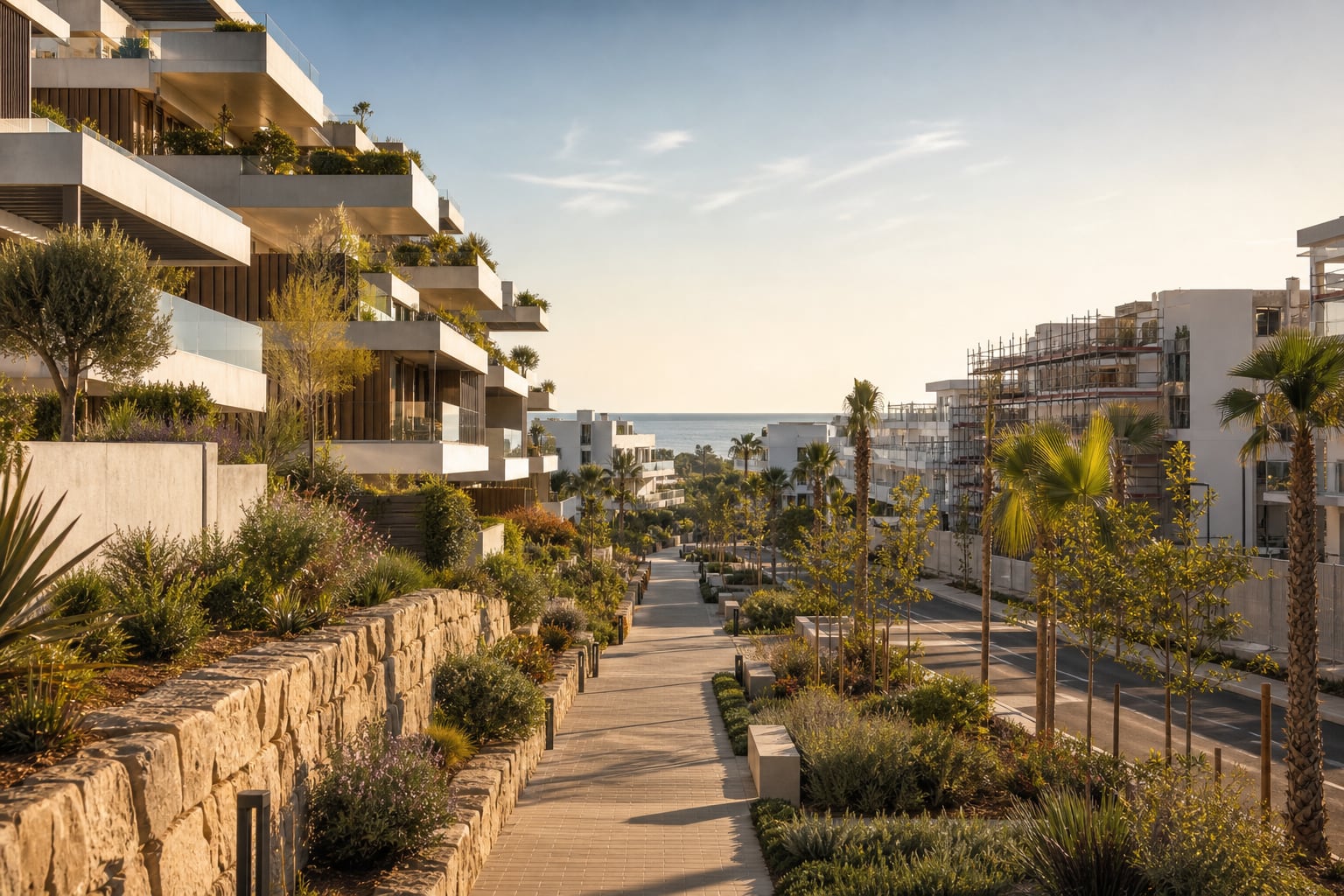
Il y a en réalité deux Esteponas à peser pour un acheteur. La vieille ville et les rues immédiatement derrière offrent une vie accessible à pied, approvisionnée par le marché et à moindre coût dans un parc de caractère ; le nouveau couloir de villégiature à l’ouest de Marbella – le soi-disant New Golden Mile – s’étend vers des produits de nouvelle construction plus vitreux et plus chers dans le haut de gamme. Chez Domosmar annonces actuelles à Estepona couvrent les deux extrémités, des appartements compacts aux villas, ce qui est le moyen le plus simple de voir où atterrit réellement un budget donné aujourd'hui.
L'infrastructure qui transforme les vacances en maison
Ce qui différencie une ville dans laquelle vous pouvez passer vos vacances de celle dans laquelle vous pouvez vivre, ce sont les infrastructures essentielles et ennuyeuses – et Estepona a passé les dernières années à les acquérir. En matière de santé, la ville est exceptionnellement bien couverte pour sa taille : le secteur privé Hôtel Estepona, sur la N-340, a réalisé un parcours d'environ Agrandissement de 16 M€ en 2025 cela l'a porté à environ 59 lits avec un service d'urgence élargi et une unité pédiatrique dédiée, tandis que l'hôpital public de Alta Resolución, ouvert depuis 2021, propose des urgences, des diagnostics et des cliniques ambulatoires à l'intérieur de la ville plutôt qu'à distance.
Les familles disposent du même groupe d'écoles britanniques et internationales qui dessert la Costa del Sol occidentale, à quelques minutes en voiture de San Pedro et de Marbella, une des raisons pour lesquelles la population d'âge scolaire continue d'augmenter toute l'année. Et la connectivité qui fait fonctionner l’ensemble de la proposition est meilleure que ne le suggère la réputation tranquille de la ville : Marbella est à environ 25 minutes à l'est, Puerto Banús à environ 20 kilomètres, l'aéroport de Malaga à environ 50 minutes par l'AP-7 et l'aéroport de Gibraltar à environ 40 minutes à l'ouest, le golf et la marina de Sotogrande étant encore plus proches. Vous pouvez mener une vie véritablement tranquille ici tout en prenant un vol international avant le déjeuner.
Ces pièces comptent le plus dans leur combinaison. Un centre plat et piétonnier avec les commerces, le marché, le centre de santé et le front de mer tous accessibles à pied est une ville qui fonctionne aussi bien à soixante-dix qu'à quarante ans - une des raisons pour lesquelles Estepona garde ses résidents étrangers toute l'année au lieu de les voir revenir vers le nord chaque hiver. Les courses qui décident tranquillement si une maison à l’étranger est réellement utilisable – une pharmacie, une poissonnerie, un médecin, un bon café – se font toutes à pied ici, pas au bout d’un trajet en voiture.
Le climat fait le reste. Cette partie de la côte enregistre bien plus 300 jours de soleil par an sur les moyennes à long terme d'AEMET, avec des températures diurnes hivernales qui descendent rarement au-delà du milieu de l'adolescence - la raison pour laquelle le paseo et le marché restent occupés en janvier, alors qu'une grande partie de l'Europe du Sud s'est retirée à l'intérieur. Pour la plupart des propriétaires, c'est la différence pratique entre une propriété utilisée trois semaines par an et une propriété utilisée la plupart des week-ends, voire la totalité.
À qui s’adresse Estepona
Estepona ne conviendra pas à tout le monde. Les acheteurs dont l'idée de la Costa del Sol est le théâtre de supercars et de champagne de Puerto Banús trouveront la vieille ville trop calme – même si, utilement, Banús n'est qu'à vingt minutes lorsque cette ambiance se présente. Ce qu'Estepona offre à la place est plus rare et pour certains acheteurs beaucoup plus durable : une véritable ville andalouse en activité qui possède un beau centre accessible à pied et bien financé, une communauté internationale profonde, des infrastructures sérieuses et des prix qui laissent encore de la place avant d'atteindre celui de Marbella.
Ce sont précisément les conditions qui transforment une résidence secondaire en une première – un endroit auquel vous arrêtez de visiter et auquel vous commencez à appartenir. Si Estepona ressemble à la version de la vie sur la Costa del Sol que vous recherchez réellement, vous pouvez parcourez les maisons actuelles de Domosmar à Estepona ou parlez à l'équipe Domosmar sur les rues et les développements qui correspondent à la façon dont vous avez l'intention de vivre – à temps plein, de façon saisonnière ou quelque part entre les deux.