Marbella has no railway station. Neither does Estepona, Benahavís, or the white hill-village of Mijas. For all the motorway upgrades and the private-jet traffic of the western Costa del Sol, the train simply does not reach the coast's most famous addresses — the Renfe Cercanías C1 line strikes west out of Málaga, pauses at the airport, runs through Torremolinos and Benalmádena, and gives out a few stops later at Fuengirola. Carry on west toward Marbella and the track disappears for good. That single fact explains more about Benalmádena — its character, its buyers, and its property market — than any brochure photograph of the marina ever will.
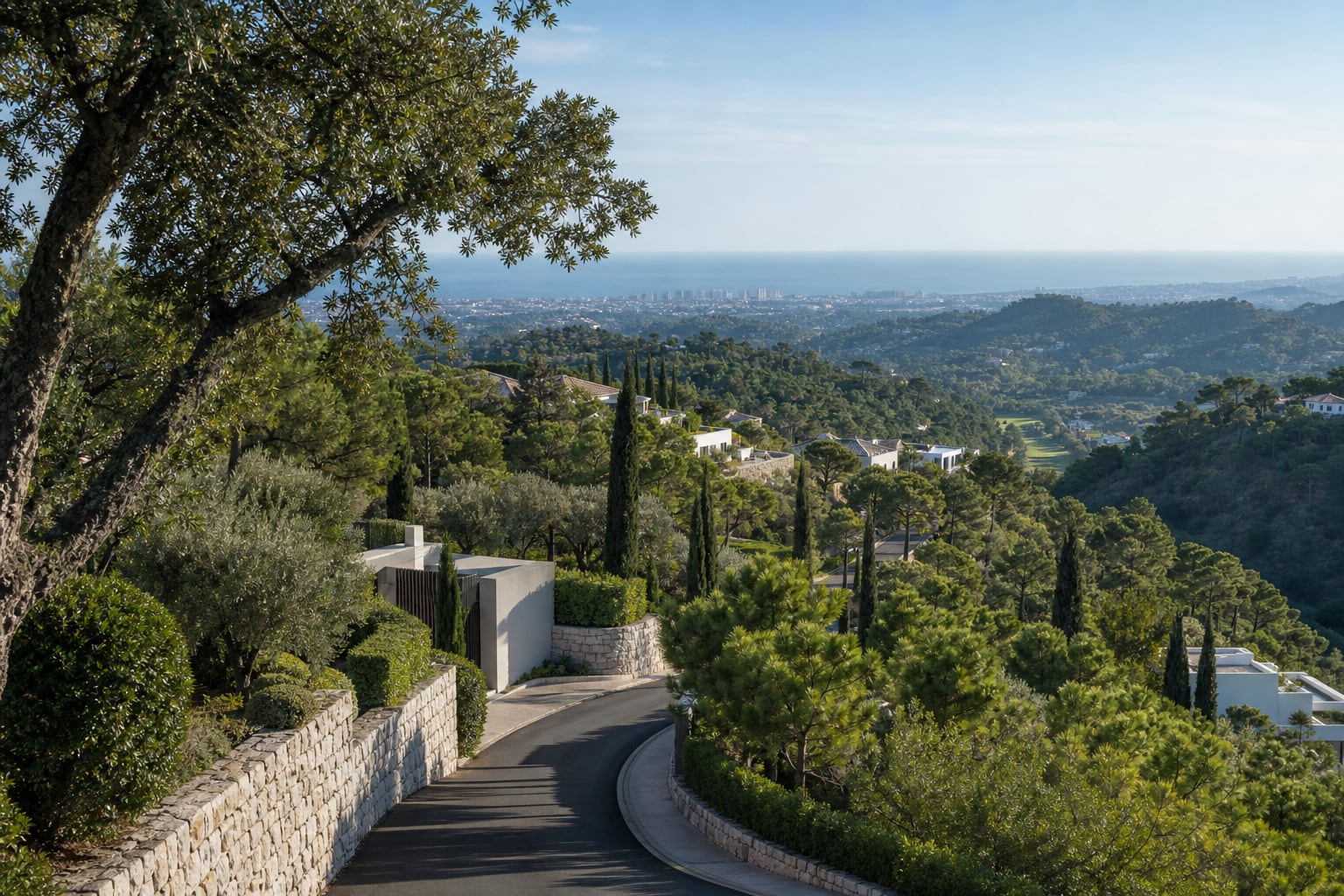
Benalmádena sits on the eastern, Málaga-facing half of the Costa del Sol, roughly 12 kilometres from the airport and a world away in feel from the gated hills above Marbella. It is busier, denser, more Spanish, and considerably cheaper: apartments here average €4,278 per square metre in 2026, against the €5,000–€8,000 routinely quoted along the Golden Mile and Estepona's New Golden Mile. For a particular kind of buyer — one who values walkability, year-round life, and a direct train to the terminal over the cachet of a Marbella postcode — that combination is the whole argument. This is a guide to what buying here actually means in 2026: the three distinct towns hiding under one name, the numbers behind them, and the life the place supports once the summer crowds thin out.
Three towns wearing one name
The first thing to understand about Benalmádena is that it is not one place but three, and the town itself says so. The municipality divides into Benalmádena Pueblo, the whitewashed historic village pinned to the hillside about six kilometres inland and some 200 metres above the sea; Arroyo de la Miel, the dense, lively commercial heart where most residents actually live and where the train station sits; and Benalmádena Costa, the hotel-and-marina strip along the seafront. The local tourist board markets them openly as the "three Benalmádenas", and the distinction matters far more to a buyer than it first appears.
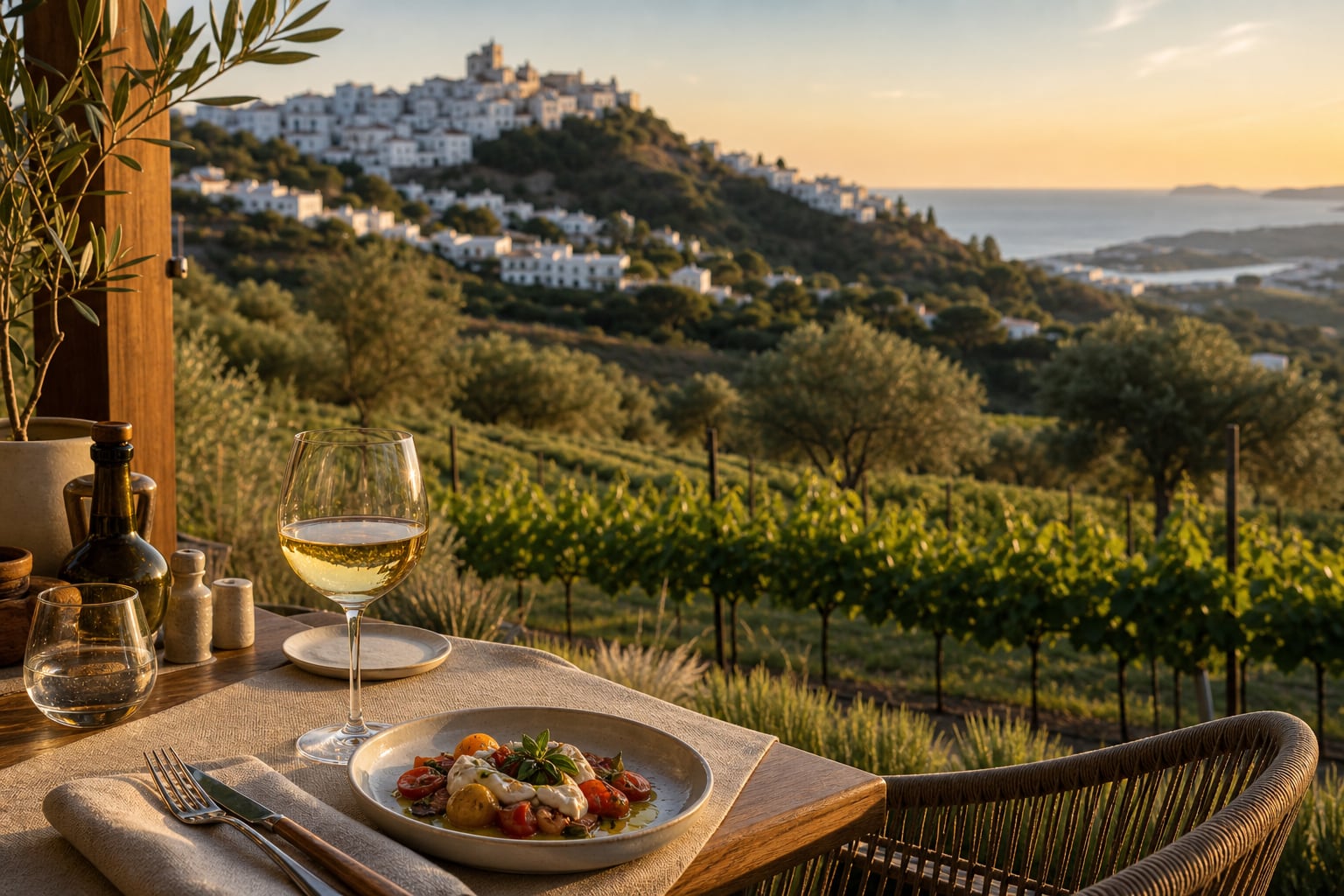
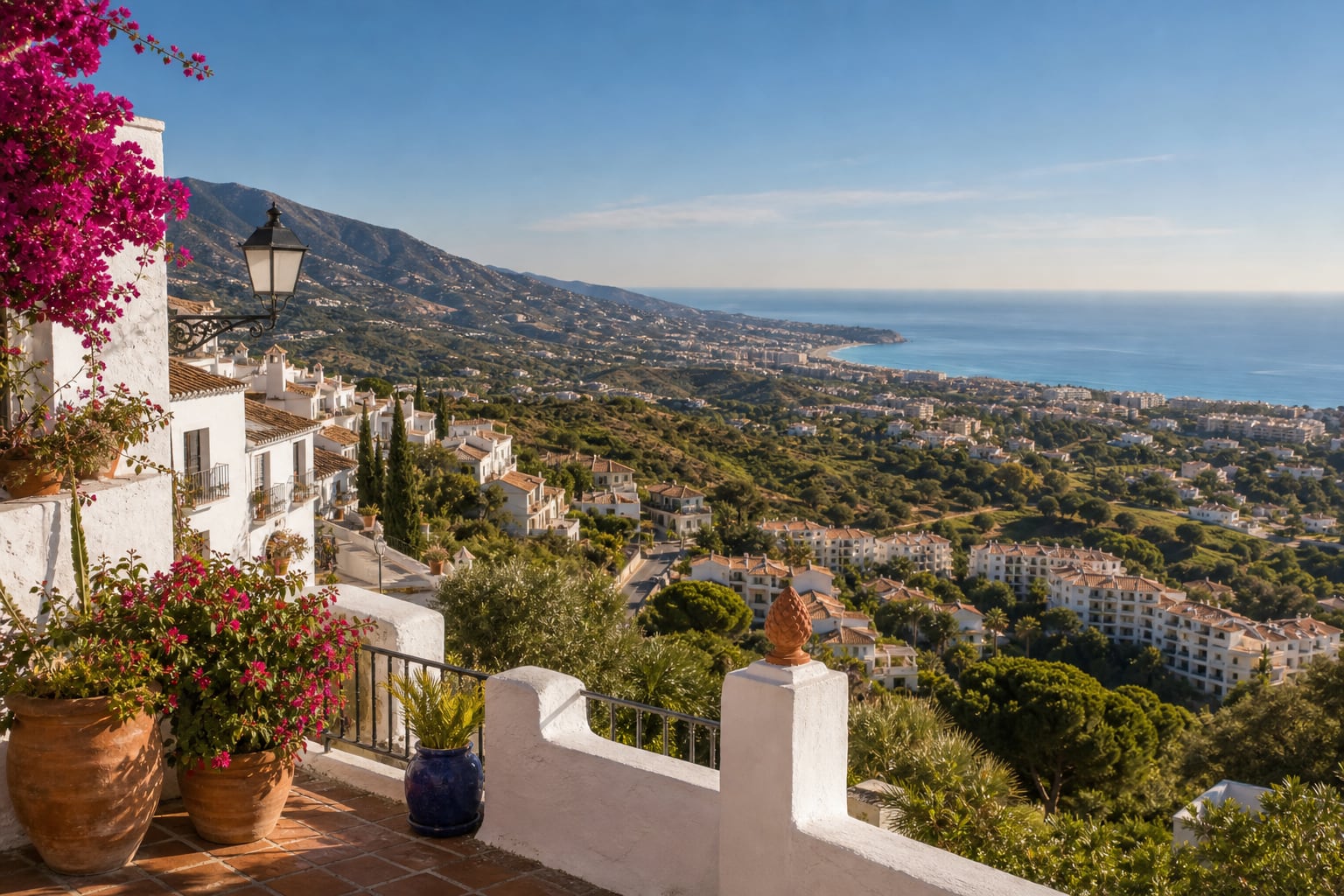
The Pueblo is the Andalusian postcard: narrow lanes, terracotta pots, a parish church, a Buddhist stupa on the ridge above, and views that open across the whole bay toward Fuengirola. Property here runs to village townhouses, reformed cottages, and a scattering of hillside villas, and the appeal is calm and authenticity rather than convenience — there is no beach within walking distance and a car is more or less essential. It draws buyers who want the postcard view and the quiet, and who are content to drive down to the coast for everything else.
Arroyo de la Miel is the engine room, and for most year-round residents the real town. It is where the Cercanías station sits, where the Saturday market fills the streets, where the supermarkets, schools, health centre, and the green expanse of the Parque de la Paloma all are. The housing stock is overwhelmingly apartments — older blocks and a thinner stream of new ones — and it is the most affordable and the most Spanish of the three. A buyer who wants a home that works in February as well as August, without a car for daily life, looks here first.
Benalmádena Costa is the holiday face: the beaches, the big seafront hotels, Puerto Marina, the Torrequebrada golf course and casino, and the apartment towers that look straight out at the Mediterranean. Prices are highest here and rental demand strongest, which makes it the natural hunting ground for an investment or a lock-up-and-leave holiday flat. Three towns, three rhythms, three price bands — and the right answer depends entirely on whether you are buying a holiday base, a rental asset, or a place to live all year.
What a square metre costs in 2026
Engel & Völkers' 2026 market data, last updated in June, puts the average Benalmádena apartment at €4,278 per square metre and the average house at about €3,415 per square metre. Those numbers have climbed steadily rather than violently — apartments up 5.65% year on year, and close to 18% across three years from €3,614/m² in 2024 — which is the picture of a market rising on genuine demand rather than speculation. It is also a market where the headline average hides a wide internal spread.
Benalmádena Costa and the Torrequebrada enclave sit at the top of the range, where seafront and golf-side apartments push toward €5,000 per square metre; Arroyo de la Miel and the Pueblo trade below the town average, and it is still possible to find a modest one-bedroom apartment in Arroyo for well under €200,000. Between those poles sits the bulk of the market: two- and three-bedroom apartments, a few minutes from the beach or the station, in the €250,000–€600,000 band. It is one of the more accessible coastlines in the province, which is precisely the point of buying here.
Set against the western Costa del Sol, the discount is plain. Neighbouring San Pedro de Alcántara averages around €5,300 per square metre for apartments, the Marbella Golden Mile close to €6,800, and new-build along Estepona's New Golden Mile €6,000–€8,000. Benalmádena will not give you a Marbella postcode or La Zagaleta privacy, and it does not pretend to. What it offers instead is a usable Mediterranean home, on the doorstep of the airport, at a price that leaves room to breathe.
The stock is overwhelmingly resale, dominated by apartments built across the resort boom of the 1980s, 1990s, and 2000s. A new-build pipeline does exist, but it is thinner here than along the western corridor, and the contemporary product — better insulation, larger terraces, communal pools and gyms — commands a clear premium over tired resale blocks. For buyers, that creates a simple fork: an older, larger, keenly priced flat that needs work, or a smaller, modern, move-in-ready unit at a higher per-square-metre rate.
The railway the rest of the coast doesn't have
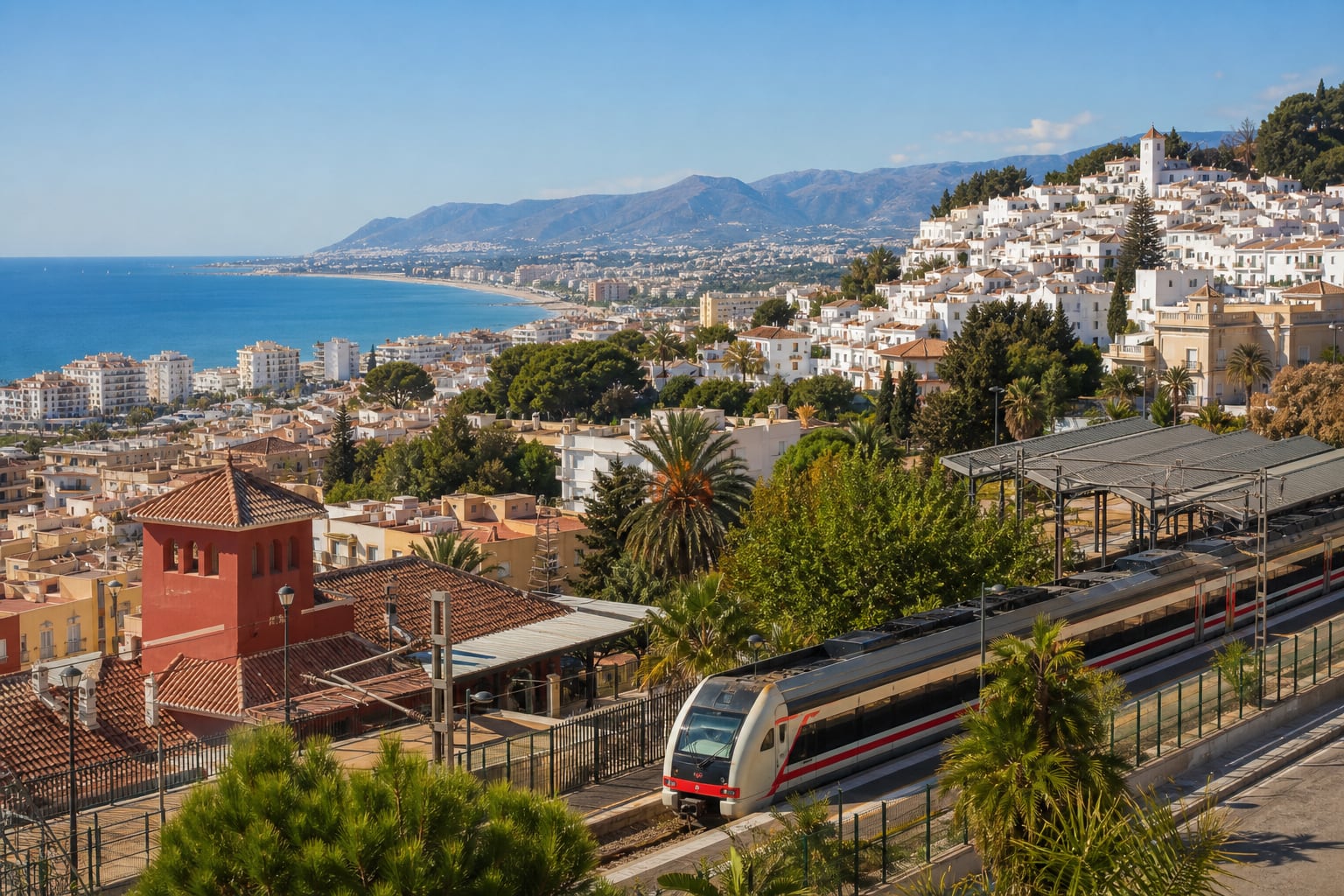
Back to the train, because for a meaningful share of buyers it is the feature that tips the decision. The Cercanías C1 runs from Málaga's Centro-Alameda and María Zambrano stations, through the airport, and along the coast to Fuengirola, with two stops in Benalmádena: Arroyo de la Miel, underground in the centre, and Torremuelle, down on the Costa. Trains run roughly every 20 minutes, reach the airport in about 20 minutes, and Málaga city in around thirty. No other resort a Marbella-side buyer typically shortlists has anything like it.
What that connection buys is independence from a car. Owners who fly in and out frequently can skip the parking and the taxi queue entirely; teenagers can get themselves to Málaga and back; a long weekend needs no hire car at all. Compare that with the western towns, where every errand requires driving and the airport is a 45-to-70-minute haul along the AP-7, and the practical difference over a year of ownership is considerable.
It also reshapes the rental case. A holiday flat that guests can reach from the airport by train, suitcases in hand, is an easier let than one that assumes a hire car, and the same line opens up Málaga city — the Picasso Museum, the Soho arts district, the revived port — as an afternoon out rather than an expedition. Short-let gross yields on the Costa del Sol are commonly quoted in the mid-single digits, but Andalucía has tightened its rules around tourist licensing and community consent, so anyone buying to let should confirm the current regime and the specific community's stance before committing, and treat any yield figure as directional rather than a promise.
A marina, a casino, and a mountain
If Arroyo de la Miel is the engine and the Pueblo the postcard, Puerto Marina is the showpiece. Opened in 1979 and designed as a kind of floating Andalusian village — white façades, Moorish towers, water threading between the buildings — it holds more than 1,100 berths, has been named "Best Marina in the World" twice (1995 and 1997), and has flown the Blue Flag continuously since 1987. Today it is one of the busiest leisure addresses on the coast: restaurants, a Sea Life aquarium, summer nightlife, and a ring of apartments whose owners can watch the boats from the terrace.
Golf sits a short way back from the water. Golf Torrequebrada, an 18-hole course opened in 1976 and designed by José "Pepe" Gancedo — the self-taught amateur champion nicknamed the "Picasso of golf" — climbs a dramatic, pine-clad slope between the sea and the mountains, and the Casino Torrequebrada beside it is one of only a handful on the entire Costa del Sol. It is not the championship density of Nueva Andalucía's Golf Valley, but for a resident who wants a home course and a flutter within ten minutes of the front door, it is hard to beat.
And then there is the mountain. The Teleférico Benalmádena cable car lifts from the Costa to the 769-metre summit of Monte Calamorro in about fifteen minutes, opening views that on a clear day reach Gibraltar and the Rif Mountains of Morocco across the Strait, with walking trails and a birds-of-prey display at the top. Add the neo-Moorish Castillo de Bil-Bil on the promenade and the subtropical Parque de la Paloma in Arroyo, and the lesson for a buyer is the same one the train teaches: in Benalmádena the amenities are dense, varied, and walkable, not scattered across a valley you can only navigate by car.
Who buys in Benalmádena, and what they build
Benalmádena's buyer base looks different from Marbella's. Alongside the long-established British and Irish communities sit Scandinavians, Belgians, Dutch and Germans, a sizeable resident expatriate population that lives here year-round, and — crucially — a strong domestic Spanish element, with families from Málaga, Córdoba, and Madrid holding weekend and summer flats. That mix gives the town a genuine off-season pulse that purer holiday resorts lack, and it tends to make for a more stable rental and resale profile than a development that empties out every October.
New-build is the smaller half of the market, but it is where much of the current buyer interest concentrates, and it skews toward contemporary two- and three-bedroom apartments rather than the trophy villas of the western hills. Domosmar's current Benalmádena listings map that range neatly: key-ready two-bedroom apartments at Mane Residences from €450,000, three-bedroom homes at Casatalaya Residences between €900,000 and €1.2 million, and the marina-front Marina Golden Bay from €1.038 million for buyers who want a berth view and a new build in one.
On the running costs, the Andalusian rules are the same here as anywhere on the coast. Resale purchases carry transfer tax (ITP) of 7% in Andalucía, while new-build apartments are taxed at 10% IVA plus stamp duty (AJD), on top of notary, registry, and legal fees — and inheritance, community charges, and the annual IBI all vary by property. None of it is unusual, but it is specific to each case, so the sensible step before signing anything is a conversation with a qualified Spanish abogado or gestor who can model your own numbers rather than a generic estimate.
The case for Benalmádena in 2026
Put the pieces together and Benalmádena reads as the value-and-convenience play on the eastern Costa del Sol. Apartment prices a clear tier below Marbella and growing steadily; three distinct towns — village, working centre, and marina coast — to choose between; a showpiece harbour, a casino, a golf course, and a 769-metre mountain within a few minutes of each other; the Costa del Sol's reliable 300-plus days of sunshine a year; and, almost alone among the resorts a buyer usually shortlists, a commuter train to the airport and the city. It is not the address for someone buying Marbella's name. It is the address for someone buying a well-connected, year-round Mediterranean home that earns its keep.
To see what is currently for sale across the town, from Arroyo de la Miel apartments to marina-front new builds, browse our current Benalmádena listings or the wider Costa del Sol property collection, or get in touch with the Domosmar team for a buyer-led comparison of new-build and resale options matched to your budget, your timeline, and how you actually plan to use the home.