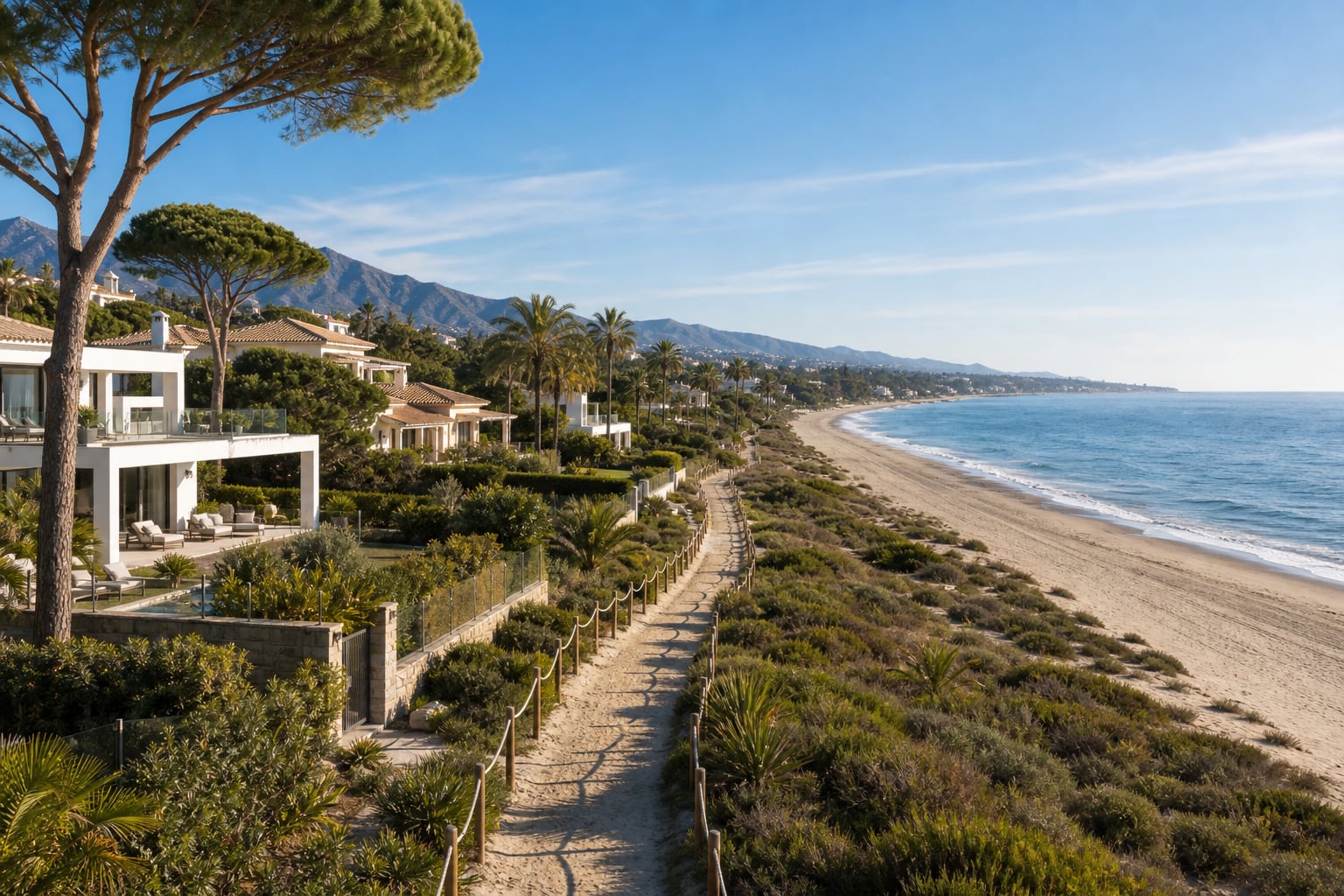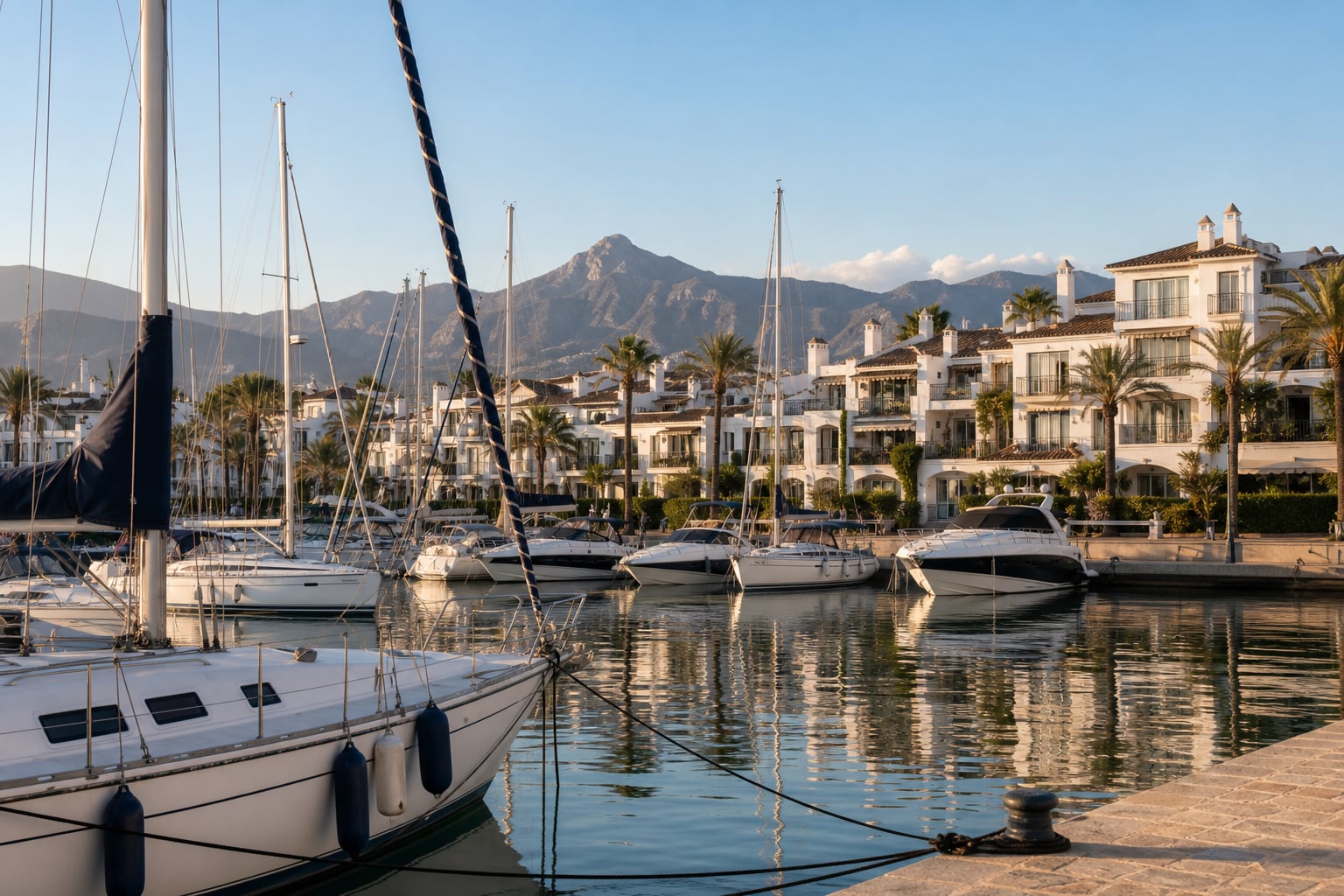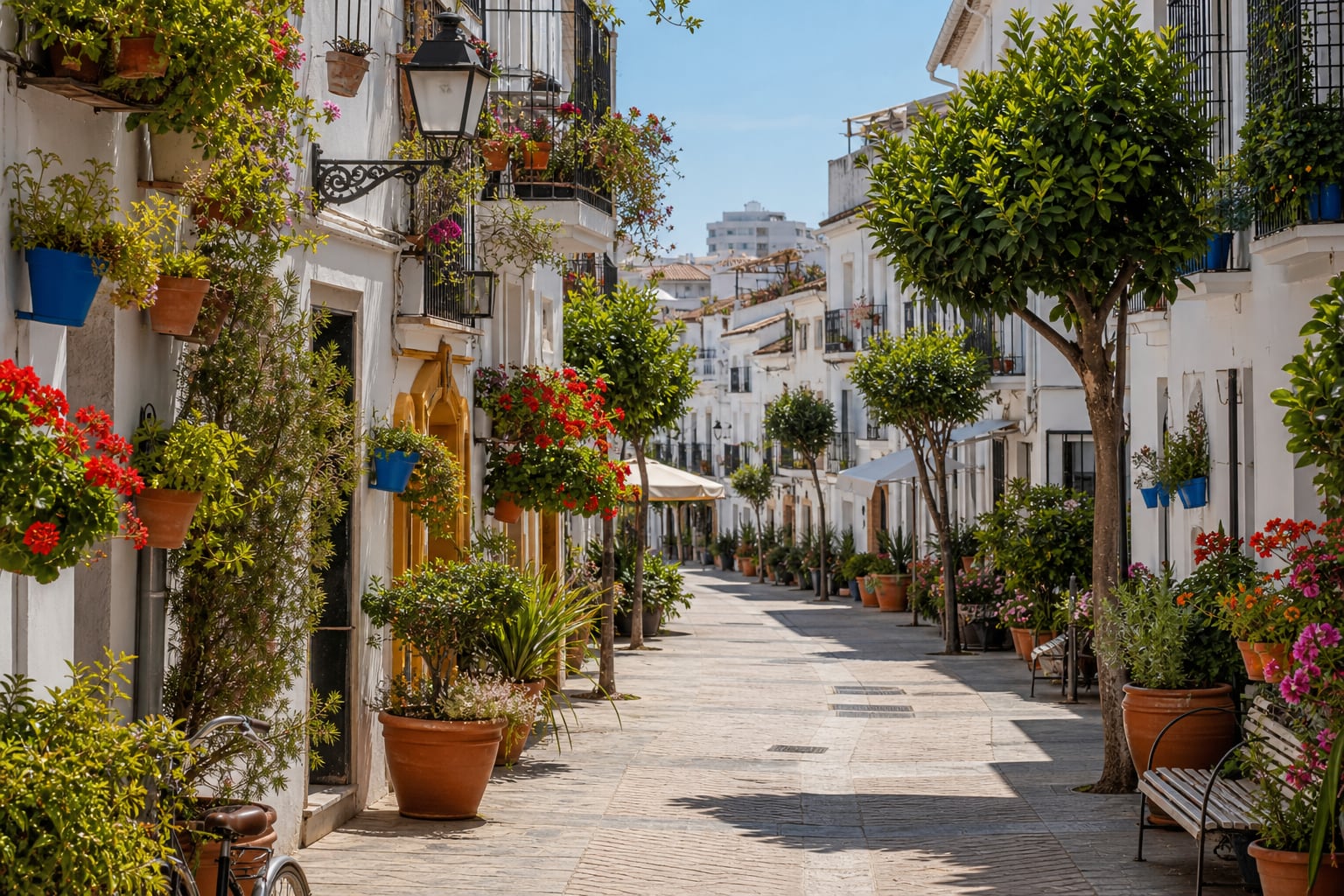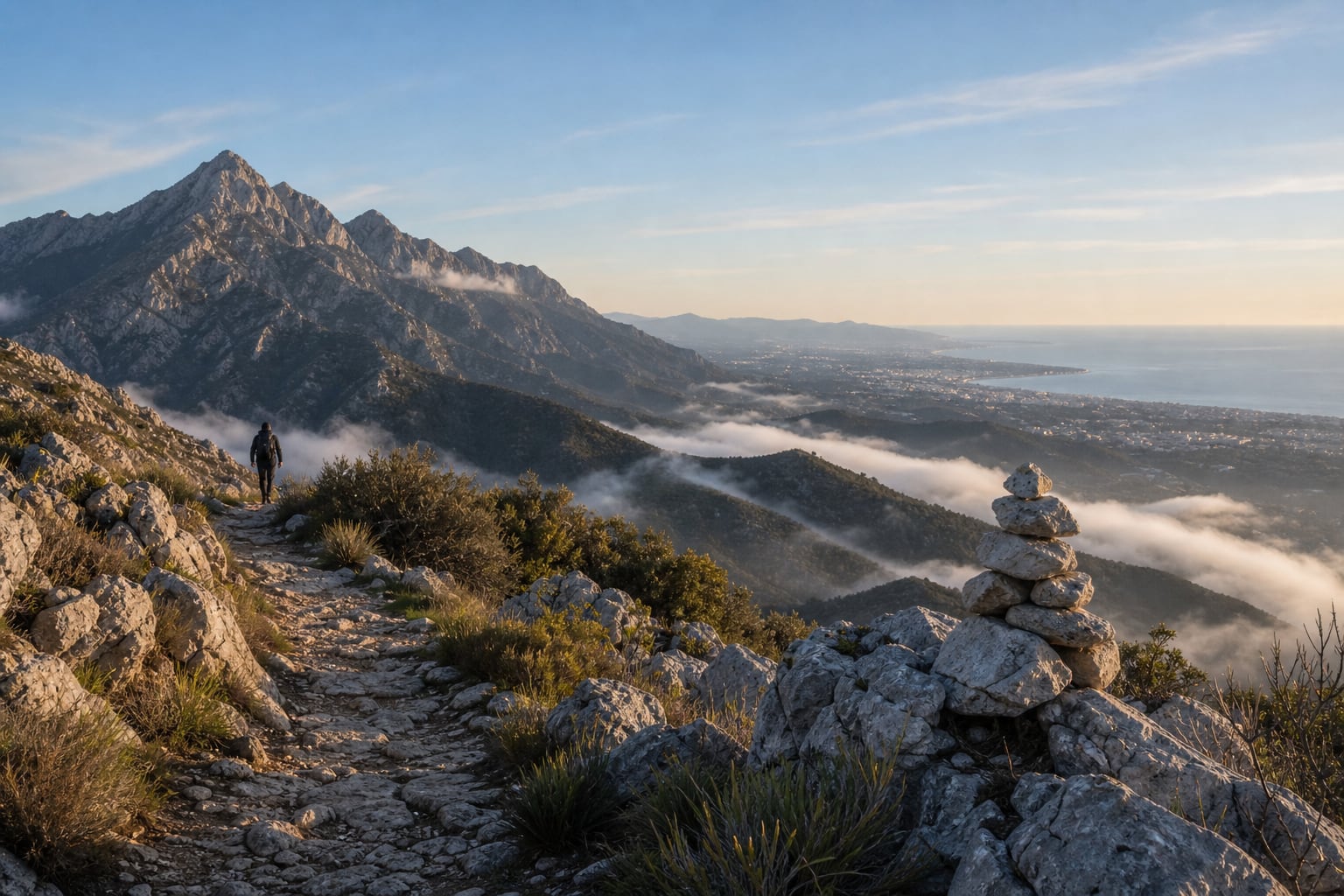
Depuis presque tous les toits-terrasses de Marbella, la vue la plus saisissante n’est pas la mer. C'est la montagne derrière la ville... La Concha, a 1 215 mètres mur de calcaire gris dont la crête en forme de coquille lui donne son nom et encadre l'horizon de Puerto Banús au Río Real. La plupart des acheteurs passent leur premier voyage d'observation en regardant l'eau vers le sud. L’autre moitié de la proposition se trouve juste derrière eux et porte depuis 2021 un nouveau titre : le rempart face à la mer de l’un des parcs nationaux les plus récemment déclarés d’Espagne.
Pour une région vendue presque entièrement aux clubs de plage et au golf, cette montagne est l’atout le moins discuté de la Costa del Sol. C’est aussi la raison pour laquelle l’air dans les villages perchés est de quelques degrés plus frais, la raison pour laquelle Marbella a de l’eau potable en août et – de plus en plus – un élément sur la liste restreinte des acheteurs qui veulent autant un début de sentier qu’une piscine. Ceci est un guide sur ce qui se trouve réellement là-haut, comment y grimper et ce qu'il en coûte pour vivre à sa vue.
La moitié de la vue que personne ne vend
La Concha appartient à la Sierra Blanca, l'éperon calcaire qui s'élève directement derrière Marbella et Ojén. Derrière lui, le terrain continue de grimper dans le massif plus large de la Sierra de las Nieves, et en 2021, le cœur élevé de cette chaîne a été déclaré parc national – le plus récent ajout au réseau de parcs nationaux espagnol et le troisième en Andalousie, après Doñana et Sierra Nevada. Ce n’est pas une abstraction lointaine. La limite sud de la chaîne constitue la toile de fond du Golden Mile ; son noyau protégé commence à peine à vingt kilomètres à l'intérieur des terres.
Ce qui s’y trouve est vraiment rare. Le parc a été un Réserve de biosphère de l'UNESCO depuis 1995 et des abris autour 1 500 espèces végétales, y compris le Pinsapo (Abies Pinsapo), une relique de sapin espagnol qui ne survit que dans une poignée de montagnes des provinces de Malaga et de Cadix. Le point culminant, La Torrecilla, atteint un peu moins de 1 920 mètres et retient la neige jusqu'au printemps, d'où son nom : les montagnes des neiges. La géologie est encore plus rare : elle abrite le plus grand affleurement superficiel de péridotite au monde, la roche du manteau profond qui donne à la Sierra Bermeja sa teinte rougeâtre plus à l'ouest.
Pour un acheteur, l’appellation compte pour une raison qui n’a rien à voir avec la botanique. Un parc national constitue la protection urbanistique la plus stricte prévue par la loi espagnole. Les pentes qui forment la vue derrière la Sierra Blanca, Nagüeles et les contreforts d'Ojén ne seront pas construites – le décor est fixé par la loi. Dans un marché où la vue sur la mer peut être perdue jusqu'à la prochaine tour le long de la plage, une vue ininterrompue sur les montagnes au nord est l'une des rares lignes de visibilité sur la Costa del Sol qu'aucun promoteur ne peut emporter.
Au sommet, depuis un pavillon de chasse
L'itinéraire classique de La Concha ne commence pas à Marbella mais au-dessus, à Le Refuge de Juanar, un ancien pavillon de chasse des marquis de Larios niché dans un col de la Sierra Blanca à environ 800 mètres. Le lodge – aujourd’hui un petit hôtel – a été pendant des décennies une retraite pour les monarques et les présidents ; Charles de Gaulle y aurait terminé ses mémoires de guerre en 1970. vingt-cinq minutes en voiture au-dessus de la côte, en passant par le village blanc d'Ojén, et sert de point de départ à une douzaine de sentiers de randonnée dans la chaîne.
L'ascension complète de La Concha (balisée PR-A 168) est une journée sérieuse, pas une promenade : en gros 13 kilomètres aller-retour, cinq à sept heures de marche, avec une crête finale qui implique de véritables brouillages et terrains découverts. Ce n'est pas un itinéraire pour les personnes souffrant de vertiges ou pour les jeunes enfants, et au milieu de l'été, le calcaire se transforme en fournaise en milieu de matinée. La récompense, depuis le cairn du sommet, est toute la côte qui s'étend en contrebas : Gibraltar et les montagnes du Rif au Maroc par une claire journée d'hiver, la courbe de la baie de Marbella directement sous vos pieds.
Les marcheurs qui veulent admirer la vue sans se bousculer s'arrêtent au Cruz de Juanar, une croix sur une épaule inférieure accessible par un circuit facile, ou au Mirador del Macho Montés, où le résident cabra montés — Le bouquetin ibérique — est une observation presque certaine à l'aube et au crépuscule. C'est le cas pratique des villages perchés en bord de mer : une montagne sérieuse se trouve à quinze minutes en voiture d'une table de cuisine de Nueva Andalucía, et la saison s'écoule à l'envers par rapport à la plage. Les sentiers sont à leur meilleur d'octobre à mai, lorsque les températures diurnes sur la côte planent encore. 17°C et les hauteurs sont claires et fraîches.
Juanar n’est que le point de départ le plus connu. Au-delà du circuit de Cruz de Juanar et du parcours inférieur d'El Pozuelo, toute la chaîne est parcourue par le Gran Senda de Malaga (GR-249), un 942 kilomètres sentier divisé en 35 étapes qui entoure toute la province et traverse la Sierra de las Nieves sur son arc ouest. Pour quelqu'un qui envisage une résidence secondaire plutôt qu'une quinzaine de vacances, ce réseau fait la différence entre une vue sur les montagnes et un accès réel et reproductible à celles-ci - un avantage qui ne dépend pas de la météo, du calendrier de location ou de la période de l'année.
Istán : le village construit sur l'eau
Si Ojén garde l’approche orientale de la chaîne, Istán garde celle occidentale – et c’est la plus singulière des deux. Connu localement sous le nom le manantial de la Costa del Sol, la source de la Costa del Sol, Istán se trouve au-dessus du Emballe de la Conception, le réservoir du Río Verde qui approvisionne en eau potable Marbella, Estepona et une grande partie de la côte ouest depuis la construction d'un barrage en 1971. Le village est un empilement de maisons blanches, de canaux d'irrigation et de fontaines ; l'eau coule visiblement dans ses rues d'une manière qu'aucune station balnéaire ne peut imiter.
Au-dessus du village, le Río Verde creuse une gorge dans le parc national et la remontée jusqu'au Charco del Canalon — une piscine d'un vert profond que l'on atteint par une course semi-aquatique d'environ 13 kilomètres aller-retour — est l'un des itinéraires estivaux les plus populaires de la province, précisément parce qu'on le termine en nageant. C'est une proposition différente de La Concha : plus basse, plus humide, ombragée et réalisable par temps chaud. Ensemble, les deux points de départ du sentier encadrent la montagne et expliquent pourquoi les villages de l'intérieur des terres ne sont plus une considération secondaire pour les acheteurs.
Le marché immobilier d'Istán est petit et divisé. Le vieux village lui-même est modeste ; la valeur réside dans son terme, qui monte vers l'est sur le flanc exclusif de la Sierra Blanca, le même flanc de colline fermé qui produit certaines des valorisations les plus élevées de Marbella. Un acheteur attiré ici recherche généralement une chose spécifique que la plage ne peut pas offrir : une finca ou une villa à flanc de colline avec le parc national à proximité, les piscines fluviales en contrebas et Puerto Banús à seulement vingt minutes de route.
Combien coûte réellement un début de sentier
Proximité de la montagne prix dans une échelle dégagée. Au sommet se trouve Nagüeles-Milla de Oro, le contrefort de Marbella où les communautés fermées de la Sierra Blanca gravissent les pentes inférieures de La Concha elle-même : le rapport d'Idealista de février 2026 le situe à 6 789 € le mètre carré, en hausse de 6,9% sur l'année et proche de son plus haut historique. C'est là que la vue et le début du sentier sont combinés le plus cher, et que les acheteurs effectuent leurs achats directement contre le prix. Vallée du Golf de Nueva Andalucía, dont les premiers tees regardent directement vers le même sommet.
Montez et entrez dans les terres et le prix d’entrée baisse rapidement. Marbella dans son ensemble en moyenne 5 410 € le mètre carré fin 2025, alors que Ojén — à dix ou quinze minutes du centre-ville mais dans un monde différent — assis à 3 838 € le mètre carré, la sixième commune la plus chère de la province de Málaga. Les projets plus récents sur ses pentes exposées au sud, autour de Palo Alto et du côté de La Mairena au-dessus d'Elviria, nécessitent une prime pour les ascenseurs, les terrasses et les services de conciergerie ; le noyau du village et la campagne vers Juanar sont là où se trouvent la valeur et les fincas. Poussez encore plus profondément, pour Lundi à la limite sud du parc, et les maisons de ville changent de mains bien en dessous 2 000 € le mètre carré.
Le stock proposé suit la géographie. Sur les pentes de la Sierra Blanca et à Nagüeles, le marché est dominé par les villas en revente et un mince filet de nouveaux projets fermés, où les terrains sont rares et où les prix sont fixés en fonction de la vue et de l'intimité. À Ojén et le long de la crête de La Mairena, l'activité consiste principalement en des appartements et des maisons de ville de nouvelle construction destinés directement à l'acheteur décrit dans cet article : quelqu'un qui veut de l'air plus frais, une terrasse face à la Sierra et un quart d'heure de course jusqu'à la plage. Plus loin dans le parc, autour d'Istán et de Monda, le commerce se concentre sur les fincas et les maisons rurales, où la diligence raisonnable en matière de voies d'accès, de droits d'eau, de fosses septiques et de connectivité compte bien plus que le chiffre global.
Le schéma est cohérent : plus une maison est proche de la montagne et plus elle monte haut, plus l’écart entre le mètre carré le moins cher et le plus cher est grand. La même logique régit les domaines fermés de Benahavís et La Zagaleta, où les valorisations les plus élevées d'Espagne sont garanties en partie par la ligne de crête protégée et inconstructible derrière elles. L'accès à la nature n'est plus une commodité douce sur la Costa del Sol ; c'est une composante mesurable du prix.
Pourquoi la montagne devient un critère d'achat
Il y a dix ans, les acheteurs faisaient des compromis sur le budget dans les villages de l'intérieur des terres. Ils se trouvent de plus en plus là où les acheteurs choisissent de se trouver. Les raisons sont pratiques plutôt que romantiques : des soirées d'été plusieurs degrés plus froides que la côte, un air plus pur, des sentiers accessibles à pied et, pour la cohorte croissante de résidents à temps plein et travaillant à distance, une vie quotidienne qui ne s'arrête pas à la fin de la saison des plages. La désignation de parc national en 2021 garantit tout cela, fixant la toile de fond de manière permanente et garantissant que la vue vers le nord reste exactement telle qu'elle est.
Elle propose également la ligne qui vend la Costa del Sol mieux que n'importe quelle brochure : pendant une grande partie de l'année, vous pouvez vous tenir debout sur le cairn sommital de La Concha le matin et nager dans la Méditerranée le même après-midi. Cette combinaison – un sommet de 1 215 mètres et un parc national protégé d’un côté, une mer chaude et une ville internationale en activité de l’autre – est véritablement rare en Europe, et c’est la raison structurelle discrète pour laquelle la demande pour les collines au-dessus de Marbella continue de dépasser l’offre.
S'il s'agit d'une maison avec la Sierra de las Nieves à sa porte – une villa de la Sierra Blanca sous le sommet, une finca au-dessus d'Istán ou un appartement à l'air plus frais sur les pentes d'Ojén – c'est précisément le genre de micro-emplacement. notre recherche de propriétés sur la Costa del Sol est construit pour comparer. Dites-nous comment vous comptez utiliser la maison et combien de temps vous y passerez, et nous le ferons. reviens avec une liste restreinte adapté à la vue, à l’élévation et au début du sentier que vous souhaitez réellement.