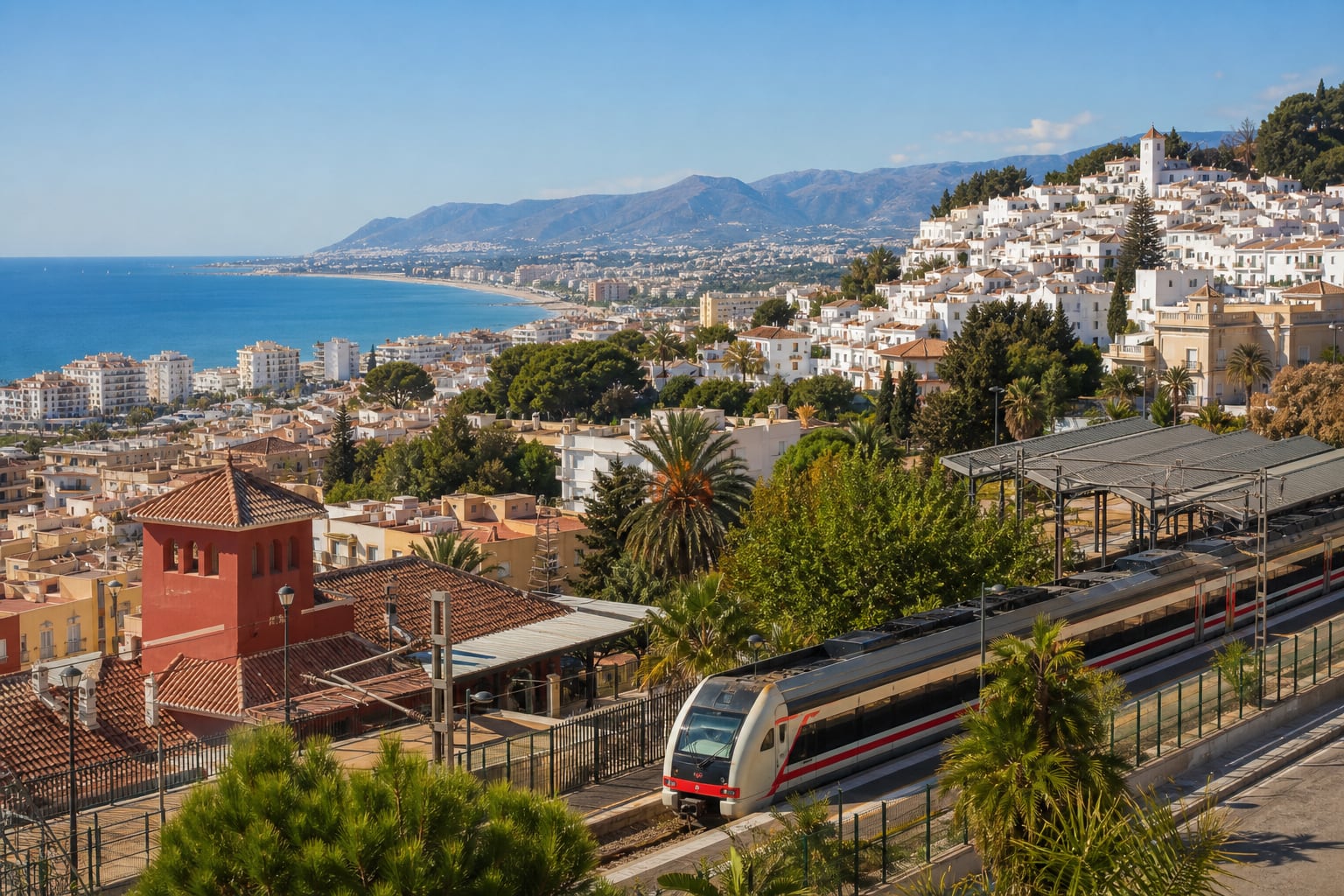
À 7h45 un mercredi matin de mai, le Mercado Municipal de Marbella, sur l'Avenida del Mercado, tourne déjà à plein régime. Les poissonniers ont préparé les prises du jour dans de la glace pilée : des crevettes rouges, des doradas fraîches et des sardines qui atteindront les chiringuitos de Playa de la Fontanilla à l'heure du déjeuner. Trois étals plus loin, un agriculteur de la vallée du Guadalhorce a empilé des tomates locales à tête plate à côté de rondelles de fromage de chèvre de Malaga enveloppées dans de la paille. Le marché est la pierre angulaire de la vie du Casco Antiguo depuis plus d'un siècle, ouvert du lundi au samedi de 8h00 à 15h00 et se trouve à seulement trois minutes à pied de la Plaza de los Naranjos. Un matin où le Prévisions AEMET affiche une température maximale de 24°C et un ciel sans nuages, il n'y a pas de raison particulière de se dépêcher.
Le Casco Antiguo n'est pas l'endroit où la plupart des acheteurs internationaux commencent leur recherche sur la Costa del Sol. Il lui manque les allées fermées et les piscines à débordement de La Zagaleta, la façade au niveau de la mer du Golden Mile et le parcours de golf de Nueva Andalucía. Ce qu'il offre à la place est quelque chose de plus difficile à reproduire de par sa conception : une ville andalouse pleinement fonctionnelle qui se trouve au sein de l'un des marchés immobiliers les plus actifs d'Europe au niveau international. Pour les acheteurs qui ont envisagé la côte du point de vue des villas et des appartements neufs, la vieille ville peut prendre un moment pour s'inscrire – et elle devient alors souvent la seule adresse qu'ils envisagent sérieusement.
Le rythme du matin : marché, café et 320 jours de soleil
Le Mercado Municipal anime la matinée des résidents du Casco Antiguo d'une manière qu'aucun supermarché ne peut reproduire. Vous venez pour des choses précises : le poissonnier qui prépare sur demande les gambas blanches de Málaga ; le stand de fromages de chèvre Payoyo de saison, provenant des collines au-dessus de Grazalema ; le vendeur de légumes dont les tomates arrivent d'Almería deux fois par semaine. Le marché occupe une seule salle couverte sur l'Avenida del Mercado 7 – une structure qui date du XIXe siècle et qui remplit la même fonction sans interruption depuis – mais son offre est profonde et la structure sociale qui l'entoure est plus dense qu'il n'y paraît à la première visite. Les conversations qui commencent au comptoir du poisson se poursuivent à la terrasse du café.
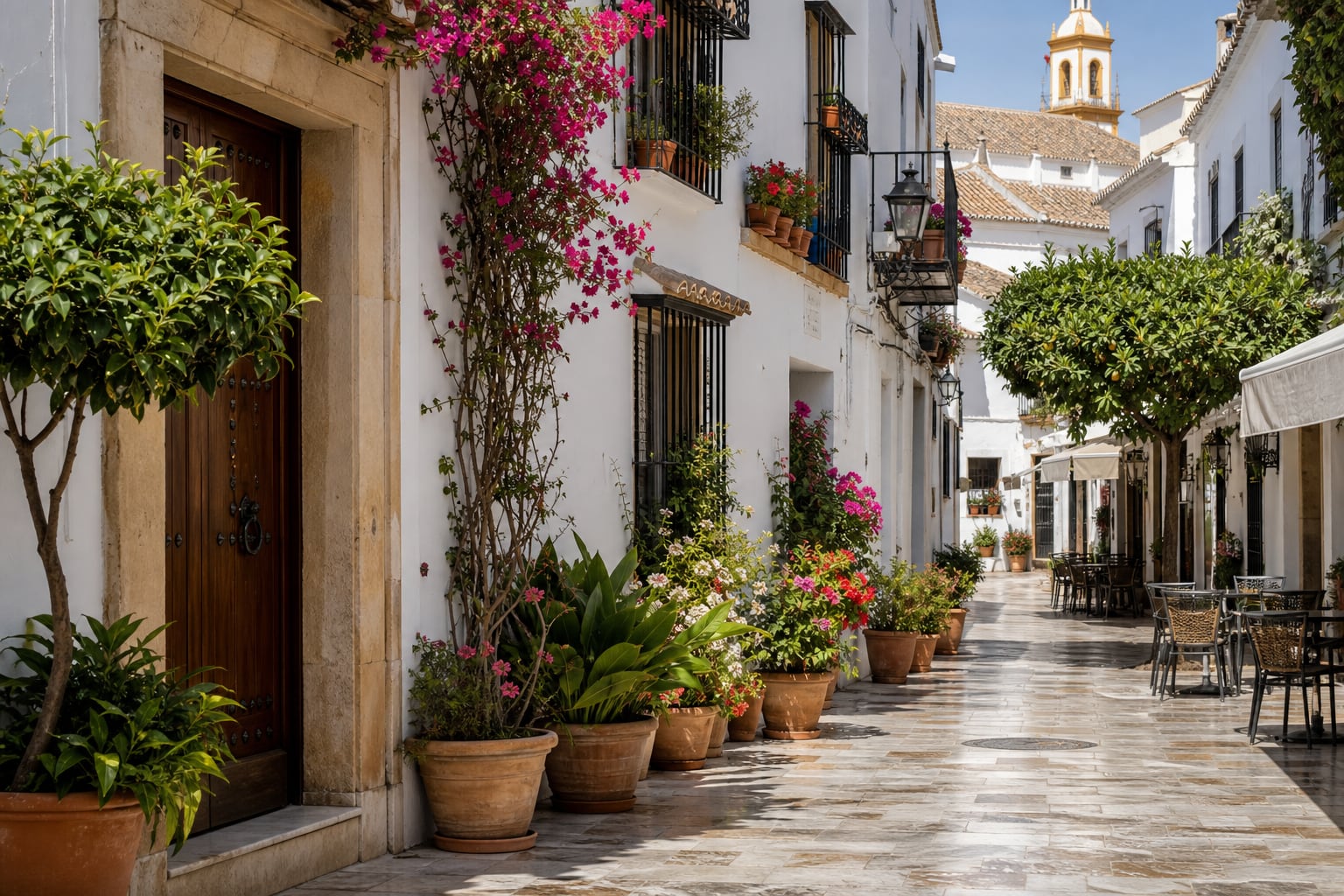
Depuis le marché, il faut marcher trois minutes à travers les ruelles piétonnes du vieux quartier jusqu'à la Plaza de los Naranjos. La place est exactement ce que son nom promet : une canopée d'orangers, une fontaine en pierre en son centre et la Casa del Corregidor du XVIe siècle sur le mur nord. En été, les terrasses des cafés s'étendent sur une grande partie de la place ; en hiver, le genre de matinée qui apporte des intempéries partout au nord de Valence, les mêmes terrasses restent utilisées - parce que Marbella bénéficie en moyenne d'environ 320 jours de soleil par an, et même en janvier, les températures diurnes sur la côte descendent rarement en dessous de 15°C. Le Données de la station AEMET pour Marbella enregistre la position mi-côtière de la ville comme l'une des plus protégées climatiquement de la Costa del Sol : à l'abri des vents du levant qui rugissent la côte est, et isolée des fronts froids de l'Atlantique par la chaîne de la Sierra de las Nieves immédiatement au nord.
L'aménagement de la vieille ville récompense la marche comme pratique quotidienne. Le noyau piétonnier est délimité par un anneau de parkings en surface qui absorbent la majeure partie du trafic automobile : le parking Mercado sur l'Avenida del Mercado, les options plus proches du front de mer sur l'Avenida del Mar et une installation souterraine à la limite sud du vieux quartier. Dans ce périmètre, les voies sont trop étroites pour tout le monde, sauf pour les véhicules de livraison matinaux à horaires fixes. La vie à pied – qui est la seule façon honnête de vivre dans le Casco Antiguo – se déroule à un rythme de plus en plus rare sur la Costa del Sol en dehors du centre historique d'Estepona, et c'est cette qualité, plus que n'importe quel agrément, qui distingue la vieille ville comme une résidence à long terme plutôt que comme une base saisonnière.
Playa de la Fontanilla : le front de mer de la vieille ville
En marchant vers le sud depuis la Plaza de los Naranjos en direction de la mer, vous atteignez le Paseo Marítimo en moins de dix minutes. Juste en face de la vieille ville s'étend la Playa de la Fontanilla : une grande plage de sable nettoyée chaque matin, avec des transats en location, des douches, des rince-pieds et un accès pour personnes handicapées sur toute sa longueur. Le plateau progressif de la plage et sa position généralement protégée (la montagne de La Concha forme une toile de fond spectaculaire au nord, donnant à toute la baie une qualité confinée, presque en amphithéâtre), la rendent toujours populaire auprès des familles et des résidents permanents tout au long de l'année. En été, la rangée de chiringuitos et de clubs de plage qui donnent sur la promenade ajoute une densité sociale qui manque totalement aux plages résidentielles plus calmes à l'est de Marbella.
L'offre de restauration à Fontanilla va du plus simple au plus authentique. Basilio Beach se trouve sur le sable et sert du poisson grillé, de la bière fraîche et le genre de déjeuner sans cérémonie – des anchois, un demi-litre de vin blanc local, du pain à l'huile d'olive andalouse – qui fait disparaître proprement un mardi après-midi. La Red est une autre option de longue date sur le même tronçon. Vers l'extrémité ouest de la plage, The Point Marbella opère dans un registre légèrement différent avec des paellas au feu de bois et des transats balinais qui le rapprochent du modèle de club de plage de Puerto Banús, sans le chaos du parking environnant. Pour les habitants de la Vieille Ville, l'essentiel est que tout cela soit accessible à pied, ce qui transforme le rapport à la plage d'une sortie saisonnière en une routine quotidienne.
Manger dans la vieille ville : des bars à tapas aux deux étoiles Michelin
Les repas au Casco Antiguo s'étendent sur un registre plus large que ne le suggère la petite empreinte du quartier. À l'extrémité informelle, les bars à tapas des ruelles qui partent de la Plaza de los Naranjos et du centre historique servent les incontournables de la cuisine de la province de Malaga : boquerones fritos, gambas al ajillo, presa ibérique aux amandes locales, vin blanc froid Moriles de Cordoue versé sans cérémonie dans de grands verres. Ces bars ouvrent tôt et ferment tard, et leur clientèle est véritablement mixte : familles espagnoles, résidents internationaux de longue date et visiteurs venus du bord de mer et tranquillement surpris de trouver une ville andalouse fonctionnelle de l'autre côté de la promenade de la plage.
À l'autre bout du registre se trouve Peau, sur l'Avenida Cánovas del Castillo 9, le restaurant qui abrite deux étoiles Michelin — la note la plus élevée attribuée à un restaurant actuellement en activité à Marbella. Les menus du chef Mario Cachinero sont construits autour de produits andalous de saison avec une spécificité que l'économie de marché de la vieille ville permet activement : le thon rouge Almadraba de la pêcherie traditionnelle au casier de Barbate, les crevettes écarlates carabinero, la chèvre de montagne de Málaga élevée dans les pâturages d'herbes aromatiques des collines environnantes. La programmation des vins, supervisée par le sommelier Marcos Granda, s'appuie sur une cave de plus de 6 000 références. Il n'est pas rare de réserver plusieurs semaines à l'avance pour un dîner du vendredi. L'expérience s'inscrit naturellement dans le contexte de ce qu'est déjà le Casco Antiguo : un quartier où le véritablement exceptionnel et le tout à fait quotidien cohabitent sans que l'un ou l'autre ne paraisse déplacé.
Le terrain entre ces deux pôles est dense. La vieille ville compte une concentration de restaurants indépendants par rue, ce qui serait remarquable dans une ville deux fois plus grande que Marbella - en raison de son flux piétonnier et de l'histoire commerciale de plusieurs siècles qui a permis à l'espace du rez-de-chaussée d'être utilisé par de véritables entreprises hôtelières. Les résidents développent une rotation de quatre ou cinq endroits où ils retournent avec une réelle régularité, complétés par des dîners Skina occasionnels qui fonctionnent comme le genre d'occasion que le quartier est tranquillement fier de pouvoir offrir.
Santé, écoles et déplacements
Pour les acheteurs d’Europe du Nord ou d’Amérique du Nord qui envisagent la vieille ville comme résidence principale ou à temps plein, la question pratique de l’infrastructure a tendance à se poser avant celle du style de vie. En matière de santé, Marbella est exceptionnellement bien desservie par la médecine privée pour une ville de sa taille. Hôpital Quirónsalud Marbella, sur l'Avenida Severo Ochoa 22, exploite un service d'urgence 24 heures sur 24 avec un personnel multilingue et détient des accords avec la plupart des grands assureurs privés internationaux. L'hôpital a 65 chambres individuelles et cinq salles d'opération, avec des spécialisations complètes couvrant la cardiologie, l'oncologie, l'obstétrique, la chirurgie plastique et la neurologie. Son emplacement – près du front de mer entre la vieille ville et le Puerto Deportivo – signifie qu'il est accessible depuis le Casco Antiguo en moins de dix minutes en voiture à presque toutes les heures.
En ce qui concerne la scolarité, le Casco Antiguo ne contient pas d'école internationale et les acheteurs ayant des enfants d'âge scolaire devraient prendre en compte un court trajet quotidien dans leur planification. Aloha College, l'une des écoles privées bilingues les plus anciennes de la Costa del Sol, est située à Nueva Andalucía, à environ huit kilomètres à l'ouest de la vieille ville. Le Laude San Pedro International College opère à San Pedro de Alcántara, à environ douze kilomètres plus loin le long de la côte. Les deux sont accessibles en quinze à vingt minutes dans des conditions de circulation normales – bien que sur la route côtière A-7 en juillet et août, cette estimation puisse s'étendre considérablement, un détail qui mérite d'être discuté avec un spécialiste local avant de s'engager dans une routine scolaire. Pour les adolescents plus âgés qui poursuivent des programmes internationaux, la concentration d'écoles proposant l'IB dans la municipalité de Marbella est parmi les plus élevées du sud de l'Espagne.
En ce qui concerne la connectivité, Marbella n'est pas desservie par le principal réseau ferroviaire national et le trajet jusqu'à l'aéroport de Malaga couvre environ 55 kilomètres sur l'autoroute à péage A-7 ou AP-7, ce qui prend généralement entre 45 et 55 minutes selon le trafic. Pour les acheteurs qui voyagent régulièrement pour le travail, il s'agit d'une véritable considération à prendre en compte. Pour ceux qui bénéficient d'arrangements hybrides ou entièrement à distance - qui décrivent une part croissante des nouveaux propriétaires internationaux de la vieille ville - le compromis entre un transfert aéroportuaire légèrement plus long et la qualité de vie quotidienne dans le Casco Antiguo a tendance à se résoudre assez rapidement en faveur du quartier.
Combien coûte réellement la propriété dans le Casco Antiguo
Le Casco Antiguo se situe dans la fourchette inférieure à moyenne du marché plus large de Marbella en termes de mètre carré, bien que l'écart se soit rétréci à mesure que la demande d'une vie urbaine accessible à pied et riche en caractère a augmenté de manière constante au cours de la dernière décennie. Données d'annonces d'Idealista Casco Antiguo pour 2025 indique une fourchette de prix d’environ 3 000 à 5 000 € le mètre carré, avec des variations significatives en fonction du niveau de rénovation et de la ruelle ou de la cour spécifique. On trouve encore des appartements non rénovés dans des immeubles anciens à moins de 3 000 € le mètre carré pour les acheteurs prêts à se lancer dans un projet ; les maisons de ville entièrement rénovées avec des sols carrelés d'origine, des cours intérieures et des toits-terrasses se situent à l'extrémité supérieure - et parfois au-dessus - dans un marché où la qualité de finition plutôt que l'emplacement brut est de plus en plus la principale variable de prix.
Dans l'absolu, l'entrée au Casco Antiguo en tant que propriétaire est plus accessible que ce que la marque Marbella implique généralement. Les petits appartements d'une chambre dans le vieux quartier commencent à partir d'environ €200,000, et le marché au-dessus de ce niveau est varié dans ce qu'il offre. Un appartement de deux chambres bien rénové avec une terrasse et une vue sur les toits de la vieille ville se situe généralement entre 400 000 et 700 000 € en fonction du niveau du sol, de la taille de la terrasse et de la qualité de la finition. Au sommet du marché, les casas de pueblo entièrement restaurées – les anciennes maisons de commerçants et d’artisans qui ont été subdivisées au fil des décennies et qui sont maintenant recombinées et rénovées par des acheteurs qui comprennent la classe d’actifs – peuvent dépasser 1 million d’euros et apparaissent rarement sur les portails ouverts. Ils ont tendance à faire du commerce par l'intermédiaire de petites agences ayant de véritables relations avec les fournisseurs de la vieille ville et des connaissances locales que les rapports sur le marché général sous-représentent.
Le profil des acheteurs du Casco Antiguo a sensiblement changé au cours de la dernière décennie. Alors que la vieille ville attirait autrefois principalement des acheteurs de résidences secondaires espagnols et un petit contingent d'Européens du Nord qui préféraient son caractère aux zones de villégiature bien entretenues, elle attire désormais une cohorte plus diversifiée à l'échelle internationale : des acheteurs français et scandinaves à la recherche d'une résidence permanente ou principale, des professionnels travaillant à distance du Royaume-Uni et d'Allemagne, et un nombre croissant d'acheteurs qui ont déjà été propriétaires à Puerto Banús ou sur le Golden Mile et ont décidé qu'ils voulaient moins de frais d'entretien et plus de vie quotidienne autour d'eux. Le potentiel de revenus locatifs est solide plutôt que spectaculaire – la vieille ville bénéficie de l’intérêt des visiteurs tout au long de l’année plutôt que d’une demande purement saisonnière – mais les locations touristiques en Andalousie nécessitent une licence VFT active (Vivienda con Fines Turísticos), que les propriétaires-acheteurs potentiels doivent vérifier auprès d’une gestora ou d’un avocat local avant l’achat.
Un quartier qui n’a pas besoin d’essayer
L'argument le plus fort en faveur du Casco Antiguo est celui qui n'apparaît sur aucun portail immobilier : c'est la seule partie de Marbella qui fonctionnerait parfaitement si la saison touristique n'arrivait pas. Le marché de l'Avenida del Mercado fonctionne parce que les locaux y achètent tous les matins. Les bars à tapas des ruelles autour du centre historique se remplissent en milieu de semaine parce que leurs habitués sont des résidents et non des visiteurs. La fontaine de la Plaza de los Naranjos éclabousse les orangers qui la surplombent, pas les caméras pointées vers elle. Cette qualité – un environnement urbain andalou avec sa propre cohérence interne, qui a absorbé les résidents internationaux sans être refait pour eux – est ce que les acheteurs qui vivent ici depuis cinq ou dix ans citent systématiquement lorsqu'on leur demande pourquoi ils n'ont pas emménagé dans une villa à flanc de colline au-dessus de Marbella.
Pour les acheteurs qui envisagent la région de Marbella pour la première fois, la vieille ville vaut la peine d'être visitée avec intention - non pas comme une excursion d'une journée depuis un hôtel du Golden Mile, mais avec un après-midi réservé pour parcourir les ruelles, déjeuner près du marché et s'asseoir sur la Plaza de los Naranjos pendant que la lumière de l'après-midi se déplace sur la façade de la Casa del Corregidor. Soit vous comprenez immédiatement pourquoi les gens choisissent d’être propriétaires ici, soit vous ne le comprenez pas – et les deux réponses vous font gagner un temps considérable. À 3 000 à 5 000 € le mètre carré dans une municipalité où la moyenne du prix demandé évolue constamment au-dessus de 5 000 €, le Casco Antiguo reste l'un des points d'entrée les plus accessibles et les plus riches en caractère pour accéder à une véritable propriété à Marbella.
Domosmar couvre les propriétés à Marbella et sur la Costa del Sol au sens large, y compris un stock de revente sélectionné dans et autour du Casco Antiguo et des quartiers environnants de Marbella. Parcourez nos annonces actuelles pour voir ce qui est disponible dans votre zone préférée et votre gamme de prix, ou contactez notre équipe pour une conversation directe sur la question de savoir si la vieille ville – ou une autre partie de Marbella – correspond à la façon dont vous envisagez réellement d’utiliser une maison sur la Costa del Sol.