Par un clair matin de février, à l'extrémité est de la plage de Los Monteros, le chiringuito ressemble à ce qu'il a toujours été : des chaises longues rangées en rangées soignées, le plat méditerranéen pâle derrière eux, une poignée de promeneurs traçant la ligne de marée avant que la journée ne se réchauffe. Mais en regardant de plus près, les parasols portent un imprimé Dolce & Gabbana. La Cabane, le club de plage qui a ancré cette partie de l'est de Marbella pendant des décennies, opère désormais sous le nom de la maison de couture italienne – dans le cadre du même refit qui a mis un drapeau Kimpton sur l'hôtel voisin Los Monteros. Un club de plage rebaptisé est une petite chose en soi. C'est aussi l'aspect le plus visible d'un changement beaucoup plus vaste : en trois ans environ, les marques de luxe sont passées de l'habillage des hôtels et des restaurants de Marbella à la construction de leurs maisons.
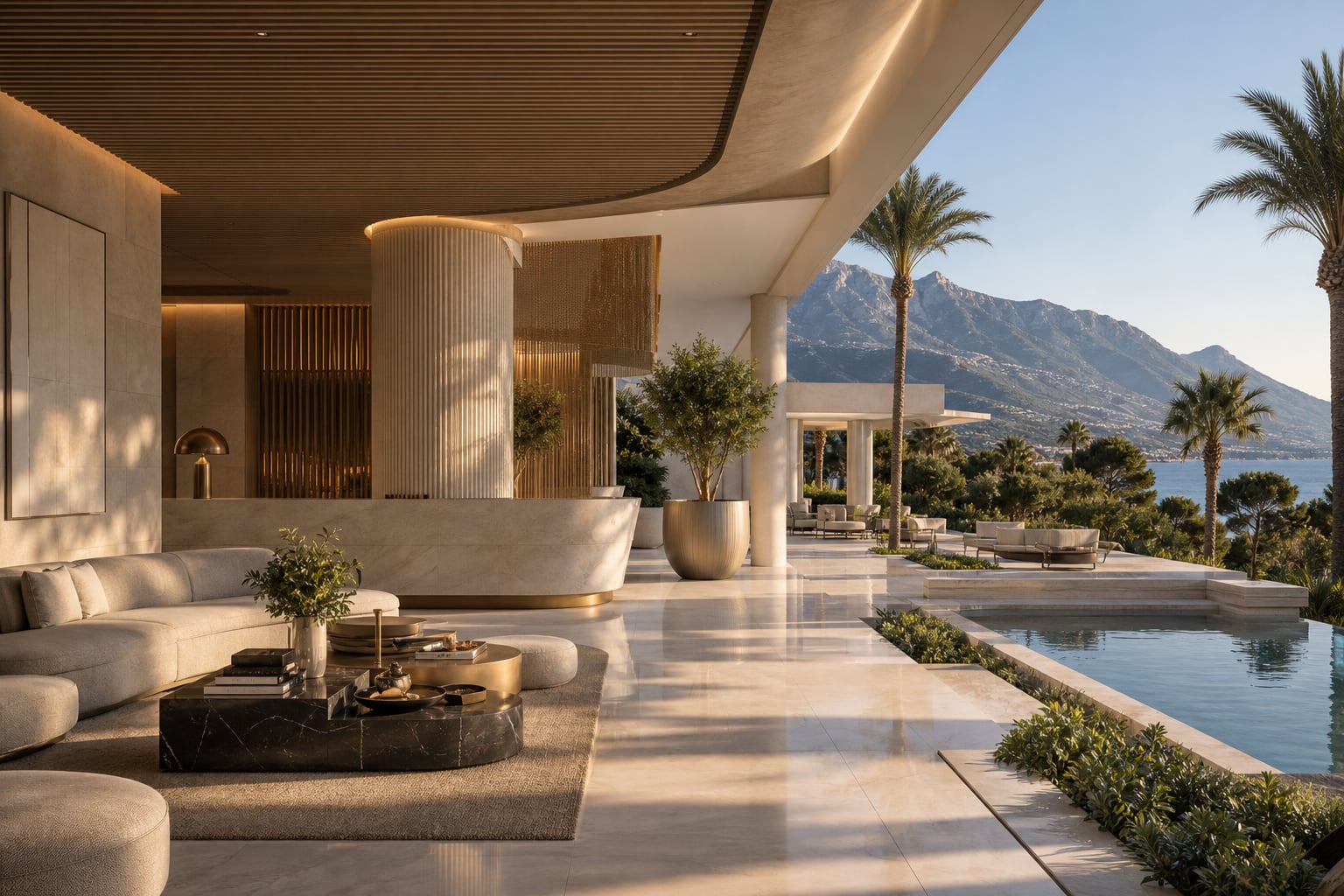
Ce changement a un nom dans le secteur immobilier... résidences de marque — et la Costa del Sol est tranquillement devenue sa capitale européenne. Fendi Casa, Dolce & Gabbana, Karl Lagerfeld, Elie Saab, Lamborghini, Missoni, Armani et Four Seasons sont désormais tous attachés à des projets résidentiels à quelques minutes en voiture de Puerto Banús. Pour quiconque envisage un achat dans la région de Marbella en 2026, le boom des marques mérite d'être lu non pas comme une curiosité marketing mais comme un véritable signal de marché : où se concentre la demande principale, ce que les promoteurs expérimentés pensent vendre et comment le sommet du marché se retire de tout ce qui se trouve en dessous.
Qu’est-ce qu’une résidence de marque
Dans sa forme la plus simple, une résidence de marque est un partenariat. Une marque – généralement un groupe hôtelier ou une maison de mode ou de design – concède son nom et, surtout, ses codes de conception à un promoteur immobilier. Le promoteur trouve le terrain, construit le projet et vend les maisons ; la marque façonne l'architecture, les intérieurs et, dans de nombreux cas, les services et la gestion qui suivent l'achèvement. L’acheteur se retrouve avec une maison finie et conçue par la marque plutôt qu’avec une coque à aménager. Selon l'agence Panorama de Marbella, établie de longue date, il existe désormais plus de 400 projets résidentiels de marque dans le monde, une liste qui est passée d'une idée de niche dirigée par un hôtel à une catégorie reconnue à part entière.
Le modèle survit parce que les trois parties y gagnent. La marque perçoit une redevance de licence et une grande visibilité sans prendre de risque de construction. Le développeur obtient un moyen de se démarquer sur un marché encombré, un public prêt à l'emploi d'adeptes de la marque et la possibilité de facturer davantage. L'acheteur bénéficie d'une certitude en matière de conception, d'une maison clé en main, de l'assurance d'un nom reconnaissable derrière la qualité de construction et, pour ceux qui louent, d'une propriété qui a tendance à exiger des tarifs de location plus élevés.
Ce dernier point apparaît dans le prix. Les maisons de marque se vendent systématiquement à un prix supérieur à celui des propriétés comparables sans marque situées au même endroit ; les consultants internationaux qui suivent le segment estiment la moyenne mondiale à environ un tiers de plus. La même recherche décrit désormais la Costa del Sol comme la région européenne avec la plus forte concentration de programmes de résidences de marque. En d’autres termes, Marbella ne se contente pas de participer à cette tendance : elle la mène.
Le roster : qui construit quoi
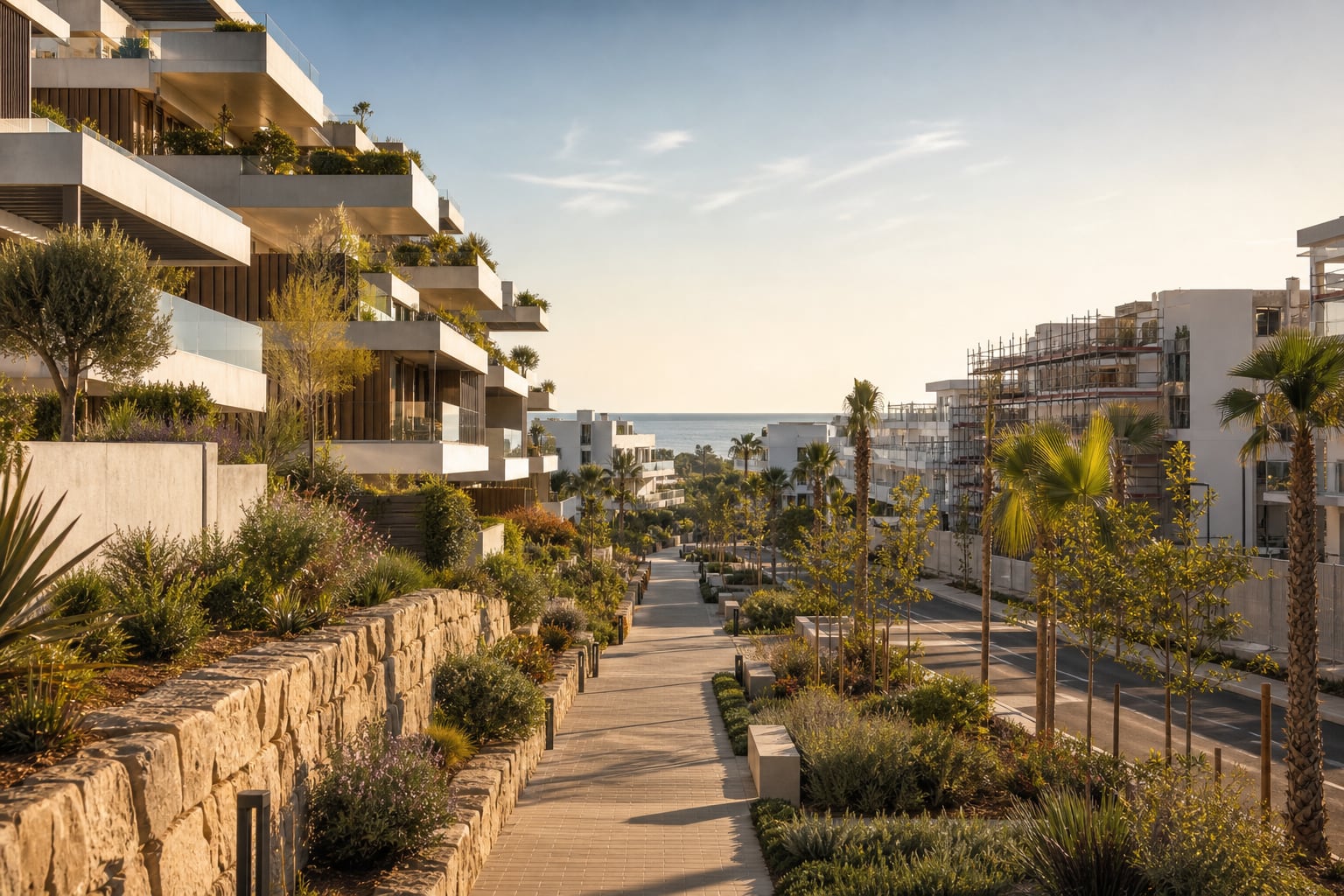
La manière la plus claire de comprendre l’échelle est de parcourir les noms. Rien que sur le Golden Mile, Dolce & Gabbana a lancé Collines du design de Marbella, présenté comme le premier projet immobilier de marque de la maison de couture en Europe - 92 résidences avec des prix annoncés entre environ 3 millions d'euros et 20 millions d'euros. A une courte distance se trouve ÉPIQUE Marbella, développé par Sierra Blanca Estates : 74 résidences réparties en trois phases, dont 56 conçues et meublées par Fendi Casa, situées sur un grand terrain fermé à environ 800 mètres de la plage.
Le côté des villas est tout aussi fréquenté. Karl Lagerfeld Villas a apporté le nom du défunt designer à une collection restreinte de cinq maisons sur le Golden Mile. Elie Saab Villas, créée par le promoteur Urbania, a placé cinq villas de style couturier dans la forêt protégée de Cascada de Camoján, au-dessus de la vieille ville de Marbella. Dans les collines de Benahavís, DarGlobal livre Terre Viva, un projet de 53 villas conçu autour d'Automobili Lamborghini — la première entreprise résidentielle du constructeur automobile en Espagne.
Ensuite, il y a le niveau de marque hôtelière, où les maisons arrivent avec un opérateur cinq étoiles attaché. Le Four Seasons Marbella, conçu par l'architecte américain Richard Meier, associe un Hôtel de 165 chambres avec des résidences privées et des villas. La marque W de Marriott construit le W Resort Marbella, un complexe d'environ 200 millions d'euros complexe hôtelier et résidentiel sur l'une des dernières grandes parcelles en bord de mer de la commune. Missoni a décoré les intérieurs Marea à côté du complexe Finca Cortesin à Casares, et l'une des signatures les plus récentes associe le nom Armani au champion de tennis Rafael Nadal sur un domaine de 33 résidences. La liste est longue et elle ne cesse de s'allonger.
Pourquoi le Golden Mile est devenu l'épicentre
La géographie explique en grande partie cela. Le Milla de Oro, ou Golden Mile, est le couloir d'environ quatre kilomètres qui relie la vieille ville de Marbella et Puerto Banús, qui abrite les hôtels Marbella Club et Puente Romano ainsi qu'un groupe établi de longue date de restaurants étoilés Michelin et de boutiques de créateurs. C'est l'adresse de luxe la plus reconnaissable du sud de l'Espagne - et selon Données de prix d'Idealista pour février 2026, la région de Nagüeles–Milla de Oro avait en moyenne 6,789 €/m², en hausse de 6,9% sur l'année et proche de son plus haut historique.
Pour une marque qui choisit où implanter son produit phare, la reconnaissance compte plus que toute autre chose. Un premier projet européen de Dolce & Gabbana ou Fendi Casa a besoin d'une adresse que les acheteurs internationaux comprennent déjà sans explication, et c'est exactement ce que le Golden Mile offre. Le hic, c’est que le couloir est presque entièrement construit ; Les terrains aménageables sont rares, et le peu de terrains négociés le font à des prix que seul le segment ultra-prime peut absorber. Le branding est devenu l’un des rares moyens restants d’extraire plus de valeur d’un très petit nombre de parcelles.
La carte des marques s’élargit cependant. À l’est de la côte, Los Monteros – le décor du club de plage Dolce & Gabbana – atteignait 8 772 €/m² en février 2026, soit une hausse annuelle de 11,9%, la plus forte croissance de tous les micro-marchés de premier ordre de Marbella. À l'intérieur des terres, la Golf Valley de Nueva Andalucía a atteint un sommet historique de 5 654 €/m². Benahavís et Casares, qui abritent respectivement les projets Lamborghini et Missoni, suivent le même schéma. Là où les développeurs de marque s’engagent, les données sur les prix ont tendance à suivre.
Ce que le boom signifie pour le marché au sens large
Les résidences de marque sont en effet un indicateur de confiance à long terme. Un projet comme celui-ci est engagé des années avant son achèvement, après un travail de faisabilité approfondi mené par des développeurs qui ont tout intérêt à lire correctement la demande. Le cluster actuel autour de Marbella est un pari collectif que le marché privilégié de la Costa del Sol restera fort au cours de la prochaine décennie. Les données à plus long terme confortent ce pari : la croissance cumulée des prix de l’immobilier dans le Triangle d’Or de Marbella, Benahavís et Estepona a augmenté. a dépassé 50 % depuis les creux d’après 2008.
Ce que le boom ne signale pas, c’est une croissance galopante. Le même marché est visiblement en train de mûrir. Les prévisions pour la province de Malaga prévoient une hausse des prix d'environ 7 à 8 % en 2026, contre environ 12 % l’année précédente — un rythme plus calme et plus rationnel, selon les mots des agents locaux. L'immobilier de luxe dans la province s'échange désormais sur un large éventail de 15 000 € à 35 000 € le mètre carré, selon les segments. Dans un marché qui n'évolue plus verticalement, les produits de marque permettent aux développeurs de rivaliser pour attirer un pool d'acheteurs internationaux de plus en plus exigeants – provenant en grande partie du Royaume-Uni, de l'Allemagne, des Pays-Bas et de la Belgique, et désormais de plus en plus des États-Unis et du Golfe.
Le point le plus important à retenir est la divergence. Les segments de marque et ultra-prime s'éloignent du marché intermédiaire et l'écart se creuse. Marbella est en train de devenir un marché à deux vitesses : un marché haut de gamme qui fait la une des journaux, mesuré en dizaines de milliers d'euros par mètre carré, et un marché beaucoup plus vaste et plus accessible en dessous. Les deux sont en bonne santé, mais ils n’évoluent plus au même rythme et l’acheteur doit savoir clairement dans lequel il achète.
Ce que cela signifie pour les acheteurs
Pour le bon acheteur, l’attrait d’une maison de marque est réel. Les intérieurs arrivent résolus plutôt que de nécessiter des mois de gestion de projet. La qualité de fabrication porte derrière elle la réputation d'un nom reconnaissable. Les services de conciergerie, de sécurité et de gestion sont généralement intégrés, ce qui convient à un propriétaire qui souhaite une véritable propriété fermée à clé. Et une adresse de marque peut être plus facile à louer à un prix plus élevé et, en théorie, plus facile à positionner lors de la revente.
Les compromis méritent la même attention. La prime d'achat est payée d'avance, et les projets de marque entraînent généralement des frais de communauté et de gestion plus élevés qu'un développement conventionnel : les services sont excellents, mais ils ne sont pas gratuits. La revente est la véritable question ouverte : le segment est jeune, les ventes comparables sont encore faibles et il n'existe pas d'expérience longue montrant la fiabilité de la prime de marque lorsqu'un propriétaire finit par vendre. Quiconque envisage sérieusement d’en créer un devrait budgétiser ces frais de fonctionnement et demander des conseils indépendants sur le programme spécifique plutôt que sur la catégorie en général.
Il vaut également la peine de maintenir un boom proportionné. Les résidences de marque constituent une mince tranche du marché de la Costa del Sol qui fait la une des journaux. Le marché du travail – celui sur lequel la plupart des acheteurs achètent réellement – est celui des nouvelles constructions sans marque, allant des appartements autour de la barre des 250 000 € aux villas dans les millions à un chiffre. C’est là que se situent la profondeur, le choix et, pour de nombreux acheteurs, le meilleur rapport qualité-prix. Acheteurs comparant Les meilleurs quartiers de Marbella constaterons que la grande majorité des maisons sont sans marque – et ce n’est pas pire – alors que nos couverture continue du marché de la Costa del Sol regarde au-delà des gros titres pour voir où se situe réellement la valeur quotidienne.
Le boom des résidences de marque à Marbella est l'expression la plus photogénique d'une vérité plus profonde : un marché de premier ordre défini par une rareté structurelle, deux décennies de demande internationale constante et très peu de terrains aménageables dans ses meilleures adresses. Qu'un penthouse meublé par Fendi soit ou non la maison qui vous convient, les forces qui l'ont produit – une offre limitée, une demande large et résiliente et un marché en pleine maturité plutôt qu'en surchauffe – sont précisément les conditions qui font que la Costa del Sol dans son ensemble mérite d'être examinée attentivement en 2026.
Si vous évaluez la valeur à Marbella, Estepona, Benahavís et sur la Costa del Sol environnante, parcourez la sélection actuelle de maisons neuves et en revente sur Domosmar, ou parlez directement à notre équipe pour une liste adaptée à votre budget et à la façon dont vous envisagez d'utiliser la propriété.