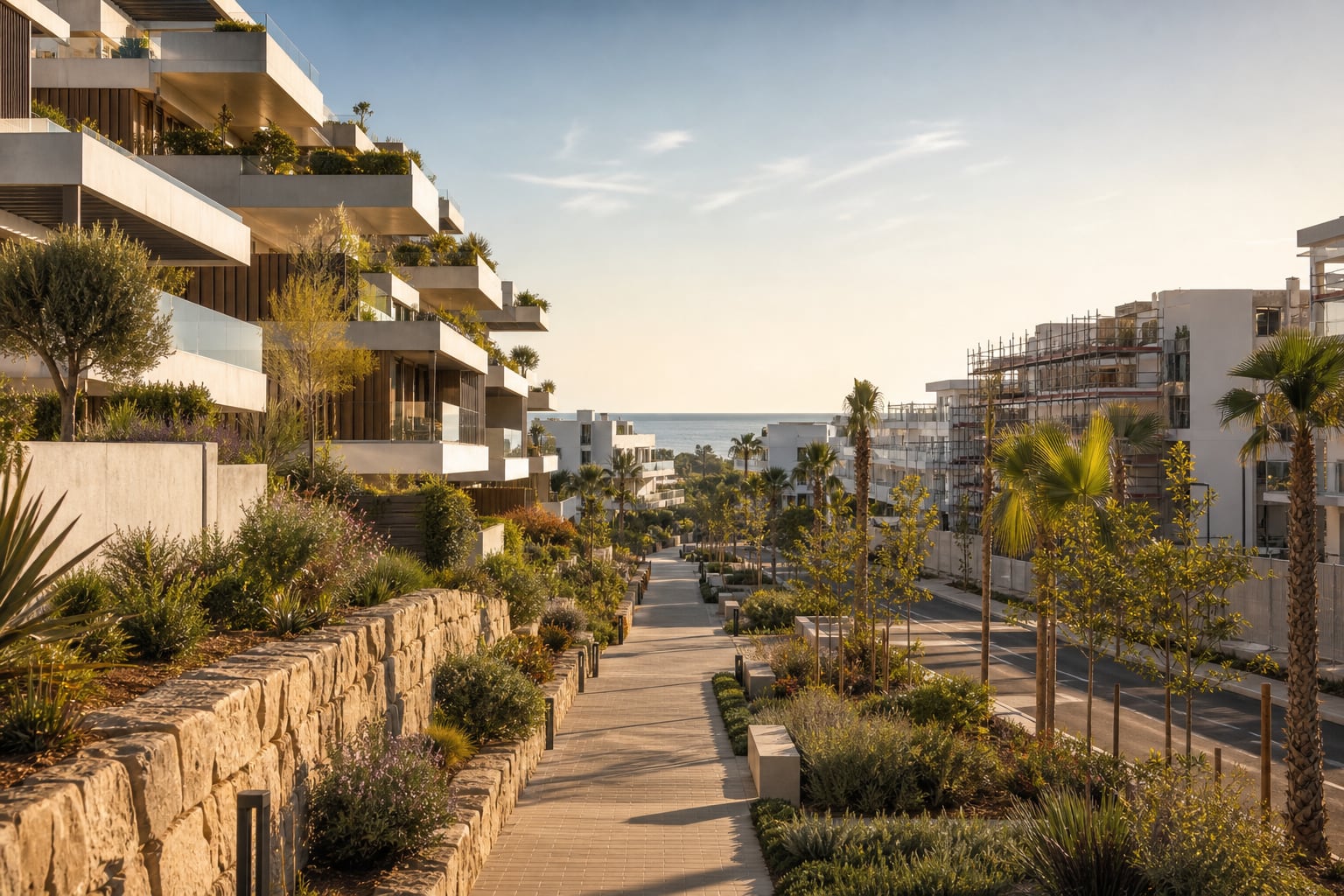
Un samedi matin de mai, le parking poussiéreux à côté des arènes de Nueva Andalucía se remplit tôt. Le marché de rue hebdomadaire s'y étend - fruits et olives, ceintures en cuir, livres de poche d'occasion - et les cafés le long du bord proposent une course constante de café et de tostadas. A quelques rues de là, dans les immeubles qui entourent la Golf Valley de Marbella, un mouvement plus calme est en cours : des nettoyeurs et des gestionnaires immobiliers transportent du linge, des kits de bienvenue et des coffres-forts pour les clés dans les appartements en préparation pour la saison de location estivale. Dès la deuxième quinzaine du mois de mai, la machinerie de location de la Costa del Sol tourne déjà à plein régime.
Derrière ce chiffre d’affaires se cache une question que les acheteurs se posent constamment et à laquelle ils obtiennent rarement une réponse claire : que rapporte réellement une propriété à Marbella ? La réponse honnête en 2026 est que cela dépend entièrement de la façon dont la maison est louée – et que l’écart entre les deux réponses possibles s’est creusé. Cela dépend désormais aussi, pour la première fois, de la paperasse. Deux changements réglementaires intervenus en 2025 ont discrètement réécrit l'arithmétique de la location d'une propriété sur la Costa del Sol, et tout acheteur qui utilise des chiffres de rendement cette année doit comprendre les deux avant de signer quoi que ce soit.
Le rendement global – et pourquoi Marbella se situe en dessous
Commencez par le tableau national. L'Idéaliste étude des rendements locatifs bruts du premier trimestre 2026 situer le rendement de l'immobilier résidentiel espagnol à 6.7%, en baisse par rapport à 7,3% un an plus tôt, mais toujours largement supérieur aux 3,5% offerts par les obligations d'État espagnoles à dix ans. Dans tout le pays, les bureaux et les commerces gagnent plus que le logement ; parmi les marchés résidentiels, Murcie est en tête des capitales provinciales 7.5%, tandis que Madrid était à la traîne à 4,7% et Barcelone à 5,2%.
Cette moyenne nationale cache cependant une grande part de géographie. Les capitales les moins rentables de la même étude n'étaient pas des marchés en difficulté : il s'agissait des destinations côtières et de style de vie les plus chères d'Espagne. Saint-Sébastien vient de rentrer 3.5% et Palma de Majorque 4,4%. Le phénomène est structurel : partout où les prix de vente ont augmenté plus vite et plus que les loyers à long terme, le rendement brut se contracte. Marbella fait partie intégrante de cette entreprise.
L’aspect prix de l’équation est facile à documenter. Données d'Idealista de février 2026 mettre Nueva Andalucía à 5,654 €/m² — un record, en hausse de 6,6% sur un an — le tronçon Nagüeles du Golden Mile à 6.789 €/m² (en hausse de 6,9 %), et Los Monteros à Marbella Est à 8.772 €/m² (en hausse de 11,9 %). Les loyers ont également augmenté : les loyers espagnols a grimpé de 7,1% sur un an au premier trimestre 2026, le marché locatif de Malaga atteignant de nouveaux records. Mais dans les principaux codes postaux côtiers, les loyers n’ont pas suivi le rythme de la valeur du capital.
La conséquence pratique est qu'un acheteur qui loue un appartement à Marbella avec un contrat standard de douze mois devrait s'attendre à un rendement brut à un chiffre dans la fourchette basse – plus proche de Palma ou de Saint-Sébastien que du taux national de 6,7% – et ce, avant déduction des frais communautaires, de la taxe d'habitation IBI et des frais de gestion. Ce n’est pas un défaut du marché. Voilà à quoi ressemble simplement un marché d'appréciation du capital : le Triangle d'Or de Marbella, Benahavís et Estepona a enregistré croissance cumulée des prix de plus de 50 % depuis les creux d’après 2008. Le rendement des locations à long terme est rarement la raison pour laquelle quelqu'un achète ici.
Là où se trouve le véritable retour : le marché des locations de vacances
Le chiffre que recherchent la plupart des propriétaires est le rendement des locations de vacances, et c’est une tout autre histoire. La base touristique de la Costa del Sol est vaste et continue de croître. L'Andalousie a fait match nul 6,8 millions de visiteurs internationaux rien qu’au premier semestre 2025 – en hausse de 21 % sur un an – et l’Espagne dans son ensemble était sur la bonne voie pour accueillir environ 100 millions de visiteurs tout au long de l’année. Marbella se situe à proximité du centre de cette demande, à environ 45 minutes en voiture de l'aéroport international de Malaga.
Marbella en capture une part importante. Bilan de location de villas 2025 de l'Agence Marbella note que la municipalité se classe désormais troisième en Espagne pour les unités d'hébergement touristique enregistrées, derrière seulement Madrid et Barcelone. Le taux d'occupation des locations de vacances à Marbella est en moyenne d'environ 65% sur l'ensemble de l'année, en hausse de plus de 80 % le long de la côte entre avril et octobre, avec des tarifs journaliers moyens proches de 169 € et des délais de réservation (environ 65 jours) plus longs que sur la plupart des marchés espagnols.
Comparez cela à la comparaison de longue durée et l’attrait est évident. Le même rapport prévoit des rendements bruts de 7–10% pour des locations de vacances bien situées et bien gérées dans des zones privilégiées – le Golden Mile, la Sierra Blanca et Nueva Andalucía – jusqu'en 2026, avec des tarifs journaliers atteignant 180 à 200 €. Ce sont des projections d’agence plutôt que des garanties, et elles décrivent le haut de la fourchette et non la moyenne. Mais le point structurel est valable : à Marbella, le rendement d’une propriété se gagne en haute saison, et non sur une location de douze mois.
Les mises en garde comptent. Les chiffres bruts des locations de vacances flattent le propriétaire. Net de nettoyage, de commission de gestion – qui représente généralement un cinquième ou plus des revenus bruts – d'ameublement, de services publics, d'usure plus rapide et de l'impôt sur le revenu des non-résidents dû sur les revenus locatifs espagnols, le rendement réalisé est sensiblement inférieur au titre. Les tarifs de location et les déductions autorisées diffèrent également selon le pays de résidence du propriétaire. Les acheteurs devraient modéliser les rendements nets plutôt que bruts et prendre conseil auprès d'un gestor ou d'un abogado espagnol qualifié sur leur propre situation fiscale avant de se fier à une projection de rendement.
Deux changements de règles qui ont fait bouger les choses
Louer une propriété à des touristes en Andalousie n’a jamais été une tâche facile. Une maison de vacances doit déjà être enregistrée auprès de la Junta de Andalucía (VFT) et répondre aux normes minimales en matière de climatisation, de chauffage et de documentation pour les clients. Ce qui a changé en 2025, c’est que deux couches supplémentaires ont été ajoutées au sommet – et ensemble, elles constituent ce qui différencie 2026 de 2024.
Le premier changement est national. Décret royal 1312/2024 a créé un registre national unique des loyers – le Registro Único de Arrendamientos – ainsi qu’une Ventanilla Única Digital, ou guichet unique numérique. Chaque propriété commercialisée pour une location à court terme nécessite désormais un numéro d'enregistrement, délivré par le registre foncier espagnol, et les plateformes en ligne sont obligées de l'afficher sur chaque annonce. Les règles sont entrées en vigueur dans la pratique 1 juillet 2025, et les annonces sans numéro valide peuvent être supprimées par les plateformes.
Pour un acheteur, ce n’est pas une rupture – c’est une étape supplémentaire et une bonne raison de vérifier le statut avant la finalisation. Une revente commercialisée comme un « investissement locatif » doit déjà détenir son numéro d'enregistrement, ou avoir un chemin clair pour en obtenir un. Un appartement qui ne peut pas être immatriculé, que ce soit en raison de son classement ou de son bâtiment, a une valeur matériellement inférieure en tant que bien de revenus qu'un appartement qui le peut.
Le deuxième changement est plus dur et concerne le bâtiment plutôt que le pays. Une réforme de la loi espagnole sur la propriété horizontale, en vigueur depuis avril 2025, permet à une communauté de propriétaires d'approuver, de restreindre ou de bloquer purement et simplement de nouvelles locations touristiques dans le bâtiment avec une majorité des trois cinquièmes. Les locations déjà enregistrées et en activité sont généralement protégées ; les nouveaux ne le sont pas. La décision appartient désormais aux voisins.
Cette seule règle change la façon dont un acheteur doit lire l’achat d’un appartement. Deux appartements physiquement identiques dans la même urbanisation de Nueva Andalucía peuvent désormais générer des revenus potentiels très différents en fonction de quelque chose qu'une brochure ne mentionne presque jamais : le vote de la communauté. Avant d'acheter un appartement avec projet locatif, ses statuts et les récents procès-verbaux des assemblées de propriétaires méritent le même examen que le titre de propriété. Les villas individuelles sur des terrains privés se situent en grande partie en dehors de ce problème – une des raisons pour lesquelles les maisons à Benahavís, les collines d'Estepona et les propriétés fermées indépendantes ont si bien conservé leur attrait locatif.
Ce que cela signifie pour les acheteurs en 2026
Rien de tout cela n’atténue les arguments en faveur de l’investissement sur la Costa del Sol – au contraire, cela les aiguise. Le contexte macroéconomique reste solide. Le même panel d'agences de la Costa del Sol s'attend à une hausse des prix dans la province de Malaga 7 à 8 % en 2026, passant des gains plus marqués de ces dernières années à ce que les agents locaux décrivent comme un marché plus mature et plus rationnel. Marbella reste le marché le plus actif en termes de volume de transactions, Benahavís affiche les prix moyens les plus élevés et Estepona affiche la plus forte croissance en pourcentage.
Les nouvelles règles récompensent simplement un acheteur plus réfléchi. Le parc de nouvelles constructions présente ici un net avantage : il est généralement plus simple à enregistrer, il présente les caractéristiques énergétiques modernes que les vacanciers attendent de plus en plus et, dans les communautés de villégiature spécialement construites, il est souvent vendu dans des développements où la location est anticipée plutôt que combattue. Les appartements en revente dans des immeubles résidentiels établis nécessitent d'abord un contrôle communautaire – une conversation rapide avec l'administrateur avant qu'une offre ne soit faite, pas après.
Sur la microlocalisation, la logique du rendement suit la logique de la demande. Un parc accessible à pied, adjacent à la plage et à la marina - les rues autour de Puerto Banús, les fronts de mer de San Pedro et d'Estepona, La Cala de Mijas - remplit les mois intermédiaires du printemps et de l'automne qui permettent d'obtenir un taux d'occupation annuel. Les maisons situées dans les vallées du golf et à flanc de colline bénéficient des tarifs les plus élevés en haute saison. Les régions qui méritent le plus de prudence ne sont pas les plus chères, mais celles où la demande est faible hors saison, où un fort taux d'intérêt estival cache un calendrier à moitié vide.
Une manière simple de l’encadrer : à Marbella, achetez d’abord pour l’actif et le style de vie, et traitez les revenus locatifs comme un rendement réel mais secondaire – un rendement qui, bien exécuté et dans le cadre des nouvelles règles, surpasse toujours confortablement la plupart des alternatives. Les propriétaires qui transportent du linge dans ces appartements de Nueva Andalucía en mai ne recherchent pas un rendement de location à long terme. Ils monétisent un actif de haute saison sur l'un des marchés immobiliers les plus résilients d'Europe, et le font avec des documents qui, pour la première fois, sont entièrement consignés.
Une réponse plus claire à la question du rendement
Pour les acheteurs, le message pratique de 2026 est simple. La question du rendement a une bonne réponse sur la Costa del Sol, mais c'est la réponse à la location de vacances, et elle est désormais soumise à conditions. Vérifiez le parcours d'inscription, lisez les règles de la communauté et modélisez le retour net de frais et de taxes plutôt que de vous fier à un titre brut. Bien réalisée, une propriété à Marbella bien choisie remplit deux fonctions à la fois : un actif capital dans un marché caractérisé par une véritable pénurie structurelle d'offre et un actif de revenus dans une économie touristique qui ne cesse de battre ses propres records.
Domosmar se spécialise dans les propriétés de nouvelle construction et de revente sélectionnées à Marbella, Benahavís, Estepona et sur la Costa del Sol au sens large. Pour voir comment le rendement 2026 se reflète dans des projets spécifiques et des maisons de revente, parcourez le Propriétés sur la Costa del Sol — chaque annonce est examinée en fonction de son emplacement, de son étape de livraison et de son aspect pratique, et pas seulement de son attrait pour la brochure. Pour une shortlist construite autour d'une vision claire du rendement et des nouvelles règles de location, contactez l'équipe Domosmar, et explorez le Blog Domosmar pour en savoir plus sur le marché de Marbella et de la Costa del Sol.