Marbella gère son marché immobilier dans le cadre d'un plan d'urbanisme rédigé en 1986. Cela a changé 22 février 2026, lorsque l'autorité régionale du logement de la Junta de Andalucía a publié un rapport favorable au nouveau Plan général d'ordonnance municipale de la ville — le PGOM — et l'a formellement transmis à la mairie de Marbella, ouvrant la voie à un vote final en plénière qui transformera le cadre en loi. Avec cette approbation, Marbella devient la première municipalité d'Andalousie pour mettre son urbanisme en conformité avec la loi régionale de 2021 connue sous le nom de LISTA, la Ley de Impulso para la Sostenibilidad del Territorio de Andalucía.
Pour un acheteur qui essaie de comprendre ce qui arrive réellement aux prix, à l’offre et à la certitude dans la ville la plus surveillée au niveau international de la Costa del Sol, il s’agit de l’actualité la plus importante de l’année. Ce n’est pas non plus tout à fait le moment où le marché change de forme. Le PGOM est un cadre stratégique, pas un permis de construire. Le plan détaillé qui décidera de ce qui peut être construit où — le POU, le Plan de Ordenación Urbana — vient ensuite et ne devrait pas être en vigueur avant 2027 ou 2028. L'approbation de février est à la fois une étape importante et un coup d'envoi, et la différence entre ces deux choses réside dans l'endroit où se situe réellement l'opportunité de propriété.
Quarante ans sur le PGOU de 1986
La saga urbanistique de Marbella est l'une des histoires les plus anciennes de la vie municipale espagnole. Le PGOU de 1986 a régi l’utilisation des terres tout au long des hauts et des bas des années 1990 et 2000. Un plan révisé, rédigé sous l'administration précédente de la ville, a été adopté en 2010, puis, en 2015, annulé dans son intégralité par la Cour suprême espagnole, qui a estimé que la procédure légale correcte n'avait pas été suivie lors de sa rédaction. Du jour au lendemain, la ville a été contrainte de revenir aux règles de 1986. Environ quatre décennies plus tard, ce plan plus ancien était toujours en vigueur le matin où la junte a publié son rapport de février.
Les limbes n’étaient pas abstraits. Des milliers de maisons construites ou autorisées dans le cadre du plan de 2010 se sont retrouvées avec des classifications contestées. Les propriétaires ont eu du mal à enregistrer ou à vendre des propriétés dont le statut urbanistique était discrètement contesté. Les développeurs des zones touchées ne pouvaient pas déposer de nouvelles licences avec la certitude que les règles seraient valables. Pour une ville dans laquelle environ un résident sur trois est étranger, l’effet pratique a été un frein constant à la confiance des investisseurs – masqué par la vigueur de la demande internationale, mais visible pour quiconque lit un rapport au titre délicat.
Le maire Ángeles Muñoz a qualifié l'approbation de février de « magnifique nouvelle » et a déclaré qu'elle avait été obtenue « en un temps record » grâce à une étroite collaboration entre la ville et le gouvernement régional. Le PGOM a été conçu spécifiquement dans le cadre procédural LISTA, en partie pour le protéger du type de défi qui a fait échouer le plan de 2010. La distinction, première en Andalousie, est technique, mais elle est importante : elle signale que le nouveau cadre a été écrit pour passer le test juridique que le précédent a échoué.
Ce que fait réellement le PGOM
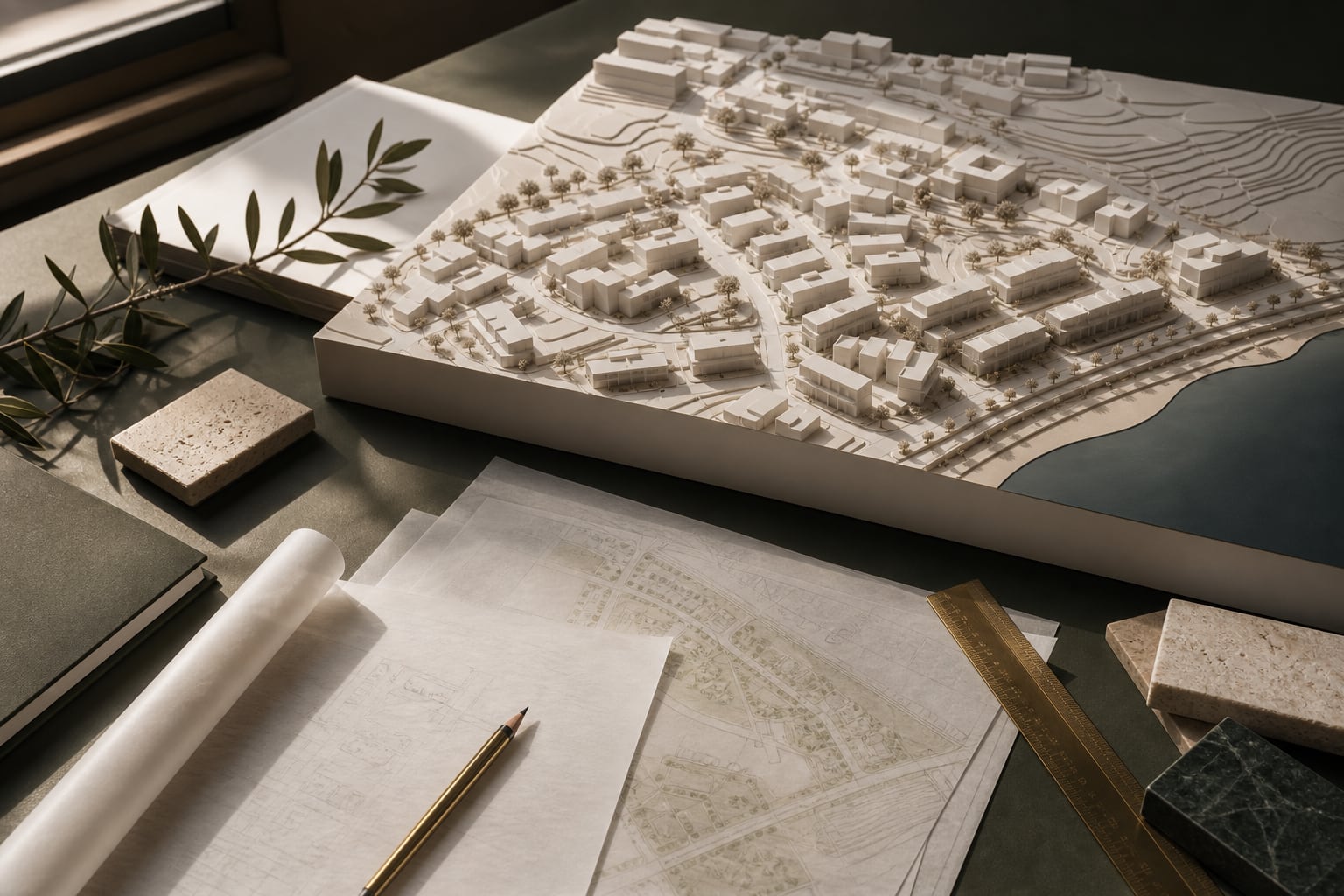
Un PGOM est, par essence, la carte stratégique d’occupation du sol d’une municipalité espagnole. Il classe les terrains – urbains, aménageables, non aménageables – définit le cadre général de zonage, de densité et d’utilisation, désigne les espaces verts et protégés et aligne les corridors de transport et les règles de durabilité avec la législation régionale. Il n’accorde pas, en soi, le droit de construire sur une parcelle particulière, mais il définit l’univers de ce qui sera possible une fois les plans détaillés de mise en œuvre mis en place.
Dans le cas de Marbella, le nouveau plan ouvre un potentiel de développement supplémentaire San Pedro de Alcántara, Nueva Andalucía, Las Chapas et certaines parties du centre de Marbella — des zones où l'offre a été visiblement tendue par rapport à la demande. Il s’attaque également à l’un des héritages les plus inconfortables de l’annulation de 2015 : une voie visant à régulariser le statut juridique des propriétés prises entre les deux régimes annulés. Pour les propriétaires des maisons concernées, il s’agit de la partie du PGOM qui est la plus susceptible d’avoir une incidence directe sur leur propriété quotidienne.
Pour les constructions neuves, l’effet immédiat est plus modeste. Le PGOM détermine quel type de développement est autorisé au niveau stratégique – ce qu’un architecte peut rédiger de manière crédible, ce qu’un développeur peut garantir de manière crédible. C'est le POU, situé en dessous, qui émettra les règles granulaires : densités exactes des parcelles, limites de hauteur, retraits et réglementations locales qui permettent de déposer un permis de construire spécifique sur un terrain spécifique.
Le POU est le plan qui façonnera réellement ce qui sera construit
Jusqu’à ce que le POU soit approuvé – actuellement attendu entre 2027 et 2028 – Marbella fonctionnera sous un régime hybride. Le PGOM apporte la certitude stratégique. Les permis au jour le jour continueront d’être délivrés dans le cadre de règles transitoires qui s’appuient, si nécessaire, sur ce qui restait réalisable dans les anciens cadres. Pour les acheteurs immobiliers, c’est la partie du calendrier qui compte le plus. Le marché ne passe pas des limbes à un environnement de planification entièrement renouvelé en février 2026. Il évolue désormais vers un horizon stratégique plus clair et un régime de mise en œuvre pleinement opérationnel dans environ deux à trois ans.
Un aperçu utile de la manière dont Marbella gérera cette période intérimaire se trouve dans l'annonce faite par la mairie, en juillet 2025, d'environ 67 M€ de permis de construire orienté vers le développement résidentiel. Les libérations ont été sélectives et concentrées : la majeure partie du paquet a atterri sur un petit nombre de projets soigneusement choisis à Nueva Andalucía, comprenant ensemble près de 100 nouveaux logements. Dans une municipalité qui absorbe plusieurs multiples de ce chiffre chaque année, cet approvisionnement a été choisi délibérément et non débloqué en masse. Les attentes devraient être à peu près les mêmes jusqu’à ce que le POU soit en vigueur.
Pourquoi l’histoire de l’offre évoluera lentement
Les données de prix pour le premier trimestre 2026 ne laissent aucun doute sur l’étroitesse du marché de Marbella. Rapport de prix d'Idealista pour mars 2026 mettre le prix municipal moyen demandé à 6 260 € le mètre carré, soit une hausse annuelle de 8,59%. Dans les zones prime, les chiffres sont encore plus élevés : la zone Nagüeles-Milla de Oro a atteint en février une moyenne de 6 789 €/m², Los Monteros atteignant 8 772 €/m² et Nueva Andalucía atteignant un sommet historique de 5 654 €/m². L'indice des prix de vente vérifié de l'évaluateur indépendant Tinsa pour Marbella a montré une augmentation annuelle de 20,53% au T1 2026, pour atteindre 3 641 €/m² — bien en avance sur le taux régional andalou de 10,3%, selon la série publiée par Tinsa. Il ne s’agit pas là des chiffres d’un marché sur le point de s’affaiblir en raison d’une nouvelle offre.
Le contraste avec Estepona, à dix kilomètres à l'ouest, est instructif. La municipalité voisine a passé plusieurs années à rationaliser son processus de planification et est devenue le marché de nouvelles constructions le plus actif de la Costa del Sol en 2026, avec plus de cinquante projets en cours — une dynamique explorée en détail dans notre Analyse de nouvelle construction à Estepona. L'offre délibérément plus restreinte de Marbella a plutôt creusé l'écart de prix entre les deux villes au cours de cette période plutôt que de le réduire. Le PGOM et le POU qui suivra ne pourront pas inverser cette tendance du jour au lendemain. Au cours de la seconde moitié de la décennie, ils allégeront progressivement une partie de la pression, mais la machine de planification produit des maisons en années, et non en trimestres, et un acheteur devrait planifier en fonction de ce calendrier plutôt que de l'anticiper.
Les prévisions du secteur reflètent la même situation. L'Agence Marbella, citée par Idealista en mars 2026, s'attend à ce que les prix de l'immobilier à Marbella augmentent entre 7% et 8% en 2026 – un recul par rapport à environ 12 % de l’année précédente, mais une croissance toujours fermement positive, tirée par une demande internationale structurelle et un pipeline d’approvisionnement que même un PGOM fraîchement approuvé ne peut pas accélérer rapidement. Le marché mûrit, il ne se refroidit pas.
Lire le PGOM en tant qu'acheteur immobilier
Pour la plupart des acheteurs, la conséquence pratique la plus importante du PGOM n’a rien à voir avec la direction du prochain développement. Il s’agit du rétablissement d’une sécurité juridique fondamentale dans l’ensemble de la base immobilière de Marbella. Une propriété qui nécessitait il y a dix ans des pages de contexte juridique pour expliquer son statut de planification peut, après l'entrée en vigueur du nouveau cadre, être classée, enregistrée et commercialisée selon des règles cohérentes. Il s’agit d’un changement considérable pour le marché de la revente, et en particulier pour les acheteurs qui envisagent des propriétés plus anciennes sur des terrains qui ont été rattrapés par l’annulation du plan de 2010.
Le corollaire est que le fardeau de la diligence raisonnable de l'acheteur ne disparaît pas : il change de forme. Avant le PGOM, la question était de savoir si un bien immobilier tombait dans les fissures laissées par la saga urbanistique. Après le PGOM, la question est de savoir quel régime transitoire s'applique au terrain ou au bâtiment spécifique que vous achetez, et comment il sera reclassé dans le nouveau cadre. C’est technique, cela varie selon la zone et ce n’est pas une question à laquelle il faut répondre à partir d’une brochure. C'est le genre de détail qu'un abogado ou un gestor espagnol qualifié lira dans un journal actuel. cédula urbanistique — le certificat formel d'urbanisme — du bien immobilier concerné.
Pour les acheteurs de nouvelles constructions, le message est plus simple. Les projets sous licence existants se poursuivent selon leurs calendriers d'origine (le PGOM ne suspend pas les travaux déjà autorisés) et les développeurs disposant de licences valides termineront et livreront comme prévu. Les stocks sur plan et récemment achevés actuellement en vente à Marbella sont la partie du marché la moins perturbée par le nouveau cadre. Notre annonces en direct à Marbella refléter cette réalité. Les acheteurs comparant Marbella aux marchés voisins trouveront également notre couverture du premier niveau, y compris le récent Boom des résidences de marque à Marbella, contexte utile pour comprendre quelle extrémité du pipeline d’approvisionnement se déplace aujourd’hui et laquelle mettra du temps à arriver.
Comme pour toute transaction sensible en matière d'urbanisme en Espagne, nous recommandons fortement un avis juridique indépendant sur le statut urbanistique précis de toute maison avant de signer — en particulier pendant cette période de transition et en particulier pour les propriétés datant d'avant 2015 ou situées dans des zones affectées par le plan annulé de 2010.
La forme de la prochaine décennie
L’histoire de Marbella au cours des dix prochaines années s’écrira en trois niveaux. Le sommet visible – les programmes des marques Fendi, Dolce & Gabbana et Lamborghini – continuera de faire la une des journaux tout en occupant une mince partie du pipeline d’approvisionnement. Estepona continuera à livrer la majeure partie des nouveaux logements de la côte ouest jusqu'en 2026 et 2027, comme elle l'a fait jusqu'à présent. Et le changement le plus profond et le plus lent se produira discrètement à l’intérieur même de Marbella, alors que le PGOM et son successeur POU restaureront la machine de planification qui construit – et reconstruit – la ville. Aucun des trois n’est indépendant des autres, et l’acheteur qui les lit ensemble a une vision plus claire de la valeur de la propriété à Marbella en 2026 que la plupart des agents ne le proposent.
Si vous envisagez un achat à Marbella par rapport aux marchés voisins en 2026, parcourez le Domosmar maisons neuves et revente sur la Costa del Sol ou parlez directement à notre équipe pour une liste restreinte, dirigée par l'acheteur, adaptée à votre budget, à votre calendrier et au contexte de planification spécifique des maisons que vous envisagez.