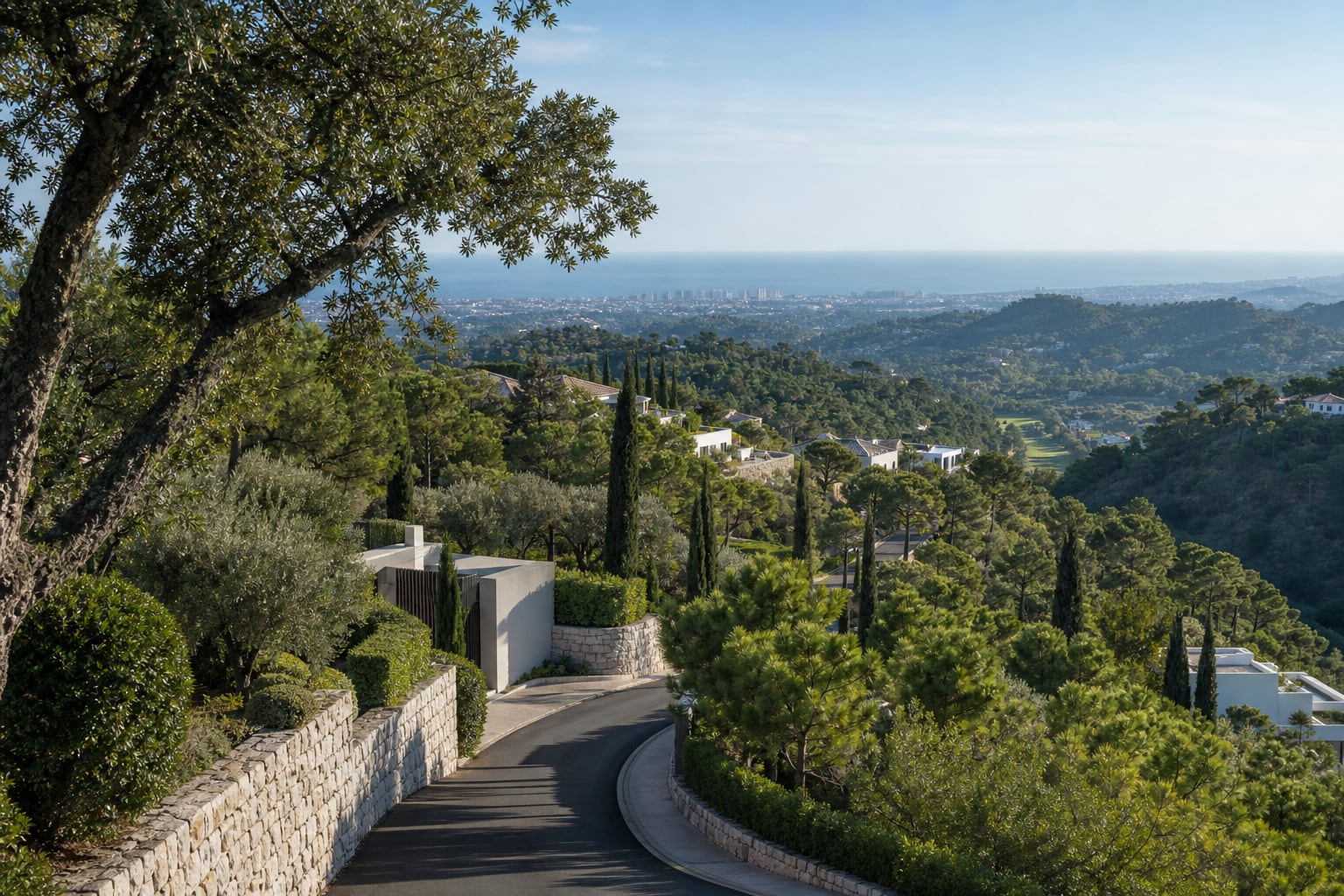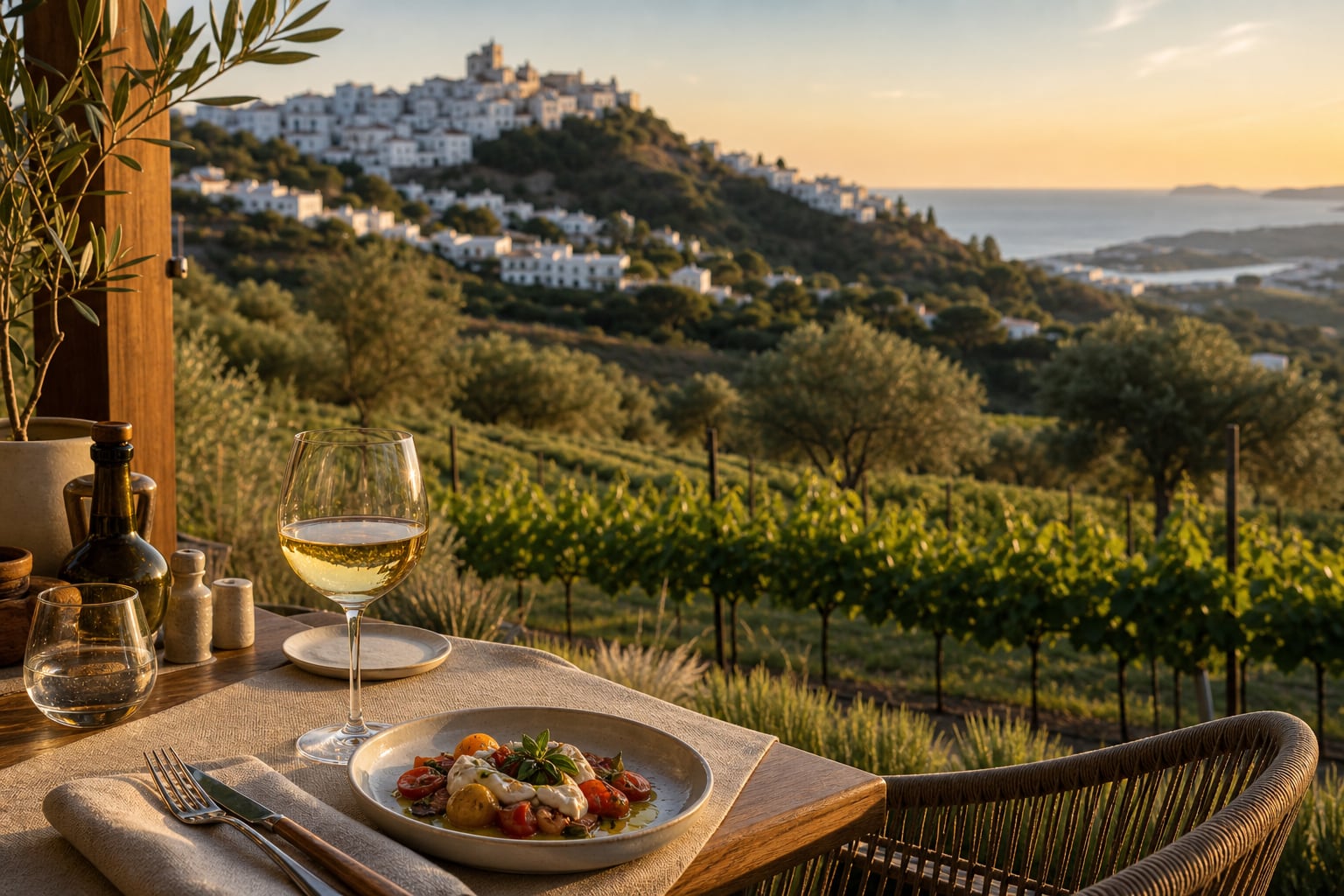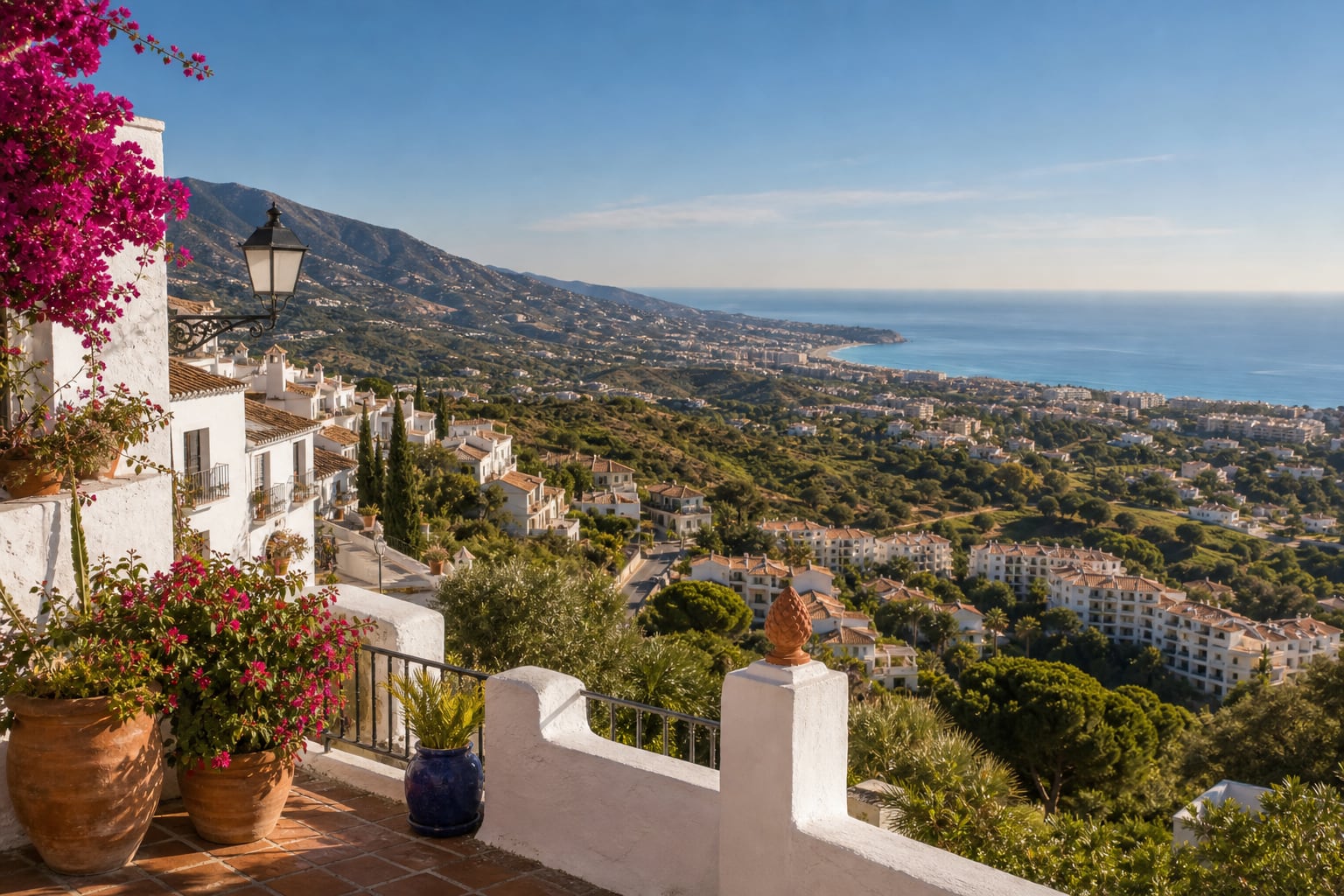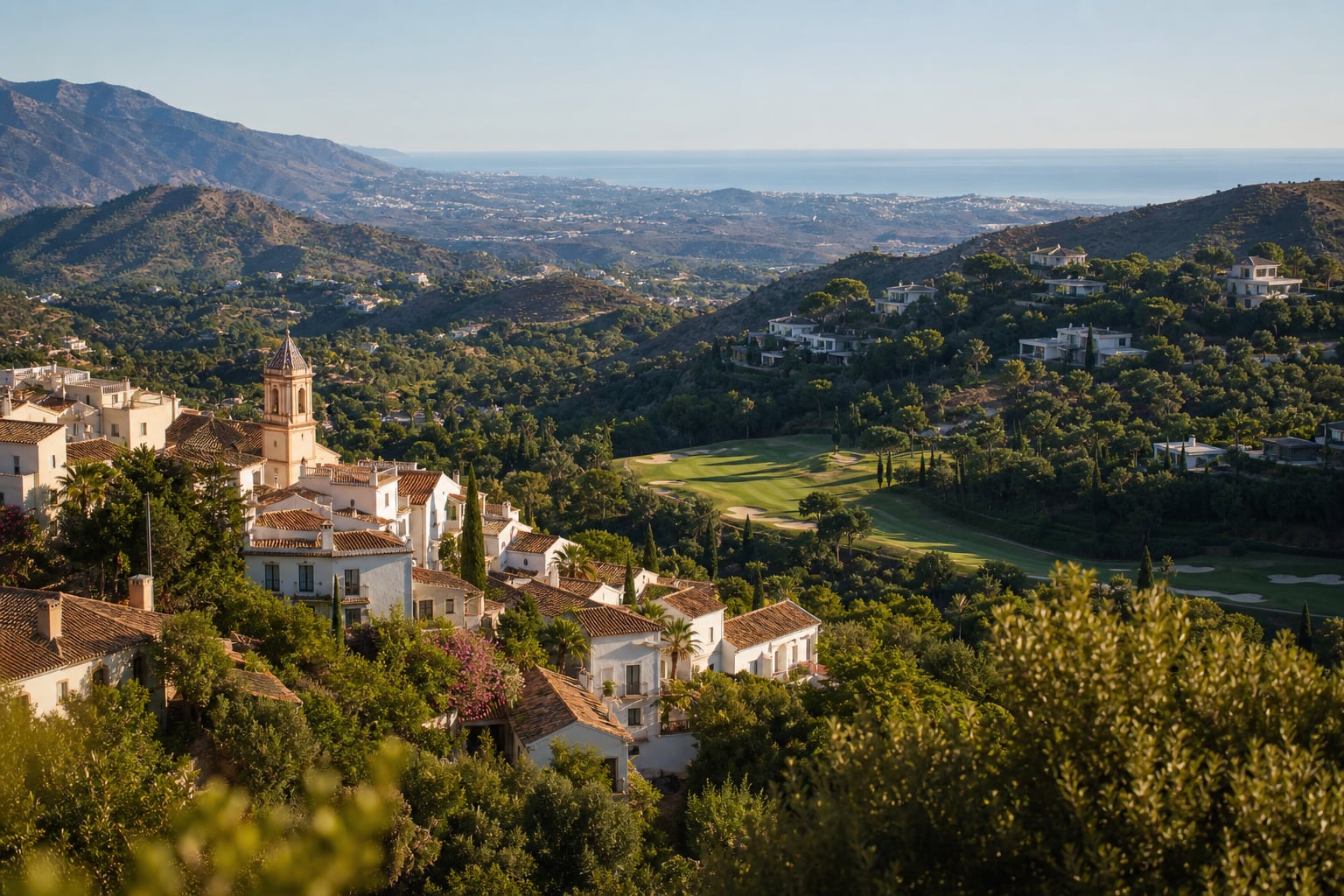
No town in Andalucía declares a higher average income than Benahavís. The Spanish Tax Agency's latest figures put it at €43,159 a year, and idealista's index has the municipality's homes changing hands at €5,391 per square metre — a regional record and, by idealista's own account, an all-time high. What makes the figure strange is what it averages over: one municipality that runs from a whitewashed mountain village of cobbled lanes up to La Zagaleta, the most expensive private estate in Spain.
For a buyer trying to read the western Costa del Sol, that breadth is the whole point of Benahavís — and the thing that trips people up. The name is attached to a fifteen-minute drive's worth of cork-oak hillside above San Pedro de Alcántara, but it is also attached to gated golf valleys, to ultra-prime estates with their own helipads, and to one of the better-known restaurant villages in southern Spain. Quoting a single price per square metre for a place like this tells you almost nothing. Knowing which Benahavís you are buying tells you everything.
One municipality, every price band
Benahavís is, geographically, one of the largest municipalities on this stretch of coast, and it does not behave like a single market. Its centre is an inland village of roughly 9,000 residents (INE), around six in ten of them foreign, reached by climbing the A-355 from San Pedro de Alcántara through a gorge of the Río Guadalmina. But the municipal boundary also reaches down toward the coast and swallows part of the Golf Valley behind Puerto Banús, along with a string of gated estates in between. A buyer in Benahavís might be looking at a €400,000 village apartment or a €15 million villa behind two private security gates, and both carry the same postal town.
That spread is what makes the headline statistics so misleading and so revealing at once. The municipality-wide average of €5,391/m² sits just below Nueva Andalucía, the Golf Valley next door, at roughly €5,654/m², and below the Golden Mile's €6,789/m² on idealista's early-2026 figures — yet Benahavís posts the higher income of the lot, because the people who own its trophy estates declare their wealth where they live. The number is pulled in two directions at once: up by La Zagaleta and El Madroñal, down by the village and the more accessible new-build belt.
For context on where Benahavís sits in the local pecking order, it is worth reading the municipality against its neighbour down the hill. Our guide to San Pedro de Alcántara — the working town at the foot of the A-355, trading in the low €5,000s per square metre — describes the everyday coast that Benahavís looks down on. The hill above it is where the money goes quiet and the plots get larger, and the rest of this guide works upward from there.
La Zagaleta and El Madroñal: the top of the market
No conversation about Benahavís gets far without La Zagaleta. Built on a former hunting estate above the village, it covers around 900 hectares behind a single controlled entrance, with two private members-only golf courses, an equestrian centre, a clubhouse, and — the detail that everyone repeats — a private helipad for owners who would rather not sit on the AP-7. There is no through-traffic, no public access, and 24-hour security on a scale more familiar from Beverly Hills than the Sierra Blanca.
The pricing matches the privacy. Villas in La Zagaleta trade across an enormous band — roughly €4 million to €40 million — and the estate's average sale price has been reported at around €12 million, among the highest of any residential address in the country. At the very top, headline listings reach €30 million for a single villa on a plot of several thousand square metres. Buildable land almost never comes up; when a plot does, it is priced for the view and the address rather than the dirt. This is where the municipality earns its reputation, and a meaningful share of that €43,159 average income.
A short distance away, El Madroñal offers a quieter version of the same idea: a gated community of large villas set among cork oaks at altitude, with sweeping coastal views, generous plots and a more discreet, established feel than the showpiece estates below it. Between them, La Zagaleta and El Madroñal define the ceiling of the Benahavís market — and explain why, on paper, a mountain municipality with a village at its heart can out-earn every other town in Andalucía.
The Golf Valley's Benahavís edge
Drop down from the estates and Benahavís turns into golf country — the part of the municipality where most buyers actually shop. La Quinta, on the Benahavís side of the Golf Valley, runs a 27-hole course laid out as three nines — San Pedro, Ronda and Guadaiza — designed by the three-time World Cup and Ryder Cup player Manuel Piñero and anchored by the Westin La Quinta resort and spa. Further down the A-355 toward San Pedro, the Los Arqueros golf-and-residential resort climbs the hillside with its own course and apartment terraces, putting a championship round within a few minutes of the front door.
This is the engine room of new-build Benahavís, and it is where the agency's own inventory concentrates. Schemes such as Le Monte, a row of contemporary villas priced from roughly €1.65 million, and the larger The Sky Marbella, spanning apartments to villas from about €1.5 million up to €9 million, sit on these slopes with views back over the valley to the sea. You can compare what is currently live on our Benahavís listings page, where guide prices start a little under €1 million for an apartment and rise steeply with altitude and plot.
The buyer here is typically a family or a serious second-home owner who wants modern construction, a gated setting and golf on the doorstep, but does not need — or want — the scale and security apparatus of La Zagaleta. It is a market that overlaps closely with the Golf Valley proper; for the neighbouring courses and the apartments around them, our Nueva Andalucía Golf Valley guide maps the other half of the same playing field, where five championship courses share one valley floor.
The village that feeds the coast
For all the estates, the soul of Benahavís is the old village — and its reputation rests on food. Locals and visitors alike call it the comedor de la Costa del Sol, the “dining room of the Costa del Sol”, a tag earned by an unusual concentration of restaurants for a place this size and reinforced by the village's own hospitality school, the Escuela de Hostelería de Benahavís, which has trained a generation of Costa del Sol chefs. People drive up the mountain from Marbella and Puerto Banús specifically to eat here, then drive back down.
The pleasure of the place is that it remains a real Andalusian village rather than a resort built to look like one. Narrow lanes climb between lime-washed houses to a ruined Moorish castle; tables spill out onto small plazas; and tucked among them is Amanhavis, a long-running boutique hotel and restaurant on Calle Pilar whose themed rooms and creative Andalusian kitchen have made it a fixture of village evenings for decades. The whole centre sits about fifteen kilometres from Marbella and roughly an hour from Málaga airport — close enough for a spontaneous dinner, far enough to feel like another world.
That combination — a genuine village with serious restaurants, a short hop from the coast, under skies that deliver some 320 days of sunshine a year — is exactly what makes the more modest end of Benahavís compelling. A buyer who cannot stretch to a hilltop villa can still own an apartment within walking distance of one of the best little dining scenes on the coast, and inherit the same views and the same air. The village is the part of Benahavís that the spreadsheets miss.
Who buys here, and the case in 2026
Put the bands together and Benahavís reads as a layered market rather than a single one. At the base, village apartments and townhouses open the municipality to buyers in the high six figures. In the middle, the golf belt around La Quinta and Los Arqueros delivers gated, modern family homes from around €1 million into the low millions. At the top, La Zagaleta and El Madroñal run from several million to the highest prices in Spain. The €5,391/m² average is real, but it is the midpoint of a very long line, not a description of any actual house.
The buyer mix is international and skews to the long-term: British, Scandinavian, Belgian, Dutch and Middle Eastern owners who want privacy, golf and mountain views within reach of the coast, and who tend to keep their homes rather than flip them. New-build dominates the active market on the golf slopes, with staged developer payments and current energy standards; resale is where the village character and the larger established plots live. As across Andalucía, anyone planning to let a property should check the region's tightened holiday-rental registration rules before counting on rental income — a point we explore alongside the eastern coast's numbers in our guide to Marbella's beach-side east.
For 2026, the case for Benahavís is that it lets a buyer choose their altitude on the same address. You can take the view and the golf without the Golden Mile's beachfront premium, or you can buy at the very summit of the Spanish market — and either way you are minutes from a village that the rest of the coast drives up to for dinner. That optionality, more than any single price, is why the municipality keeps out-earning everywhere else in Andalucía.
To see how the layers translate into real homes, browse our current Costa del Sol property listings across Benahavís and the wider western coast, or get in touch with the Domosmar team for a buyer-led comparison of village, golf-valley and gated-estate options matched to your budget and how you intend to use the home.