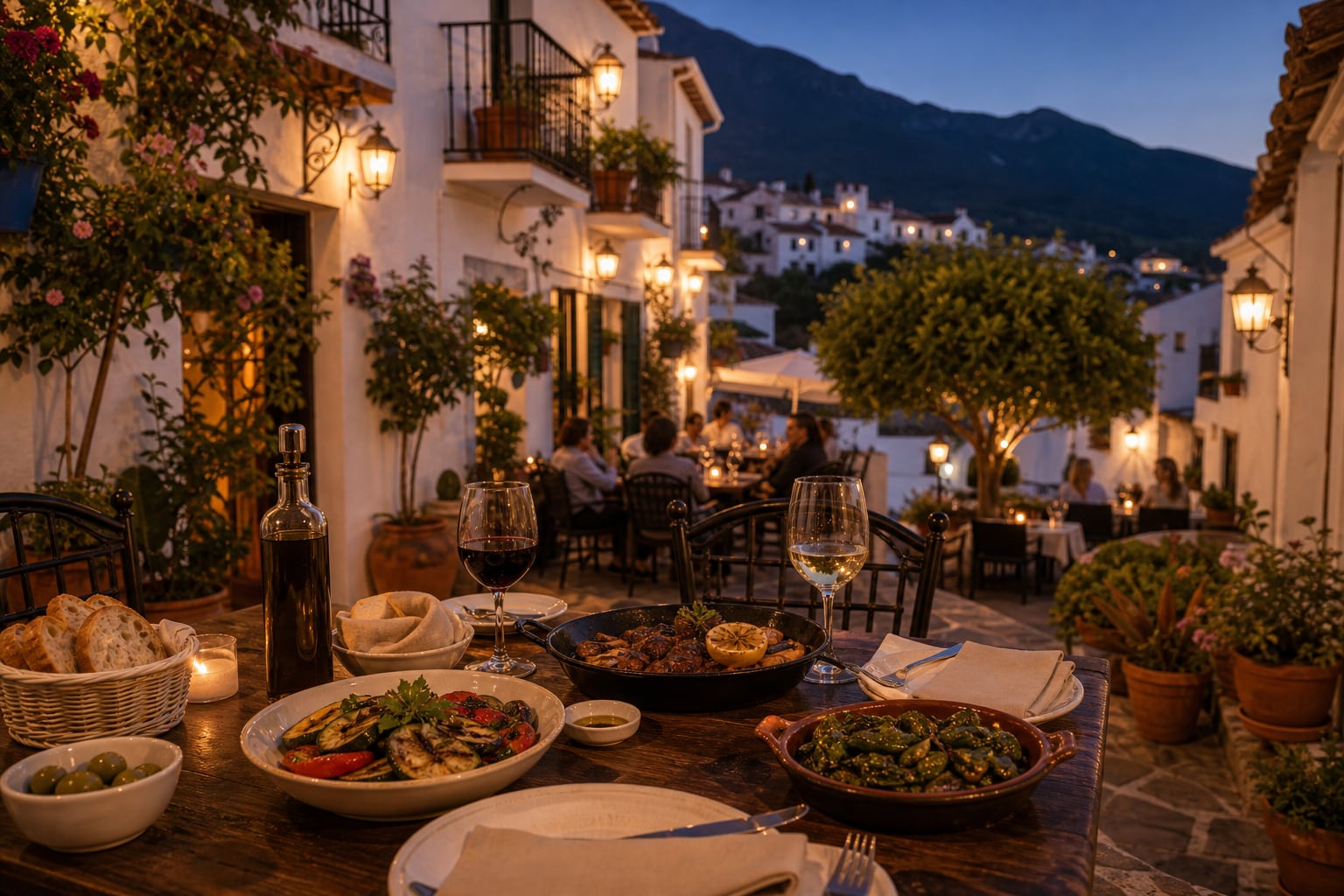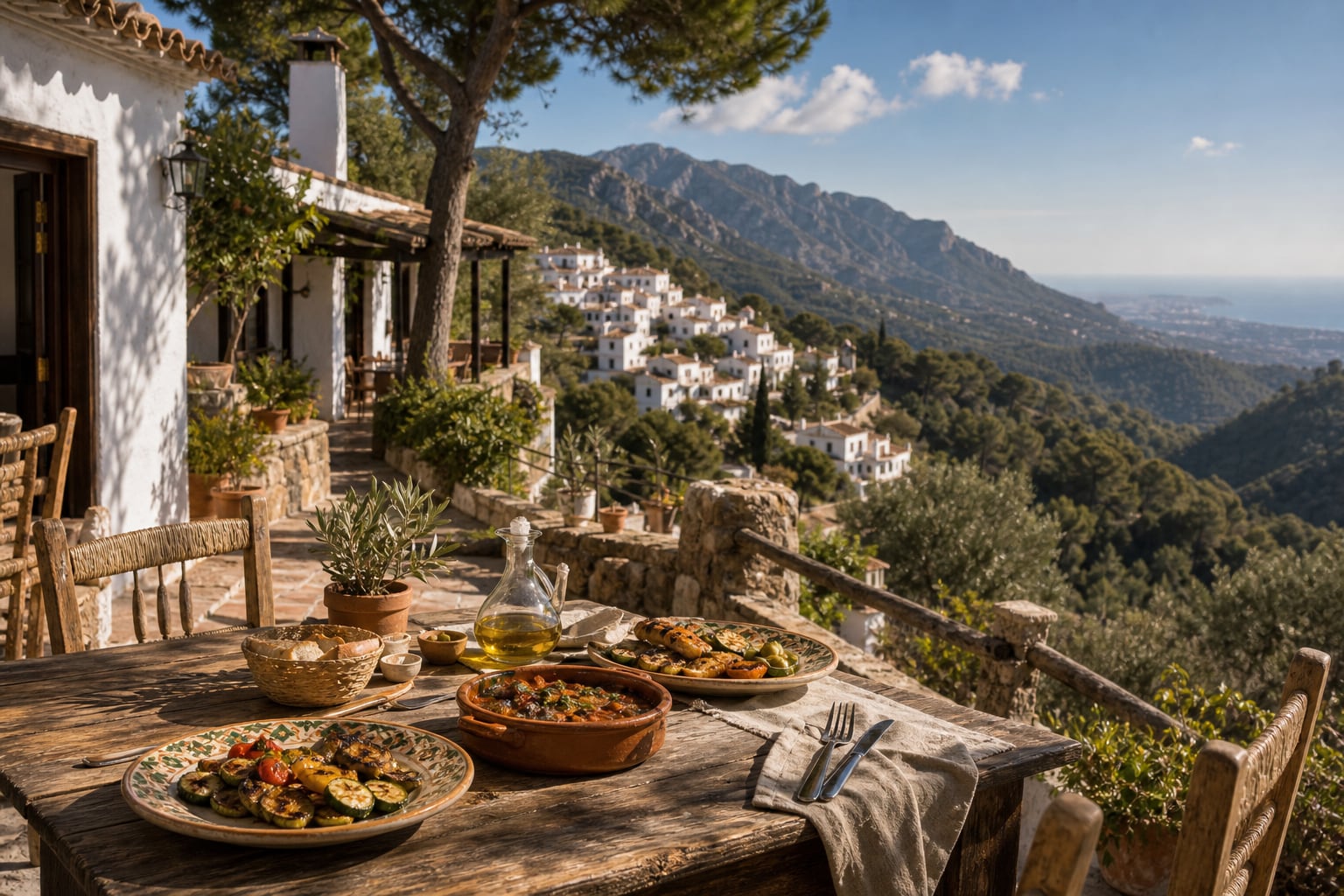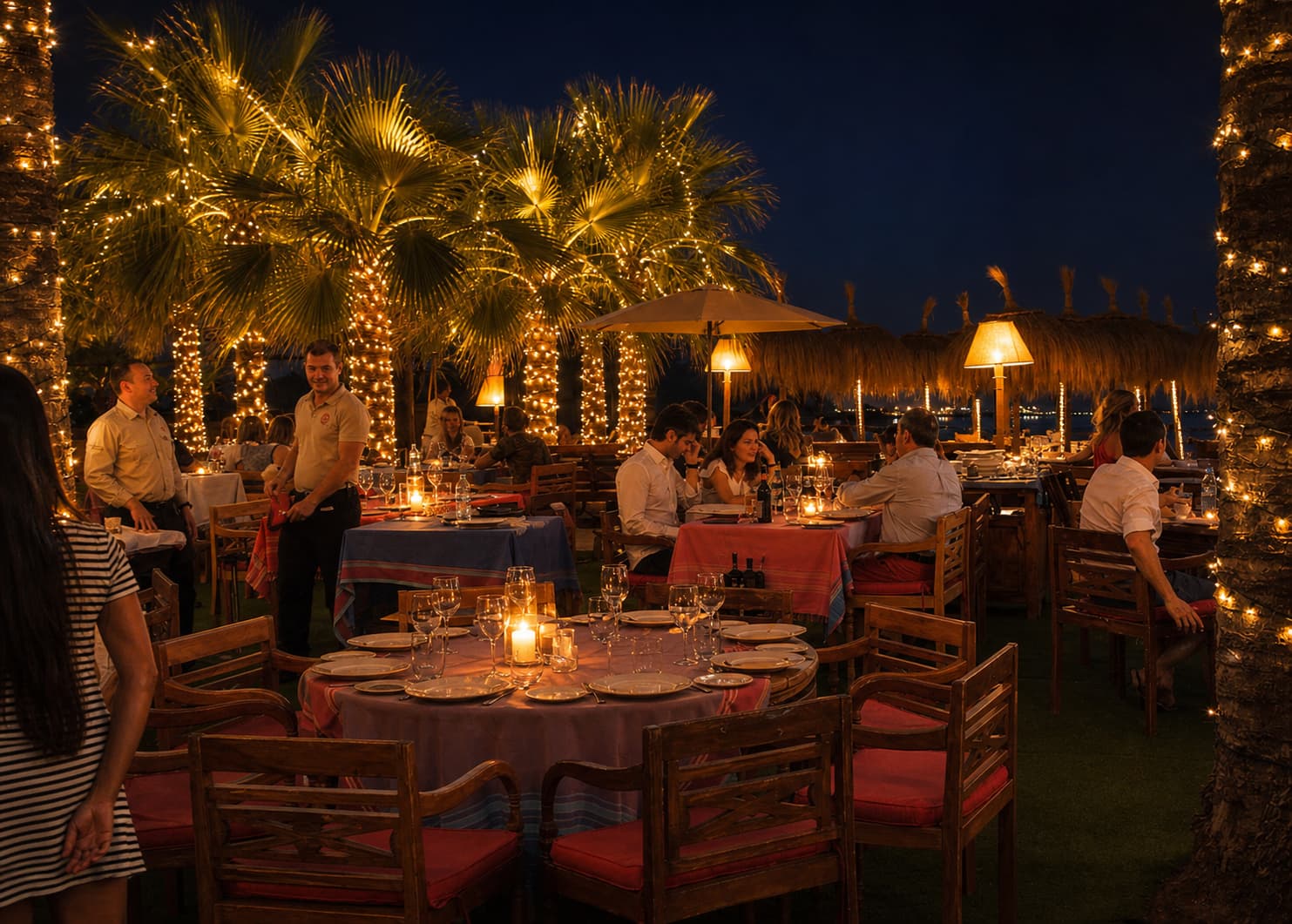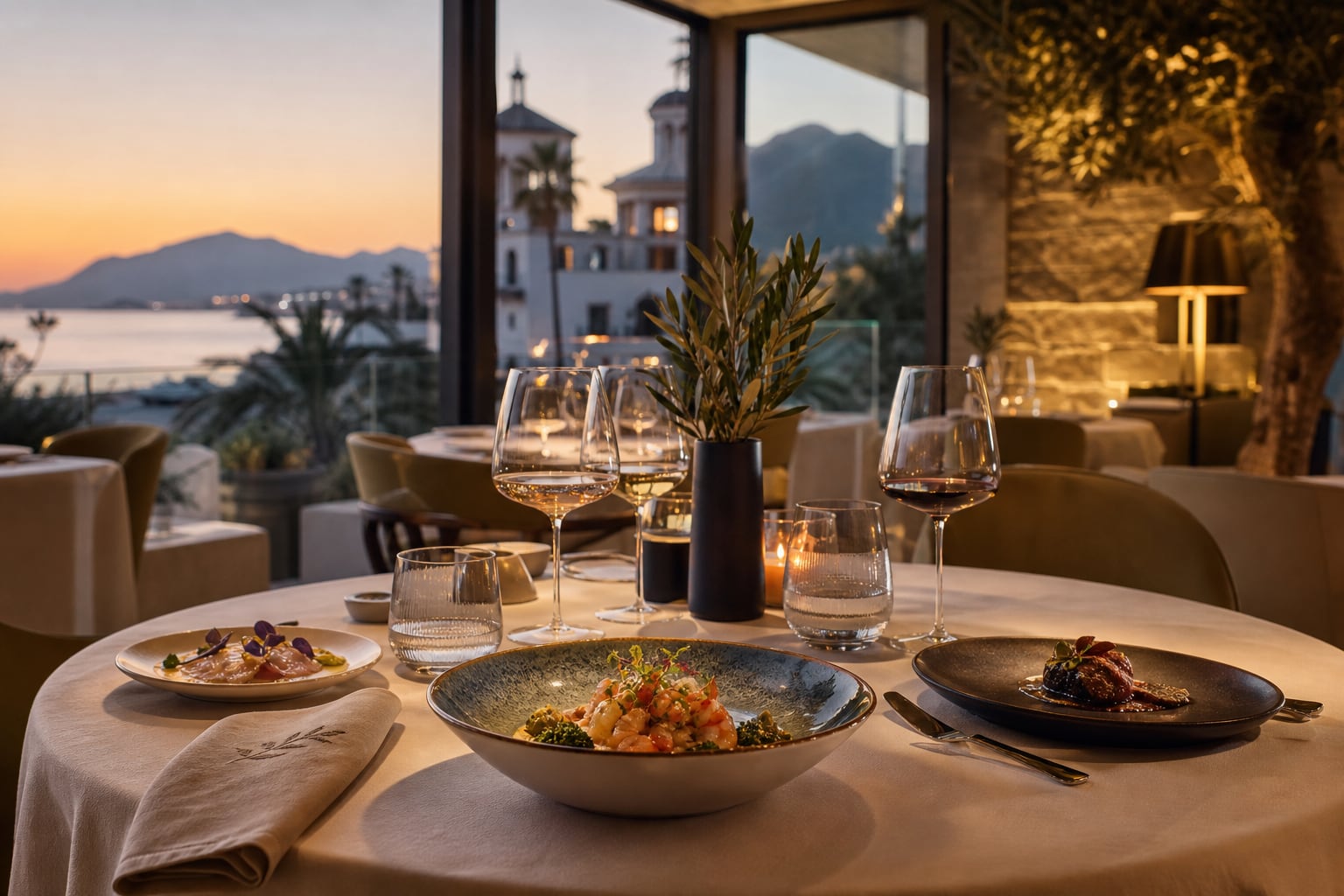
Marbella holds five Michelin-starred restaurants in the 2026 Guide Michelin España: one table with two stars and four with one each. Six stars in total — a density that no comparable beach destination on Spain's Mediterranean shore approaches. A sixth starred table, Sollo in the Reserva del Higuerón resort in Fuengirola, adds a Michelin Green Star for sustainability to the extended area's tally twenty minutes to the east. Taken together, this concentration of recognised culinary excellence is not simply a lifestyle amenity to list on a property brochure. It is a structural feature of the Marbella market — one that has quietly shaped buyer preferences, reinforced premium valuations, and helped sustain international demand through multiple economic cycles.
The question most buyers never phrase directly — but which almost always surfaces once a shortlist is drawn up — is how to compare a Marbella address against its nearest European equivalents: Tuscany, the Algarve, Provence, the Côte d'Azur. The climate argument tends to settle quickly in Marbella's favour. The Málaga province records an average of around 3,000 hours of sunshine per year, and average January daytime temperatures that rarely fall below 15°C — figures that leave the French and Italian Mediterranean coasts well behind once October arrives. The gastronomic argument used to be more equivocal. As of 2026, it no longer is.
Skina — The Two-Star Anchor
Skina now operates from Avenida Cánovas del Castillo 9 in central Marbella, having moved from its original address on Calle Aduar. What did not travel with the relocation is the restaurant's standing in the Michelin Guide: it remains the only two-starred table on the Costa del Sol, and one of the most demanding tasting-menu operations in the whole of Andalucía. The project belongs to Marcos Granda, a sommelier by formation who has assembled a small group of recognised restaurants with Skina as its flagship. The kitchen is led by chef Mario Cachinero, who approaches Andalusian cuisine through its classical repertoire: local red prawns from Garrucha, wild turbot from the Cádiz coast, Ibérico pork from Jabugo — each named, each traceable, each cooked with the precision that two Michelin stars require.
Three menu formats are offered: the Evolution menu, which follows the season and changes several times a year; an à la carte option available at lunch only; and the Grand Cru menu, a wine-forward experience designed for the serious oenophile. That last format makes most sense in the context of the restaurant's 6,000-label cellar, assembled by Granda himself, running from the dry whites and reds of the Sierras de Málaga DO through aged Rioja and classified Burgundy, treating neither end of the geographic spectrum as a supporting act. The dining room is deliberately intimate — reservations in summer require lead times measured in weeks rather than days. Skina opens for dinner from 6:30 p.m., Monday to Saturday, and does not offer walk-in seating.
Four One-Star Tables — From Omakase to the Golf Course
Nintai, the second Marbella project under Marcos Granda's direction, operates from Calle Ramón Gómez de la Serna 18B and holds one Michelin star in the 2026 Guide. The format is Japanese omakase: ten exclusive seats around a wooden bar, at which guests face the itamae directly and watch each piece of sushi assembled at close range. Two principal menus are available — the Zen at €155 and the Ensō at €249 — with optional sake and Champagne pairings from the sommelier. The kitchen uses Koshihikari rice sourced in Japan and the daily fish selection is determined each morning by what arrived. No two services are identical. Nintai opens Monday to Saturday for a single dinner service beginning at 8:00 p.m.; the punctuality requirement is not decorative — service starts simultaneously for all guests.
Restaurante Messina on Avenida Severo Ochoa 12 has held one Michelin star continuously since 2016. The chef is Mauricio Giovanini, Argentine by origin, who developed a culinary style that moves well beyond his South American starting point: precise, personal, and grounded in the seasonal produce of Andalucía. His wife Pía Ninci manages the front of house and the wine selection. The dining room — with a kitchen that opens directly onto it and a private chef's table for four — has an unusually domestic quality for a starred restaurant, which makes it more relaxed and more focused at the same time. Messina is the table most often described by regulars as a restaurant that reveals itself on the third visit more fully than on the first.
El Lago is Marbella's most quietly situated starred table, set within the Greenlife Golf development in Nueva Andalucía and overlooking the course's lake. Chef Fernando Villasclaras has built a kitchen philosophy around proximity — locally sourced produce used with an emphasis on seasonality — complemented by a more informal lunchtime menu, the Midi, that serves the golf-valley clientele in a casual register. The physical distance from the town centre (roughly eight minutes by car from Puerto Banús) gives El Lago a mixed dining profile: destination visitors from across the municipality alongside residents of the surrounding urbanisations who treat it as their neighbourhood restaurant of choice. Back, the fifth Michelin-starred restaurant in the municipality, rounds out the picture with contemporary Andalusian cooking that inspectors have noted for its creative playfulness, its unconventional wine list, and — the detail that appears most consistently in guest accounts — a trolley of aged cheeses and artisan liqueurs that arrives at the end of the meal as a quiet declaration of intent.
Dani García's Marbella — The Year-Round Layer
For buyers whose definition of a good evening runs closer to a reliably excellent seasonal menu with a crowd and a view than to a twelve-course tasting sequence, the operation that Dani García has built at the Puente Romano hotel on the Golden Mile is the defining reference point on the Costa del Sol. BiBo — the principal restaurant in the complex — serves Andalusian cooking in a brasserie register: ambitious enough to be interesting, informal enough to visit twice a week without ceremony. Adjacent to BiBo sit Lobito de Mar, García's seafood restaurant; Leña, a wood-fired meat operation; and La Cabane, which extends the offering to a beachfront terrace and cocktail programme. Together they form a private dining quarter at the western end of the Golden Mile, operating across the full twelve months of the year rather than a compressed summer season.
García holds no Michelin stars at his Marbella restaurants, but his influence on the town's dining identity has been significant in a different register. By building a group of restaurants that attracts residents as reliably as hotel guests, and by positioning them within a broader resort infrastructure — beach clubs, spa, year-round events calendar — he has helped shift the Golden Mile's identity from a summer-season destination to a year-round address. That shift tracks closely with what the upper end of the residential market between the N-340 and the beach has done for the past decade: absorbed demand consistently, at prices that have moved in one direction. Walkable access to the Puente Romano complex is now routinely mentioned by buyers of properties on and around the Golden Mile as a specific positive — not as brochure language, but as an actual criterion, in the way that proximity to an international school or a private hospital might be cited elsewhere.
What the Sommelier Pours — Sierras de Málaga and a Cellar Worth Understanding
Skina's 6,000-label cellar is the most consistently discussed feature of the restaurant among food and wine writers who cover it, and for good reason. A collection of that scale and ambition, assembled by a trained sommelier in a town better known until recently for champagne and rosé, is a deliberate statement about the kind of address Marbella is becoming. The Sierras de Málaga DO — established in 2001 to champion dry still wines from across the Málaga province — appears with increasing confidence on serious restaurant lists across the area. The designation spans five production zones: Axarquía, Montes de Málaga, Zona Norte, Costa Occidental-Manilva, and the Serranía de Ronda. Permitted whites include Sauvignon Blanc, Chardonnay, Moscatel, Viognier, and the indigenous Doradilla; reds draw on Syrah, Cabernet Sauvignon, Merlot, Tempranillo, and the little-known local variety Romé.
The Ronda sub-zone has attracted serious critical attention over the past decade: altitudes ranging from 300 to 900 metres, significant diurnal temperature variation, and a small group of committed producers working at controlled yields have produced wines that stand up to comparison with better-known Spanish appellations. Bodegas Bentomiz in the Axarquía valley is among the producers most consistently cited in the context of the region's modern wine identity. The older Málaga DO — the sweet and fortified tradition built on Moscatel de Alejandría and Pedro Ximénez — also remains genuinely distinctive: the raisin-dried Pasas wines from the Axarquía hillsides, and the aged Málaga Virgen style that was fashionable in Victorian Britain, represent wines of real complexity when made with care. For buyers arriving from wine-literate markets — Switzerland, the Netherlands, the UK, Scandinavia — the emergence of a credible local wine scene is a detail that registers. It is no longer necessary to apologise for what ends up in the glass when dining in Marbella.
The Property Logic — What Six Stars Signal to a Buyer
Marbella's average asking price reached €6,260 per square metre in March 2026 — an increase of 8.59% on the same month in 2025, according to aggregated property portal data. That figure spans the whole municipality, from the western edge of San Pedro de Alcántara to the far side of Río Real. Within Marbella Centre, the Old Town, and the Golden Mile, prices climb above that municipal average; in some streets and urbanisations, significantly so. The Casco Antiguo in particular — the stone-and-whitewash quarter clustered around Plaza de los Naranjos and Calle Aduar — holds its value with a tightness that reflects structurally constrained supply. The Old Town cannot expand outward, and the apartments available within it represent a genuinely finite category.
The Michelin restaurants are not the primary cause of those valuations; they are a symptom of the same underlying dynamic that has driven the market upward for three decades — that Marbella has assembled, more completely than any comparable resort on Spain's coastline, a combination of services, infrastructure, climate, and lived experience that justifies a sustained premium. The restaurant scene is one layer of that infrastructure, but a particularly legible one. Unlike school league tables or hospital performance statistics, a Michelin rating is immediately comparable across cities and cultures. A buyer from Geneva or London who has eaten at Skina does not need the context explaining: they know what two stars means and how rarely it appears outside a major capital.
The buyers who factor the dining scene most explicitly into their decision tend to be experienced international purchasers — often from finance, technology, or professional practice in northern or central Europe — arriving in Marbella having already benchmarked it against alternatives. For this cohort, the gap between what the Costa del Sol offered gastronomically twenty years ago and what it offers in 2026 is not a minor lifestyle upgrade. It is a category change. And unlike changes in exchange rates, planning regulations, or political climate, a Michelin star is a reasonably durable signal: Skina's two stars have been maintained across multiple Guide editions, and Messina's one star has been continuous since 2016. The wider dining landscape of the Costa del Sol reinforces this direction of travel — the Benahavís village restaurant cluster, fifteen minutes inland from Puerto Banús, represents a further layer of the same story.
The specific case for Marbella Centre, the Old Town, and the Golden Mile — rather than a gated urbanisation higher in the hills of Nueva Andalucía or a beachside development further along the coast — is partly about walkability and partly about permanence. These are addresses where Skina, Nintai, Messina, and García's Puente Romano complex are accessible by foot or a short taxi ride, and where the concentration of quality dining is woven into the fabric of daily life rather than requiring an expedition. New supply within the Old Town and on the Golden Mile's beachside plots is, structurally, extremely limited. The market understands this: tightly held assets in a constrained geography, anchored by the kind of lifestyle infrastructure that does not relocate.
For buyers beginning to assess whether the Marbella area fits their requirements, the restaurant scene is one of the cleaner tests available. If the ability to book Skina or Nintai without planning a trip across town, and the emergence of a serious regional wine list from the Sierras de Málaga DO, matters to how you intend to live — Marbella's central addresses deserve serious consideration. The asking prices suggest the market has already reached that conclusion.
Domosmar curates handpicked apartments, penthouses and villas across Marbella, the Golden Mile, Nueva Andalucía and the wider Costa del Sol. Browse our current listings at domosmar.com/properties, or contact our team to discuss a shortlist matched to your lifestyle priorities and budget — no obligation, no pressure.