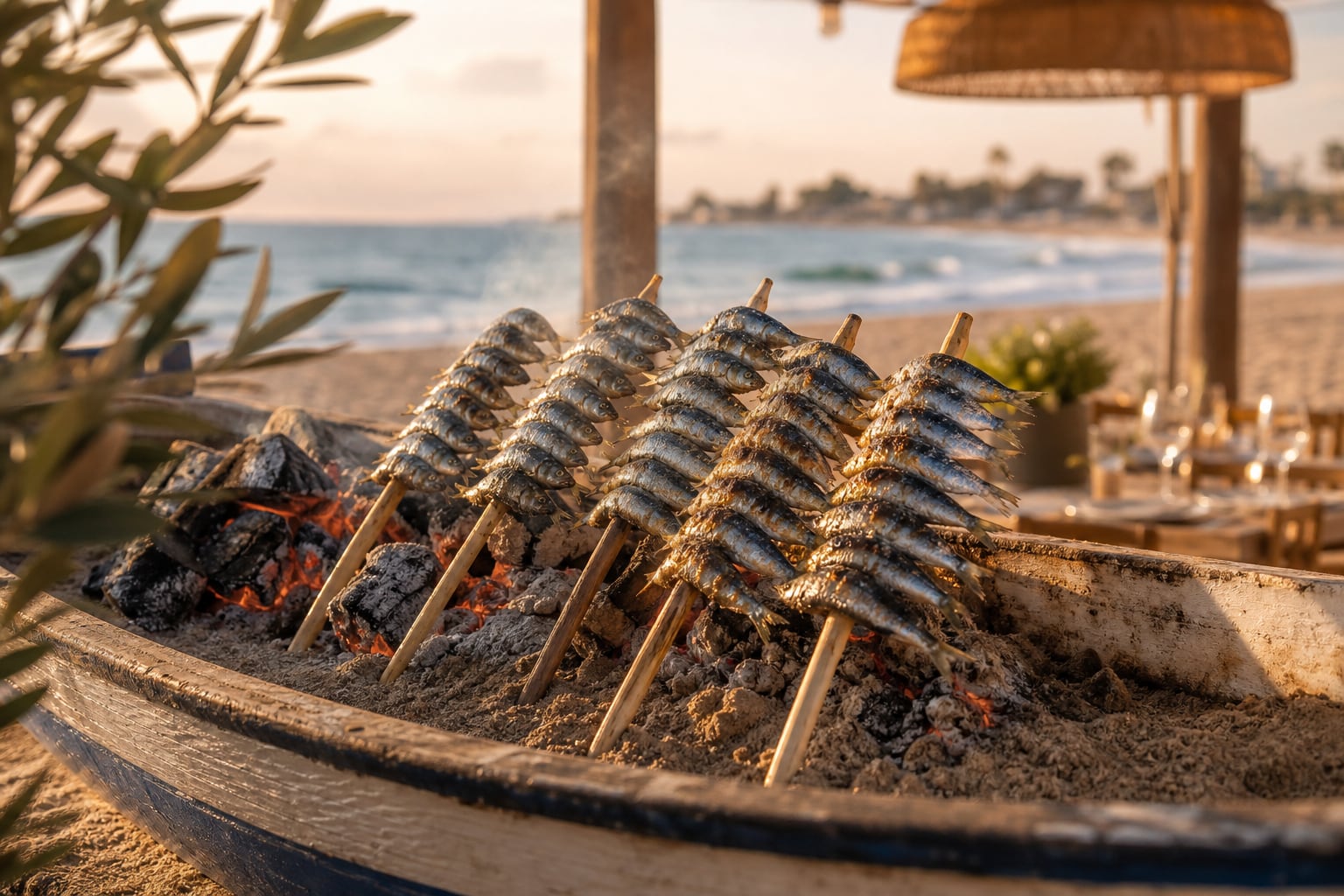
The most democratic meal on the Costa del Sol is cooked inside a boat. Not on one — in one. A retired wooden skiff is hauled off the water, half-filled with beach sand, and set on the shore as a hearth; a fire of olive wood is lit in the hull, and rows of fresh sardines threaded onto canes are planted in the sand at the fire's edge to roast in the smoke. The result is the espeto de sardinas, and on most of this coastline a skewer of them still costs only a few euros — grilled, almost without exception, on the same sand that fronts some of the most expensive residential property in Spain.
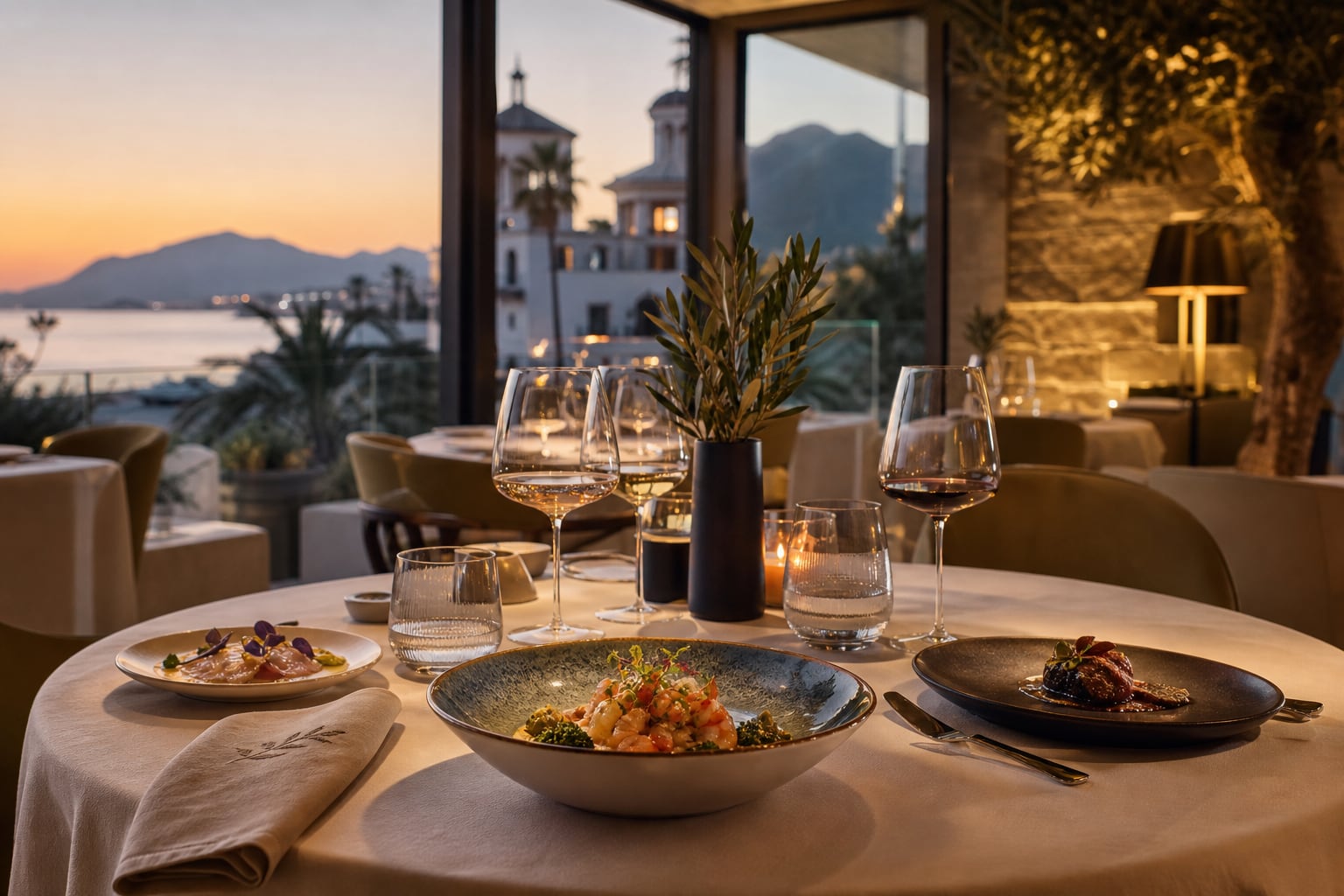
That juxtaposition is the whole proposition of the western Costa del Sol in miniature: a fisherman's lunch cooked a few metres from beachfront apartments trading well into seven figures, a place where a two-Michelin-star tasting menu and a three-euro sardine skewer can share the same afternoon. The working chiringuito on the beach is as much a part of what a buyer is acquiring here as the sea view itself. And June opens the season — which makes early summer a good moment to look hard at both the dish and the sand it is cooked on.
A dish invented on the sand
The espeto is a Málaga invention before it is a Costa del Sol one. The technique traces to the fishing barrios of El Palo and Pedregalejo on the eastern edge of Málaga city, and to a 19th-century fisherman, Miguel Martínez Soler — remembered as Migué el de las sardinas and credited as the padre del espeto, the first to thread a sardine onto a reed and roast it on the open beach. The Málaga tourism board still describes the craft as a trade handed from father to son, with a job title of its own: the espetero, the person who tends the fire.
Almost everything depends on that fire and the hands above it. Purists insist on a wood flame, and on olive wood for the cleanest flavour; the sardines, lightly salted, are angled into the heat and then moved patiently nearer or further from the embers until the skin crisps and the flesh stops just short of dry. The dressing is deliberately minimal — coarse salt, a little olive oil, a squeeze of lemon picked off the tree — and, as the Olive Press observed this May, many malagueños add nothing at all. The espeto is eaten with the fingers, straight off the cane.
There is a season, and June sits right at the front of it. Local lore holds that sardines are best in los meses sin erre — the months without an "r", from May through August — when the fish are fattest; the more exacting narrow the window further, from the feast of the Virgen del Carmen on 16 July to the Virgen de la Victoria on 8 September. The reason is biological rather than romantic: warmer summer water carries more plankton, the sardines gorge on it, and their flesh turns oily, heavy and rich in Omega-3. A sardine eaten in January is a leaner, lesser fish entirely.
Málaga takes the dish seriously enough to campaign for its memory. The provincial Ruta del Espeto, run under the Sabor a Málaga banner, now backs a formal bid to have the espeto recognised as Intangible Cultural Heritage — the same standing sought for flamenco and the Mediterranean diet. It is, in the end, the most malagueño thing a person can eat, and one of the few genuinely local rituals the international coast has adopted wholesale rather than priced out.
Where to eat one between Marbella and Estepona
On the Marbella shoreline the institutions are easy to find. Victor's Beach, open since 1978 on the Golden Mile, grills its espetos slowly over wood and serves them with Málaga tomato bread; at around €12 a skewer, it sits firmly at the upmarket end of the genre. A short walk east, El Ancla, on the central Marbella beachfront, runs from ten in the morning until eleven at night, with sardines and a broad seafood list starting nearer €5 — the more typical chiringuito price, and a fair gauge of how affordable this ritual remains.
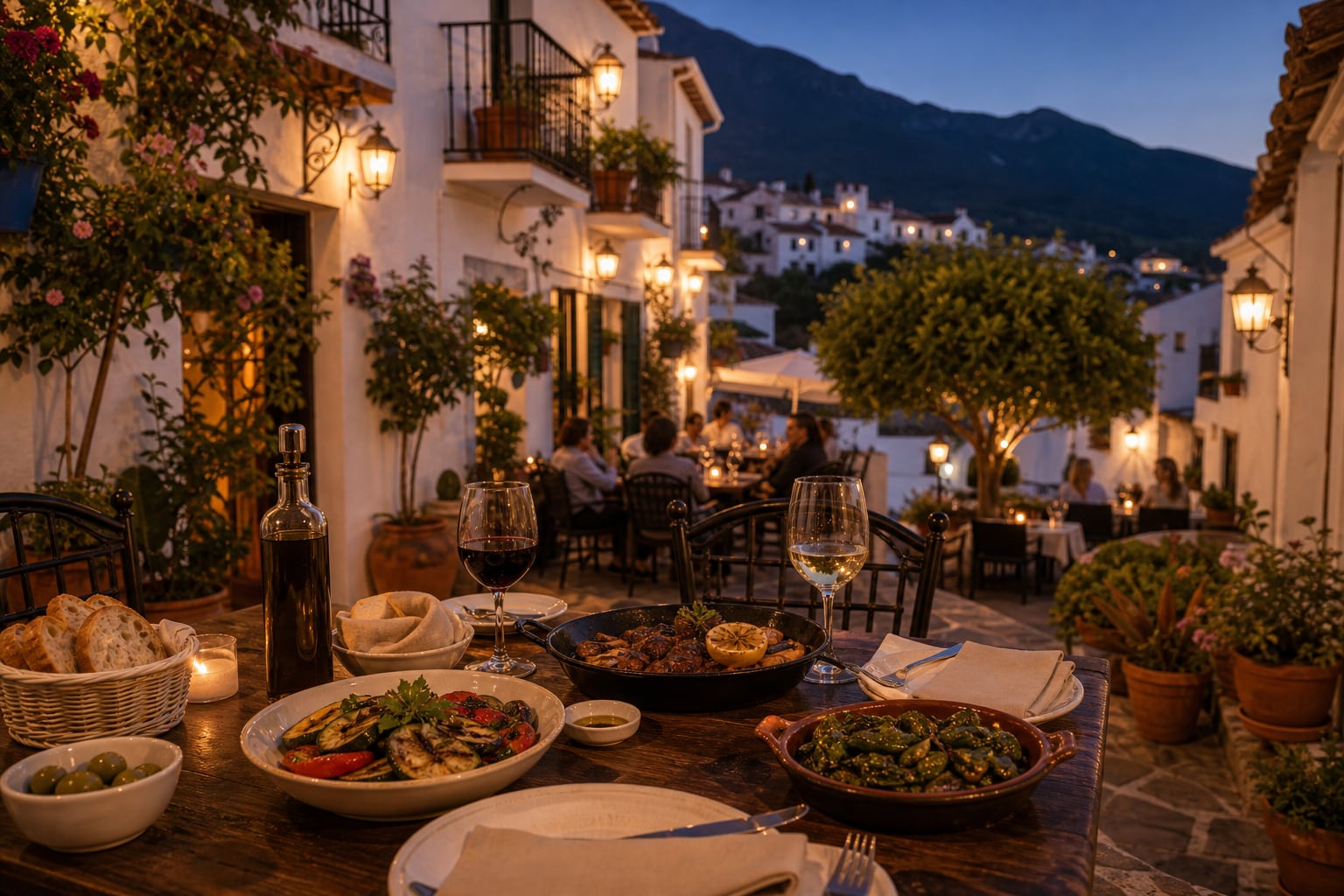
Towards Puerto Banús, Trocadero Arena has spent a decade pushing the chiringuito format upmarket — cocktails, rice dishes, a Japanese corner — without retiring the espeto from its grill. Marbella keeps its old guard too: Aquí te quiero ver, trading since 1977, is the kind of address regulars defend with a seriousness usually reserved for football. The catch that moves through the Mercado Municipal in Marbella's old town each morning is, by lunchtime, on the coals at the chiringuitos along Playa de la Fontanilla — a daily rhythm we traced in a week in the life of the Casco Antiguo.
West of San Pedro the tradition runs just as deep. In Estepona, Chiringuito Torre Velerín treats the espeto as its house dish, while África Beach keeps the classic fish-and-paella formula going on the sand. The current regional benchmark sits a little further east, however: Larry's Beach Bar, on the Carihuela seafront in Torremolinos, took the 2025 Costa del Sol Espeto Award — confirmation that the contest for the best version of a three-euro fish is still fiercely fought along this coast.
None of this demands a reservation in the depths of winter. In July and August it does: the better beachfront tables fill two or three days ahead for a weekend lunch, and the espeto — a sunset-and-smoke spectacle as much as a meal — is exactly what everyone wants at the same hour. For a resident, the quiet luxury is proximity. A chiringuito within walking distance turns a summer evening into something that requires no planning at all.
What to drink with a sardine
The honest beach answer is an ice-cold beer or a glass of something cold and white, and no one in a chiringuito will think less of you for it. But the wine question is more interesting than the setting suggests, because the hills directly behind these beaches make precisely the sort of wine a grilled sardine wants. The bottle to look for is Botani, the dry Moscatel produced by Jorge Ordóñez Málaga from old Muscat-of-Alexandria vines in the Axarquía, the steep coastal district east of the city.
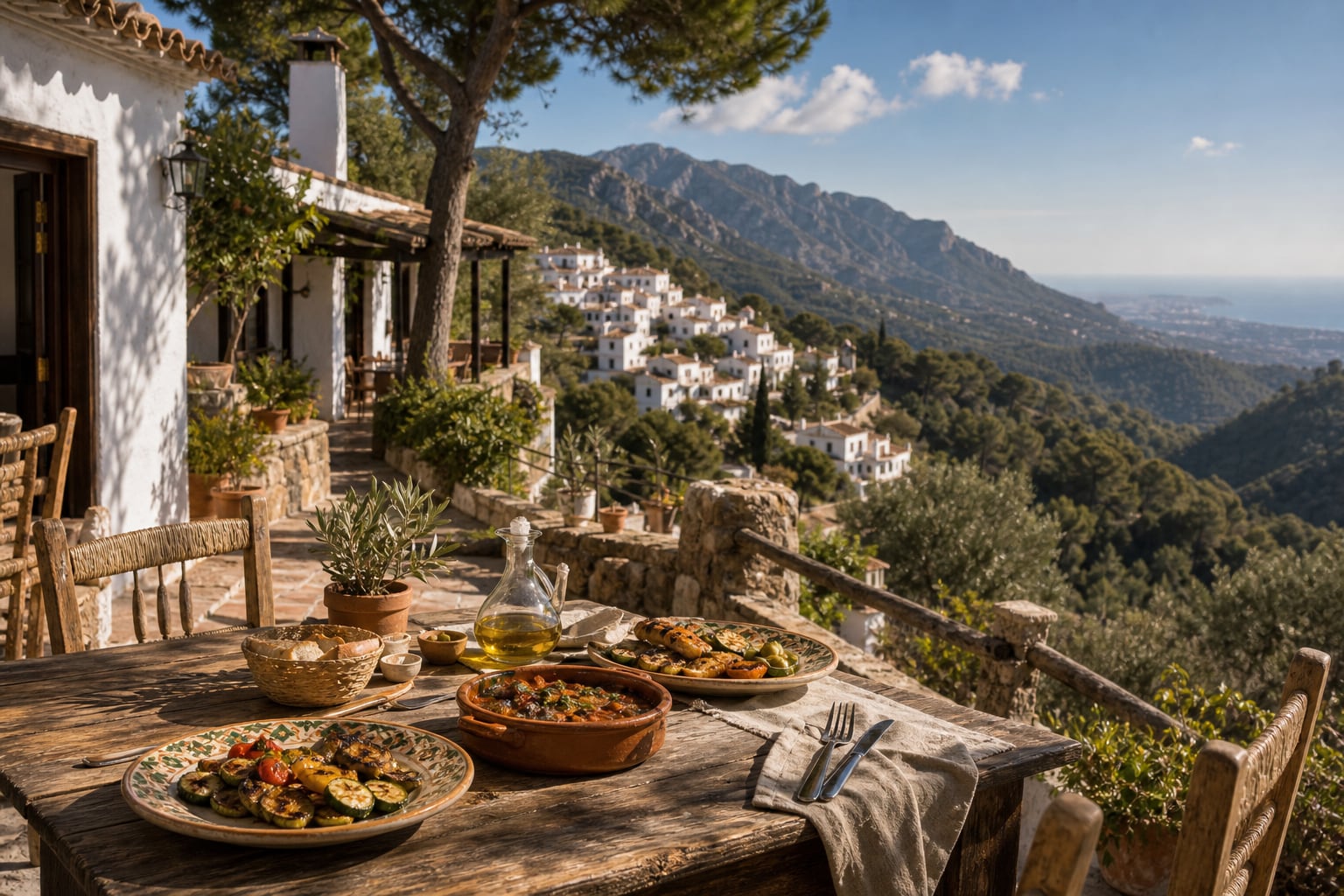
By the winery's own account, Botani was the first dry Moscatel made in Spain in modern times, reviving the region's nearly lost tradition of dry "Mountain Wines" from vines planted between the 1940s and the 1970s on slate so steep the fruit is still carried down by mule. Its floral perfume and bone-dry finish cut through the oil of a fat summer sardine in a way a heavier white cannot, and it carries the DO Sierras de Málaga appellation created in 2001 for exactly these dry table wines. The older, amber, sun-raisined Moscatel de Málaga belongs at the end of the meal rather than the middle; the fuller story of the wines grown above this coast is one we told separately in our guide to Estepona's food scene and the Sierras de Málaga.
What the chiringuito does for the value behind it
Spend a full season here and the chiringuito stops reading as a novelty and starts reading as infrastructure — part of the reason a beachfront address commands what it does. The clearest case is Los Monteros in east Marbella, which idealista in March 2026 called the town's emerging beachfront powerhouse: an average of €8,772 per square metre in February 2026, up 11.9% year on year, with the relaunch of the La Cabane beach club under Dolce & Gabbana branding named among the drivers. The beach club and the beachfront price move together; the espeto is simply the older, cheaper end of the same economy.
On the Golden Mile the frontline-beach complexes climb higher still — above €15,000 per square metre for the best of them, as we set out in our zone-by-zone Golden Mile guide — while the Nagüeles–Milla de Oro average stood at €6,789/m² and Nueva Andalucía, behind Puerto Banús, at €5,654/m² in the same report. What separates the dearest of these is rarely size or finish; it is position — the first line of sand. idealista's luxury desk, writing in April, put it bluntly: across the Spanish coast the one guaranteed value is frontline beach with views, and genuine frontline stock, once it appears, tends to sell within months.
The espeto is a useful proxy for why. A coast that still grills sardines in olive-wood smoke on its public beaches is a coast with a working fishing culture, a year-round population that eats out in February as readily as in August, and a shoreline not yet sealed entirely behind hotel gates. With more than 300 days of sunshine a year, the chiringuito season runs from spring deep into autumn, and the social life it anchors runs with it. Those are precisely the conditions that turn a beachfront property into somewhere a person lives rather than merely visits — and, not by coincidence, the conditions that defend its value when the wider market wobbles.
So the next time you find yourself at a beach table in June, watching an espetero walk the canes in and out of the embers, it is worth registering what you are actually looking at: the cheapest seat at the best table on the Costa del Sol, set on sand the market prizes more highly than almost anywhere else in Spain. A home within walking distance of that — a frontline apartment on the Golden Mile, a villa behind the dunes at Los Monteros, a new-build a few streets back in Estepona or Mijas — remains one of the more durable propositions this coast has to offer.
If that is the kind of ownership you are weighing, browse the current Domosmar listings across Marbella, Estepona, Benahavís and the wider Costa del Sol, or speak to our team — we'll help you find the addresses where the sea, the sand and the smell of olive-wood smoke come built into the deal rather than added as an afterthought.